Just a 35-minute direct train ride from Osaka Station lies an abandoned railway in the Hyogo Prefecture. This railway, part of the old JR Fukuchiyama Line, has been repurposed into a magnificent 5-kilometer hiking trail. With its historical charm, stunning views of gorges and mountains, and the thrill of walking through unlit tunnels, this hike is an adventure worth taking. The trail is mostly flat and accessible, making it ideal for all levels of hikers, including families with children.
How to Get There
To start your journey, take the JR Fukuchiyama Line from Osaka Station. This is just one train ride from Osaka Station – no need to switch trains, which makes it even the more stress-free for your trip. You can choose to begin the hike at Namaze Station and end at Takedao Station, or reverse the route. Both directions are equally rewarding, but starting at Namaze Station provides a gentle introduction to the trail – and ends you at the most perfect cafe for lunch or a drink!
From Osaka to Namaze Station:
Duration: Approximately 45 minutes from Osaka Station.
Fare: Approximately ¥500.
Directions: After exiting Namaze Station, turn right and follow the path downhill. Look for the trailhead near the Mukogawa River. You will walk alongside a road tunnel, with some impressive soundproofing technology. One through the tunnel, cross over the highway before making your way down to start the trail route.
Trail Highlights
Formed as part of the JR Fukuchiyama Line, the railway was abandoned when trains were diverted to new tracks. What remains is a peaceful and scenic hike through the Mukogawa Valley, surrounded by dense forests and flowing water.
Essentials: Good walking shoes, snacks, friends, and most importantly, a torch (flashlight) for the dark tunnels. No, your phones light will not be good enough! (trust me, I thought it would be too…)
Exploring the Tunnels
The trail features six unlit tunnels, remnants of the old railway. Some are short and you can see either end, but some are long enough that you won’t be able to see the exit from the entrance, adding an adventurous element to the hike. The longest stretches 450 meters, requiring a reliable light source for safe passage.
Atmosphere: There are moments when you might imagine a train suddenly thundering through, but rest assured, the tracks are no longer in use. There are also moments where you might be a bit scared if you don’t enjoy the darkness in the tunnels. Best to go in a group if you think this would be you!
Scenic Bridges and Stunning Views
As you cross bridges like the iconic Daini Mukogawa Bridge, you’ll be treated to breathtaking views of the Mukogawa River below and the surrounding mountains. These spots are perfect for capturing the natural beauty of the valley.
Ending at Takedao Station
The hike concludes at Takedao Station, where you’ll find vending machines, small shops, and opportunities to relax. If time permits, unwind at Takedao Onsen, a local hot spring known for its rejuvenating waters and scenic surroundings.
Is it worth it?
This is by far the most rewarding hike I have been on from Osaka in terms of the scenery, the time it took to get to from Osaka, the level of difficulty and the atmosphere. Definitely my number 1 most recommended hike to go on from Osaka (so far!).
PSA! If you do not have a group and would like someone to hike this route with you, please reach out via email to: enquiries@visitosaka.org and our tour guide will accompany you (with a torch!).
Just 35 minute direct train from Osaka Station!! 🚊🥰 An abandoned railway in the Hyogo Prefecture has been adapted into a scenic 5km hiking trail. 🥾 Formed as part of the JR Fukuchiyama line, it now lies abandoned as trains are diverted down new tracks. However, what is left behind offers stunning views of gorges and mountains as you take on the adventure of also walking through absolute darkness. ⛰️ The hike in itself is not demanding as most of the way is flat ground. Ensure that you bring a torch (flashlight) 🔦!!with you as some of the tunnels are long enough that you won’t be able to see either end 👻 . There are times where paranoia that a train might come thundering through starts to sweep in but allow yourself to be eased into the comfort that knowledge is power and knowledge indicates that the railway is no longer in use. Things to bring: Good walking shoes, some snacks, friends, and most importantly a torch! If you wish to start from JR Namaze station and end up at JR Takedao station, there is an onsen nearby the station you are able to relax in. GETTING THERE Take the JR train from Osaka Station to JR Takedao station and follow the paths into the tunnels. The end of the hike will take you to JR Namaze station where a train will whisk you back to Osaka. #osaka#japan#travel#hiking#offthepath#takedao#walk#scenic#views#mountain#hyogo#lovelife#life 🇯🇵
Ok, this is technically in Nara, but its an easily accessible hike from Osaka!…
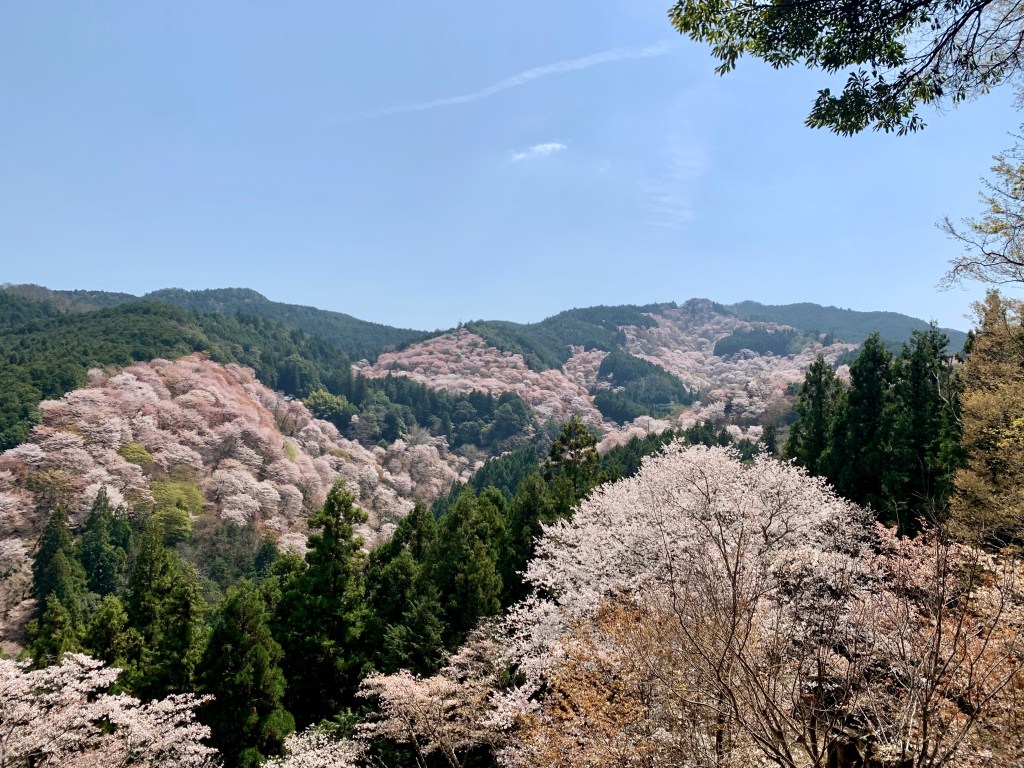
Mt. Yoshino in Nara Prefecture is the traditional famous place to see an impressive vista of cherry blossom trees (Sakura) in Japan (over 30,000 trees!). Mount Yoshino was designated as part of a UNESCO World Heritage Site in 2004 called ‘Sacred Sites and Pilgrimage Routes in the Kii Mountain Range’. Here’s everything you need to plan your own trip.
🕐 Hike Time: 4–6 hours round trip, depending on pace and how far you go 🥾 Difficulty: Easy to moderate – mostly paved or gravel paths, some uphill sections 🚻 Facilities: Toilets at stations, temples, and main viewpoints 📶 Signal: Spotty in higher areas.
Getting to Mt. Yoshino from Osaka
Mt. Yoshino is super accessible from the city of Osaka. The easy way (recommended)is to get the train from Osaka-Abenobashi Station (right next to Tennoji Station), and take the Kintetsu Limited Express directly to Yoshino Station (吉野駅). The duration of the train ride is ~1 hour 15 minutes and will cost: Around ¥1,600–2,000 one-way.
💡 Tip: Reserve a seat ahead of time, especially during cherry blossom season or weekends. You can buy tickets at the station or via the Kintetsu website.
🐢 The Cheaper Way (Local Trains) If you’re not in a rush, take a local Kintetsu train with a transfer at Kashiharajingu-mae Station. It’s slower (closer to 2 hours) but a bit cheaper.
Starting the Hike
Once you arrive at Yoshino Station, the mountain hike begins right outside. You can walk or take the Yoshino Ropeway (when it’s running) up to the Naka Senbon area.
🥾 Hiking Mt. Yoshino – What to Expect This isn’t a hardcore mountain hike—it’s more of a gentle, spiritual trail lined with shrines, shops, temples, and trees. The mountain is traditionally divided into four sections as you climb:
You can turn back at any point, but here’s the route I followed for a well-paced, full-day experience:
Yoshino Station to Naka Senbon – Winding Up Through Town 🌸 The hike begins with a walk up through Shimo Senbon, where the narrow mountain road is lined with little shops selling mochi, tea, and local specialties like kakinoha-zushi (sushi wrapped in persimmon leaves). I grabbed some to-go and kept climbing as the slope was gentle.
Kinpusenji Temple – A Sacred Stop ⛩️ You’ll soon reach Kinpusenji Temple, a UNESCO World Heritage Site and a key location in Japan’s mountain-worship tradition (Shugendo). From here you will see an iconic view of the sakura. The wooden main hall is enormous, with dramatic beams and a deep, spiritual atmosphere. There is a small entrance fee of 200-yen.
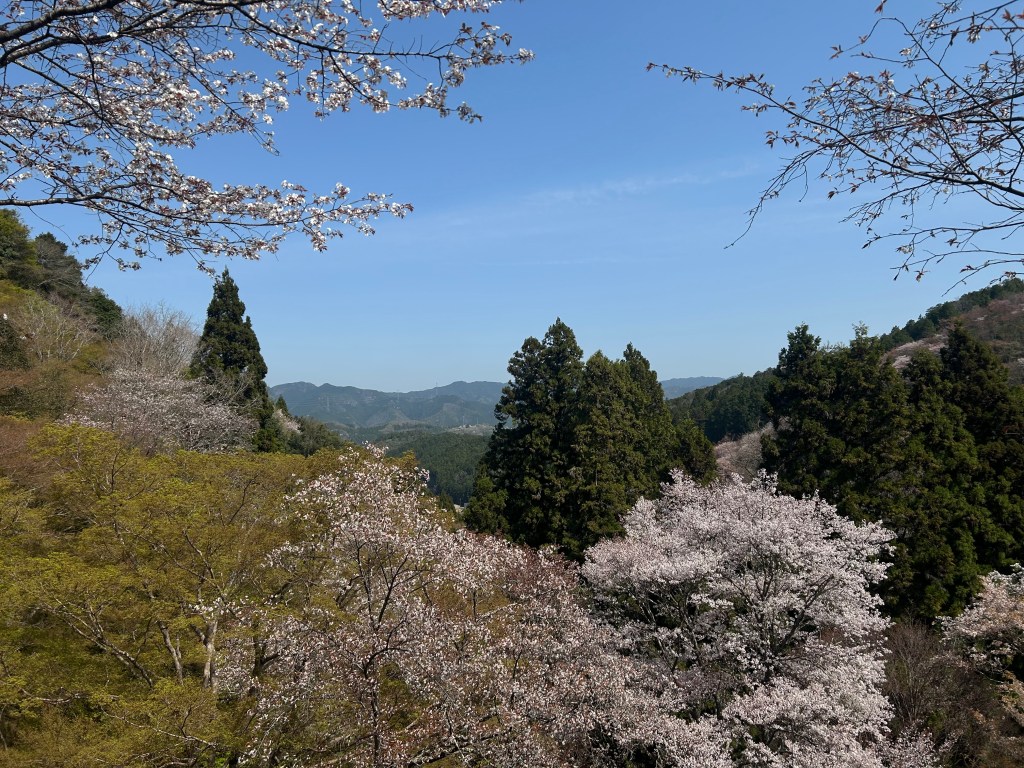
Kami Senbon – Forest Paths & Big Views 🌄 Past the temple, the trail gets quieter and more forested. As you reach Kami Senbon, the views open up and you can see down into the valley and across the ridgelines of Mt. Yoshino. The Hanayagura Viewpoint is the big highlight here where the mountain turns pink in waves. I visited on peak bloom, and it was stunning. 💡 Cherry blossoms bloom in layers as you climb, so even if the town is past peak, higher elevations may still be in bloom. In other seasons, you’ll find green, misty mountain trails or fiery red leaves in autumn.
Oku Senbon – Into the Deep 🌲 If you’ve still got energy (and time), keep hiking into Oku Senbon—the deepest and most peaceful part of the mountain. The path gets quieter, wilder, and more serene, surrounded by towering cedars and little shrines tucked into the forest. I didn’t see many people past this point.
This is the BEST location in the world to view the sakura in Japan & its just 1.5-2hrs from Osaka!! 🌸🥾🌲🏕️ This reel does not do it justice. The views are incredible. I’ll be writing a blog shortly about how to get to Mt Yoshino and what to expect. Check out visitosaka.org in the next few days! 09.04.2025 #sakuraschoolsimulator#japan#osaka#mtyoshino#cherryblossoms#tourism#travel#hiking
🍵 Where to Take a Break There are plenty of little rest stops and cafes along the trail, especially around Naka Senbon. My favourite spot is Yoshinoyama Sabo (吉野山茶房) – a lovely mountain teahouse with matcha desserts and seasonal sweets. You’ll also find small noodle shops and stalls selling grilled mochi or dango. Bring some cash, as not all shops take cards!
If you’re wondering whether Osaka has green spaces – yes! it does. Spread over 126 hectares, Hattori Ryokuchi Park is one of Osaka’s largest green spaces. The park is divided into various zones, offering something for everyone.
Just a short train ride from central Osaka, Hattori Ryokuchi Park offers a peaceful retreat into both nature and history. Here, you will be able to see Old Japanese Farmhouses, spot turtles swimming in the ponds and take a walk through the Bamboo lined Mount Inari. Located in Toyonaka City, this sprawling park provides something for everyone!
Getting to Hattori Ryokuchi Park
Hattori Ryokuchi Park is very easy to get to from Umeda Station. Take the Midosuji Line (on the Kita-Osaka Kyuko Railway) and get off at Ryokuchi-koen Station. This blog provides you with some of the main highlights to include in your visit.
Visit the Open-Air Museum of Old Japanese Farmhouses ‘Komnika’
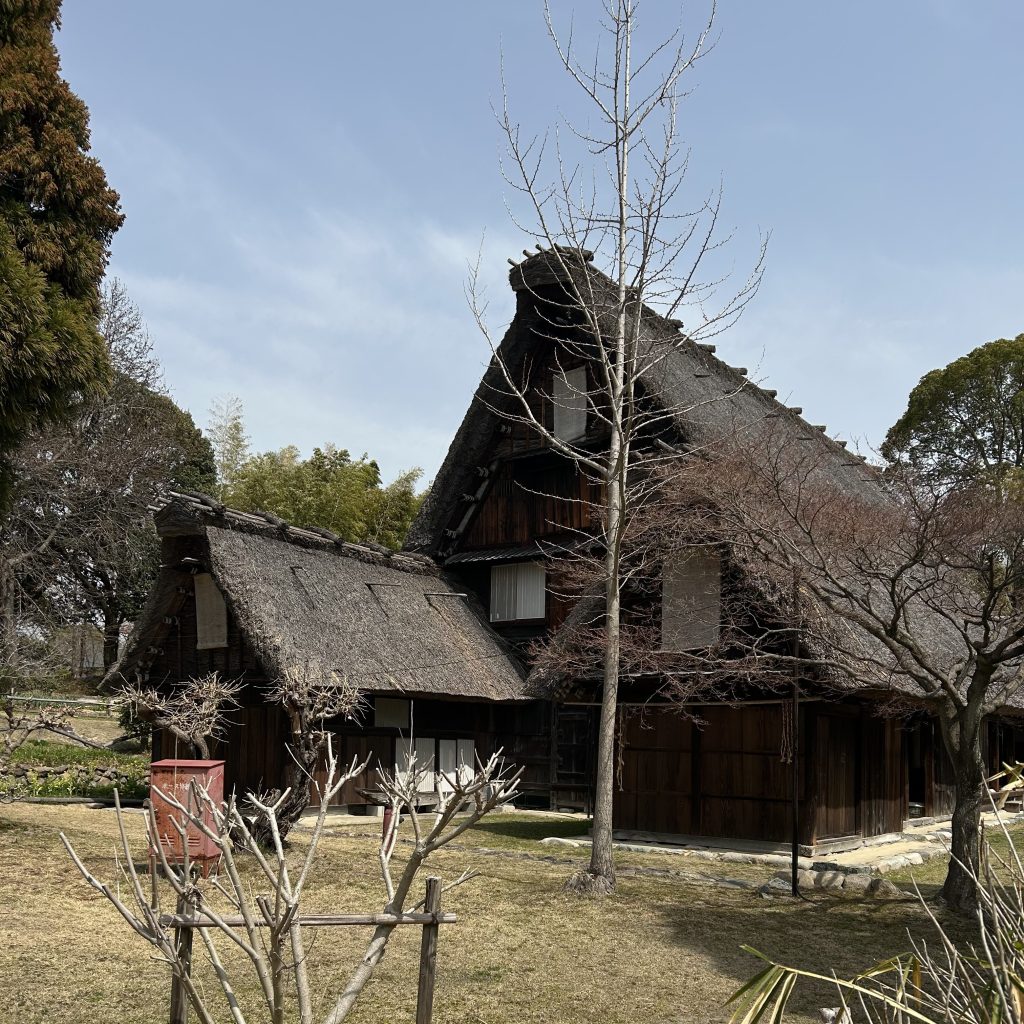
If you’re wondering where you can see Japanese Farmhouses in Japan, I have good news! One of the park’s standout attractions is the Open-Air Museum of Old Japanese Farmhouses. A Japanese Farmhouse is called a ‘Kominka’. Komnika are built in a very distinctive and nostalgic style showcasing the traditional houses of rural Japan.
The unique outdoor museum showcases traditional Komnika from different regions of Japan, reconstructed to transport visitors back in time. This is a rare open-air museum that has relocated and restored representative houses from all over Japan, including a gassho-style house from Shirakawa Village, Ono County, Gifu Prefecture, a curved house from southern Iwate Prefecture, and a raised storehouse from Amami Oshima.
As you wander through the grounds, you’ll get a glimpse of rural life in Japan’s past, complete with thatched roofs, traditional furnishings, and tools used for farming. Be sure to take cash with you as the entrance fee (800-yen for adults) is payable by cash-only. For anyone curious about Japanese culture, this museum is a must-visit. Guided tours and occasional workshops add depth to the experience, making it educational as well as enjoyable.
Take a walk along Bamboo Trails and Gardens
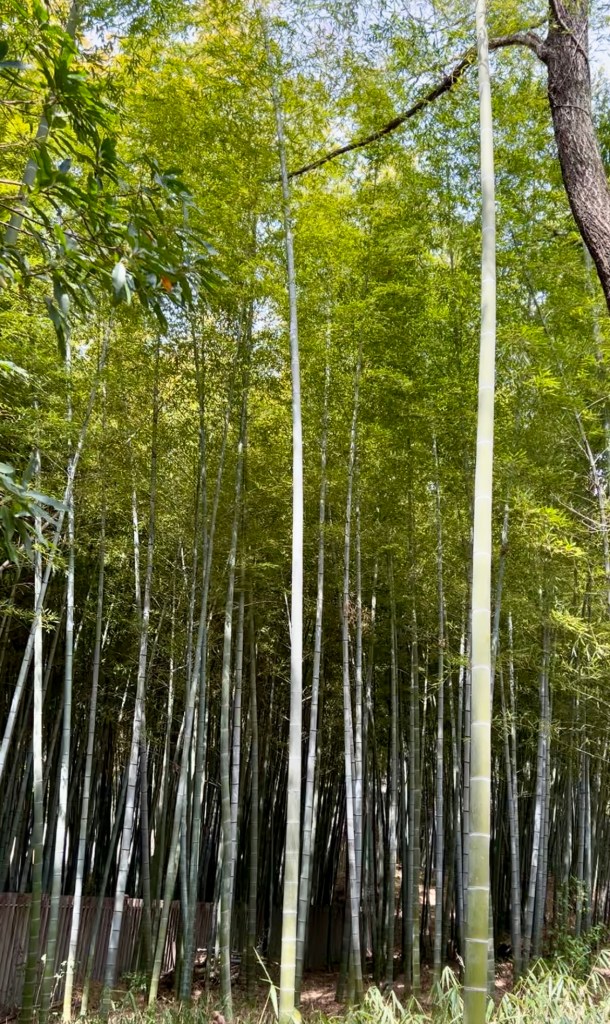
Yes – there are bamboo forests in Osaka! Hattori Ryokuchi Park is home to extensive walking paths that wind through calming bamboo trees around tranquil ponds where you may spot turtles swimming about. I was surprised at the sheer volume of bamboo trees around the Mount Inari side of the park – I would recommend visiting here instead of the Arashiyama Bamboo forest in Kyoto for a much quieter spot to see bamboo trees in Japan. Speaking to a Japanese lady while on my walk, she said that these specific bamboo trees were ones that would be cut down for people to eat.
Bamboo Trees
Visit the Beautiful nearby Botanical Gardens
Just a short walk from the park and you will find Hattori Ryokuchi Toshiryoka Botanical Gardens – this beautiful place is located on the southwest side of Hattori Ryokuchi Park. It contains an arboretum with over 700 species of camellia, a park with 2,500 cherry trees, a bamboo garden with a secret shrine, playgrounds for kids, a huge greenhouse, and much more. It’s open daily (besides Tuesdays) from 10:00 am until 5:00 pm. The best time to come here is during the cherry blossom season at the beginning of April.
Recreation and Family Fun
For those traveling with kids or looking for outdoor activities, the park offers plenty of options. You’ll find open fields for picnics, bbq’s, playgrounds, and even facilities for horseback riding. During weekends and holidays, the park often hosts events such as flea markets, food fairs, and live performances, adding a festive vibe to your visit.
Treats
After exploring the park, take a break at one of the tea houses or cafes within the grounds. Many of them serve matcha (green tea) and traditional Japanese sweets, a perfect way to recharge while soaking in the tranquil atmosphere. If you’re picnicking, consider bringing along some bento boxes from local shops to enjoy under the shade of a tree.
Tips for Your Visit
Timing: Plan your visit in the morning or late afternoon to enjoy cooler temperatures and softer light for photography.
Seasonal Highlights: Check the calendar for seasonal events like cherry blossom viewing in spring or moon-viewing festivals in autumn.
Footwear: Wear comfortable shoes as you’ll likely do a fair amount of walking.
Admission Fees: Entry to the park is free, but some attractions, like the Open-Air Museum, have a small fee. Make sure to take cash!
Is Hattori Ryokuchi Park worth visiting?
Yes! Hattori Ryokuchi Park is a hidden gem that showcases a different side of Osaka and an ideal place to reconnect with nature. Whether you’re a solo traveler seeking tranquility, a family looking for a fun day out, or a couple wanting a romantic stroll, this park delivers a memorable experience. So, next time you’re in Osaka, step away from the city’s hustle and immerse yourself in the natural beauty and cultural richness of Hattori Ryokuchi Park.
Have you visited Hattori Ryokuchi Park? Share your experiences and tips in the comments below!
Don’t go chasing waterfalls, or do! If you’re a person who craves being in nature like me, you’ll be pleased to find out that Minoh Park (also spelled Minoo or Mino) is an easy day-trip to escape the bustle of the city. Minoh Park is located just 30-minutes to the north of Osaka and is famous for its tranquil hiking trails and waterfalls.
Minoh Falls is one of the most iconic waterfalls in Japan. In spring, Minoh Park is an ideal location to view cherry blossoms, while autumn transforms the park into a canvas of warm hues, making it one of the Kansai region’s best spots for koyo (autumn leaf viewing).
How to get to Minoh Falls
To get to Minoh Falls, catch the Hankyu Takarazuka Line from Osaka to Ishibashi-handaimae Station, then transfer to the Hankyu Minoh Line to reach Minoh. This will bring you to Minoh Station (Mino-o) – the park’s entrance.
From Mino-o Station, you can either choose to follow the hiking route, or catch the one-way sightseeing bus directly from the train station. The sightseeing bus will take you to Katsuoji-Temple first, so if you’d like to combine this with your trip to the falls this is a great option.
Travel tip: If the sightseeing bus isn’t operating from Mino-o Station on the day that you visit, you could get the train to Minoh-kayano Station and catch a local bus up to Katsuoji Temple before walking down to see the falls. Or get a taxi!
The Hiking Trail
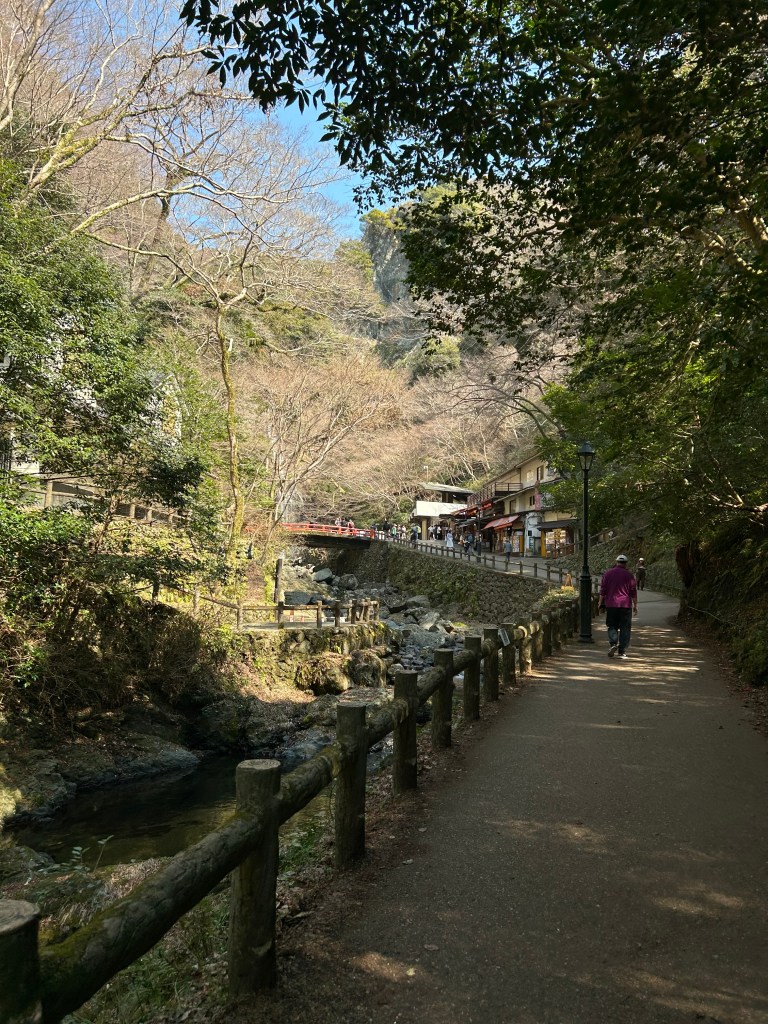
The hiking trail is located just a five-minute walk north of Mino-o Station. You will enter the park via a bridge across the River Minoh where you can then follow signage to get to the falls. Navigating the main route is super easy! The main signposted trail to Minoh Falls is a gentle 2.8-kilometer path that winds through a forest landscape and adjacent to the Minoh River. With a paved route and a gradual incline, it’s accessible for hikers of all levels, and suitable for those with pushchairs or wheelchairs. Yes – this is a hike that you can do easily with children. You’ll also be happy to know that there are also nine public toilets en route.
Along the main route, you have the opportunity to stop by the peaceful Bhuddist temple – Ryuanji Temple. Ryuanji Temple is one of the most peaceful temples that I have visited so far in Osaka. You can also check out Minoh Park Insectarium and local shops selling the famous momiji tempura—crispy deep-fried maple leaves, a must-try snack. Be sure to have cash with you as some vendors only accept cash payment.
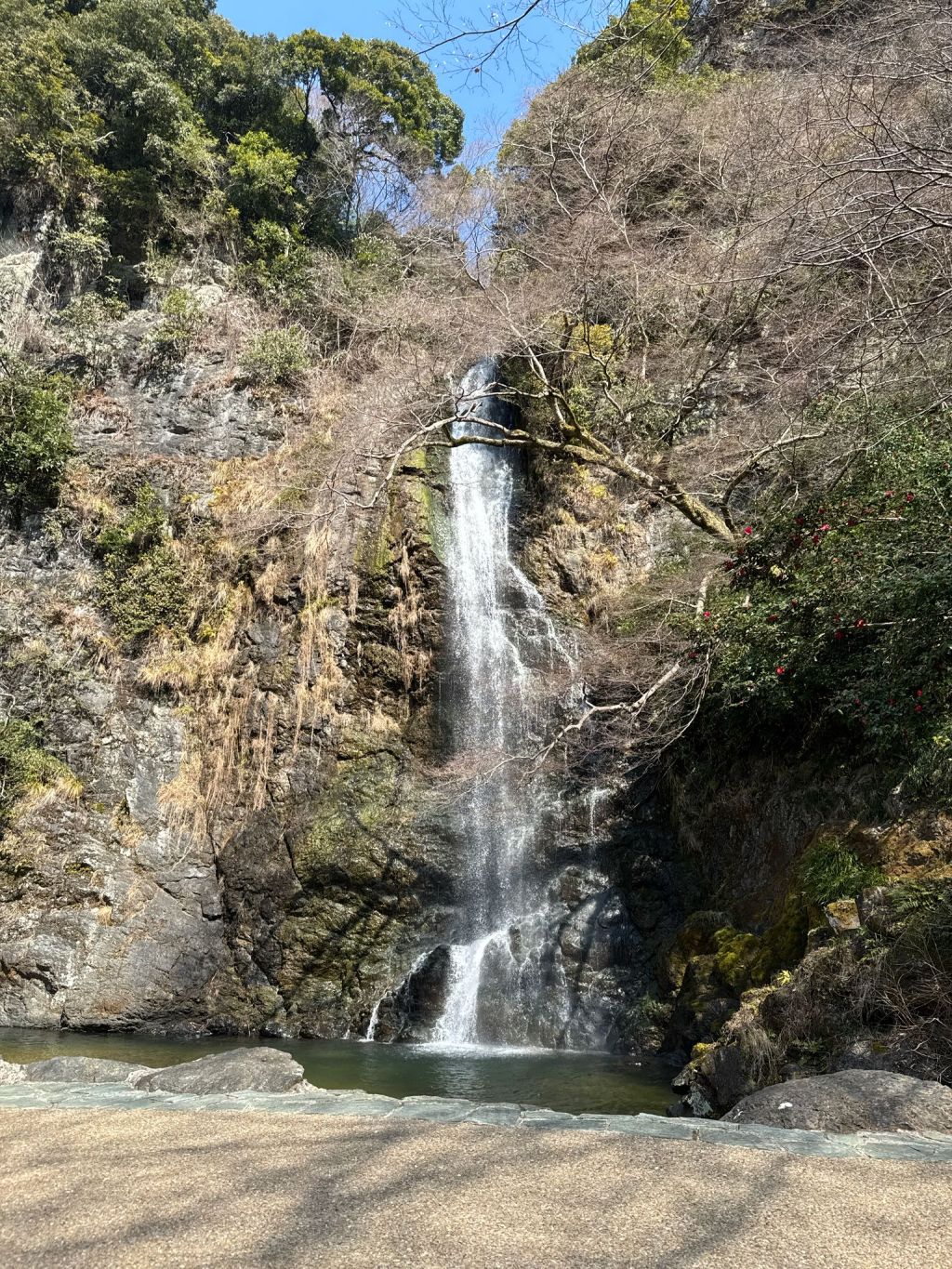
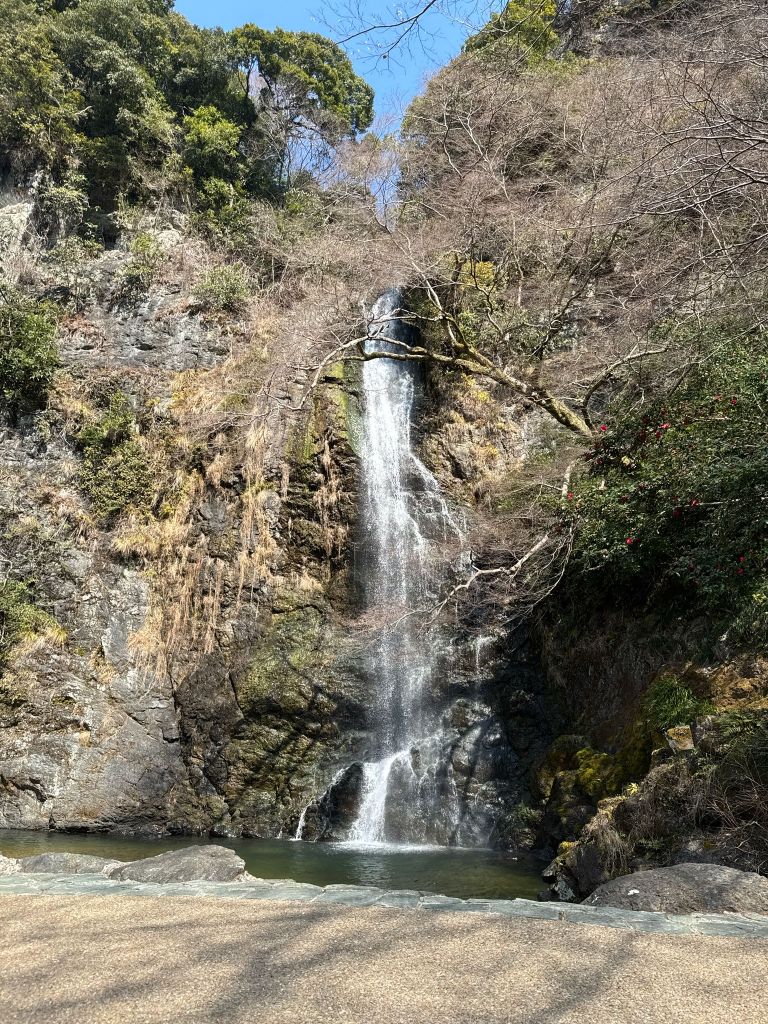
After walking for around 45 minutes, you’ll arrive at Minoh Falls, the 33-meter cascade and prime photo spot. The beauty of the falls changes with the seasons: red and gold leaves in autumn, vibrant greens in summer, and a quietness in winter. Take a moment to soak in the scenery and snap a few photos—this is the perfect spot for a rest.
Minoh Falls
Travel tip: Visit early in the morning or on a weekday if you can to avoid crowds and enjoy the falls in peaceful solitude.
On your route back down, be sure to dip your feet into the free foot bath located along the main walking route to/from the train station to soothe your achey feet.
Climb to the observation deck
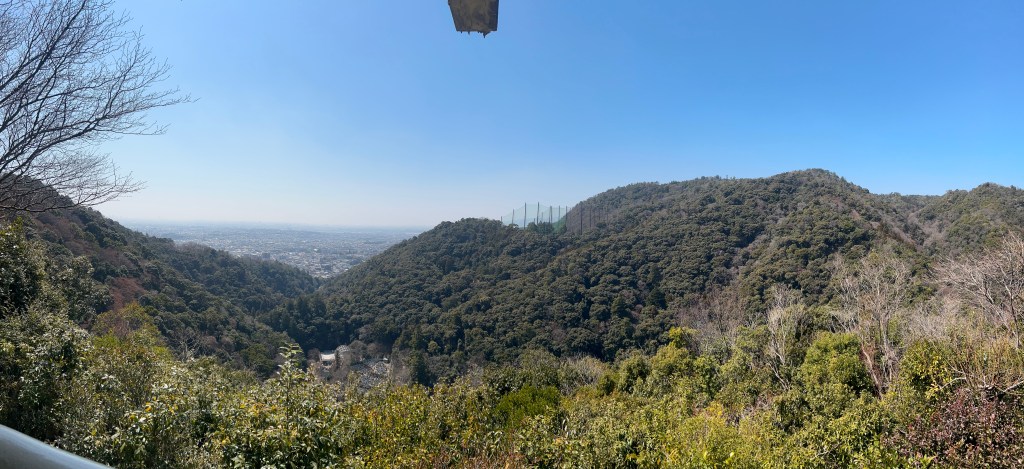
There is an incredible view of Osaka which is signposted during your walk along the main path. The walk to the observation deck is not an easy walk up and you will need to climb a fair amount of stairs to get to it. I climbed to the deck after visiting the falls and I’m glad that I did. Check out the view below!
View from the observation deck
Travel tip: Climb to the viewing point after viewing the falls, if you do it before, your legs may be tired.
Feeling adventurous?
If you want to stray off the main hiking trail and delve further into the forest, there are a few options available to you. The two main options involve making your way north past the falls to the Visitor Centre before deciding to go either:
North to reach the Minoogawa Dam where you will be greeted with scenic views of the weir. If you head north, you could also extend your hike to include a visit to Katsuoji-temple. If you choose to do this, you will add an additional 45-minutes of walking uphill, but then the reward is that you can get a local bus back down from the temple directly to the train station!
South via forest paths to see Saigaharaike Pond. If you choose to enter the forest routes, keep an eye out for Japanese macaques and do not feed them; these curious monkeys sometimes make an appearance.
Final thoughts
Your day exploring Minoh Park can be as long as you want it to be. It is suitable for all ages and abilities. Minoh Park and Falls provides both a kid friendly, easy hike and an opportunity for a walking adventure through the forest. I highly recommend visiting for a day-trip, you can definitely visit Minoh Park and Falls in one-day. Happy hiking! Let me know what you get up to in the comments when you visit.
Exploring Japan’s Heritage and Scenic Beauty from Osaka
Osaka makes an ideal base for day trips to some of Japan’s most enchanting destinations. Two of my absolute favourite spots for a one-day (or two-day!) adventure are Nara, home to ancient temples and friendly deer, and Uji, renowned for its matcha and picturesque riverside scenery.
This itinerary combines history, nature, and relaxation, offering a day packed with unforgettable experiences. Whether you’re looking to meet Nara’s famous deer, marvel at ancient temples, or enjoy a tranquil boat ride or hike along the Uji River, this guide has everything you need, including travel tips, costs, and insider recommendations. If you’ve been asking yourself ‘Can I visit Nara and Uji in one day?’, I’m here to tell you yes, you absolutely can.
Feed Sacred Deer in Nara
Start your day early to make the most of your visit. Catch the Kintetsu Limited Express from Osaka-Namba Station to Kintetsu-Nara Station. This 40-minute journey costs ¥1,070 (£6) one way and offers a faster and more convenient option for reaching Nara. Alternatively, take the JR Yamatoji Line from Osaka Station to Nara Station, which takes about 50 minutes and costs ¥800 (£4.50).
Nara Park is a sprawling 502-hectare area that is home to over 1,000 free-roaming Sika deer. These deer are considered sacred messengers of the gods in Shinto belief, and they are now a symbol of Nara. To get to Nara Park from the train station, I recommend walking approximately 20 minutes along Sanjo dori Street which has a variety of souvenir and convenience stores en route. A chance to experience the famous mochi pounding at Nakatanidou en route is another reason to walk.
Alternatively, you can hop on a local bus with unlimited rides throughout the day for just ¥600 (£3) and ¥300 (£1.50) for children. There are three pass options to choose from, each covering different areas, check out the map areas here. The one-day pass is best if you’re tight on time and want to see the main sights of the park.
If you would like to spend more time in Nara, you can also book a bus tour in advance using Nara Kotsu Bus. They offer English speaking tours of the park, with visits to temples, shrines and Mt. Wakakusa for ¥11,000 (£57).
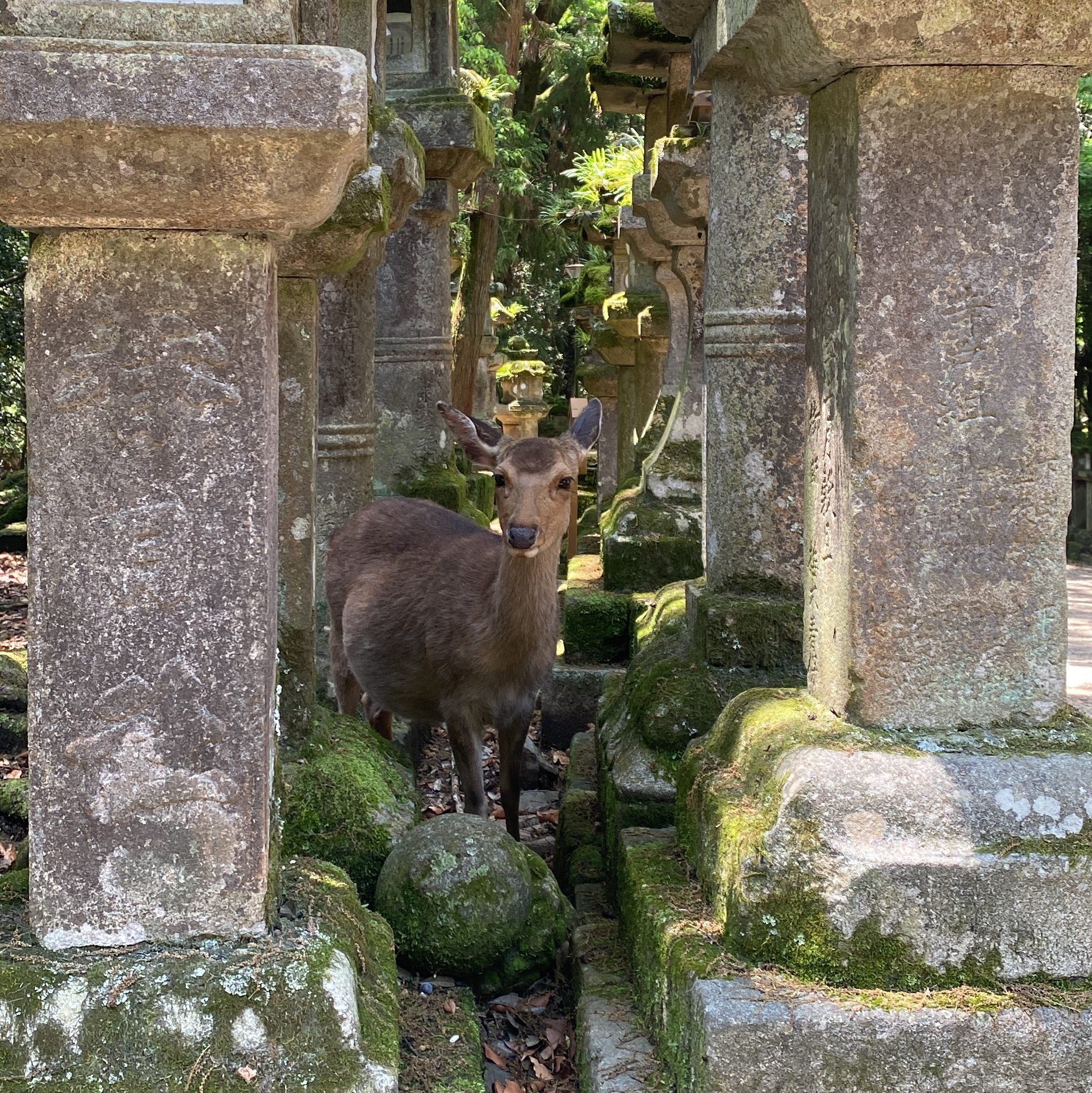
Once in the park, you will spot vendors selling crackers at stalls for ¥200 (£1). As delicious as they look, these are not for you to eat… they are shika senbei (deer crackers) which you offer to the deers as snacks. Be prepared—the deer will bow politely to you in exchange for them, but some can be quite persistent, so keep your own snacks secure! If a deer pesters you, hold up your hands to show them that you have no food to offer & they will then walk away.
Next, visit Todai-ji Temple, one of Japan’s most famous landmarks and a UNESCO World Heritage Site. The temple is home to the Great Buddha (Daibutsu), a 15-metre-tall bronze statue housed in the world’s largest wooden building, the Daibutsuden. Entry costs ¥600 (£3.50) for adults. Take your time to admire the intricate architecture and the peaceful atmosphere of the temple grounds.
After visiting Todai-ji, walk through the park to reach Kasuga Taisha Shrine, another UNESCO site. This Shinto shrine is renowned for its hundreds of stone and bronze lanterns, which create a mystical atmosphere. Entry to the inner area of the shrine costs ¥500 (£3), but you can also enjoy the scenic outer grounds for free.
For those who enjoy hiking, the nearby Mount Wakakusa offers a short climb with panoramic views of Nara and the surrounding countryside.
Lunch in Nara
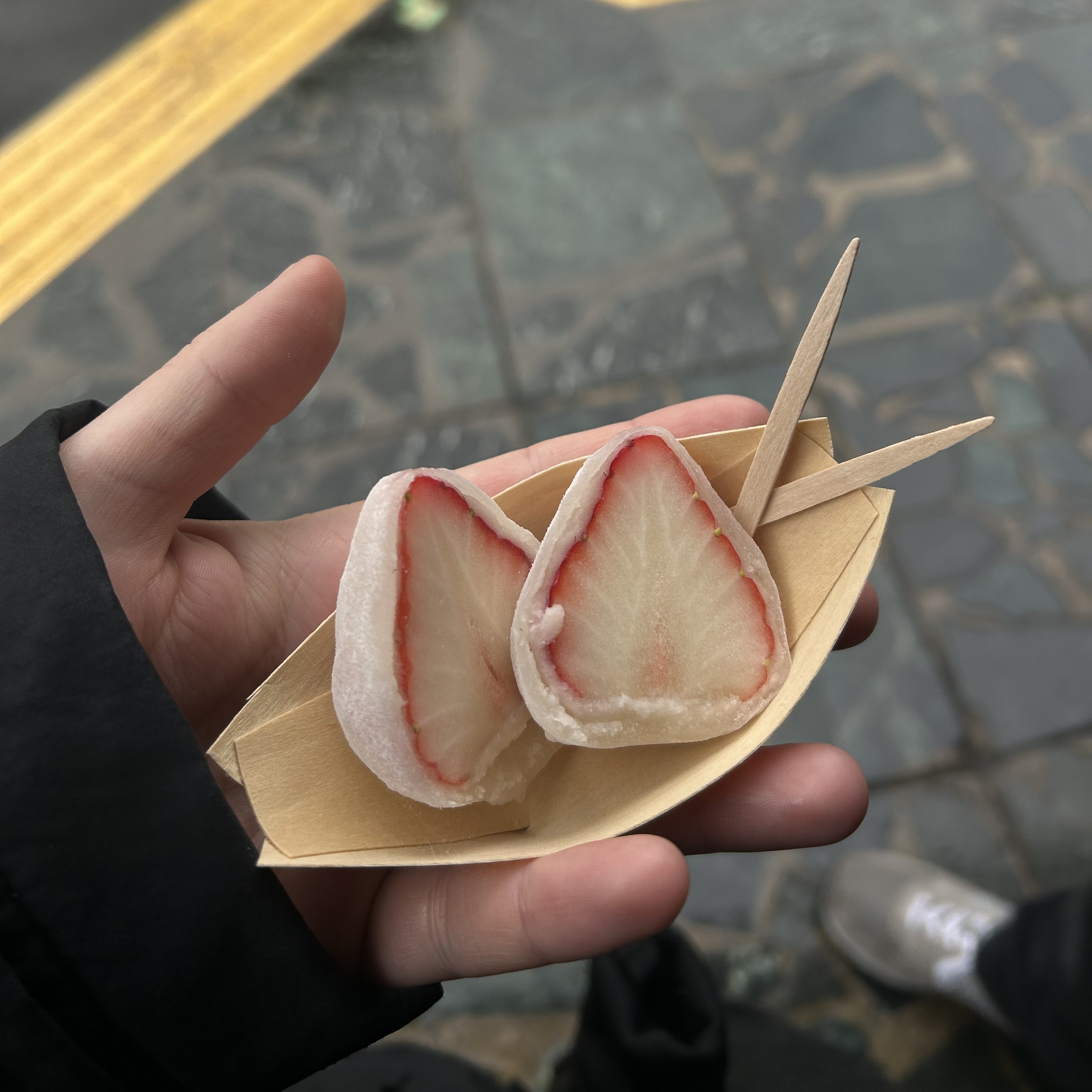
Nara has plenty of excellent options if you’re feeling pekish. Try kaki-no-ha sushi, a type of pressed sushi wrapped in persimmon leaves, or enjoy a bowl of kitsune udon, a noodle soup topped with sweetened fried tofu. Restaurants around Nara Park often offer set meals for ¥1,000–¥1,500 (£6–£8). For a quick bite, grab some street food from the stalls near the park, including freshly grilled mochi and taiyaki (fish-shaped pastries filled with red bean paste). For something sweet, a personal favourite of mine is the mochi fruit from Ben Zai Ten, located halfway along Sanjo Dori Street on return to the station. Here you can try the soft and delicious, vegan fruit mochi. The strawberry is my favourite!
Next Stop – Uji!
Uji is closer to Nara than you may think. From Nara, take the JR Nara Line to Uji Station. This 40-minute ride costs ¥620 (£3.50). Uji is a dramatic riverside town steeped in history and famous for producing Japan’s finest matcha green tea. If you were looking for a place to try it, Uji is the perfect location to do so.
From the station, take a leisurely stroll down Omotesando Street, Uji’s main shopping and dining area. Here, you’ll find numerous tea houses and shops where you can sample and purchase high-quality matcha products. Treat yourself to matcha ice cream, cakes, or even matcha soba noodles. Many shops offer free tastings of green tea, so you can learn about the different grades and flavours.
For a more immersive experience, book a tea ceremony session at one of the local tea houses, where you can learn about the traditional preparation and significance of matcha. Prices for matcha treats range from ¥300–¥800 (£1.50–£4.50), while a tea ceremony may cost around ¥1,500 (£8.50).
At the end of Omotesando Street, you will be near the must visit Byodoin Temple, a stunning example of Buddhist architecture and another UNESCO World Heritage Site. The temple’s Phoenix Hall is so iconic that it’s featured on the back of the ¥10 coin. Admission costs ¥600 (£3.50) and includes access to a museum displaying treasures from the temple’s history.
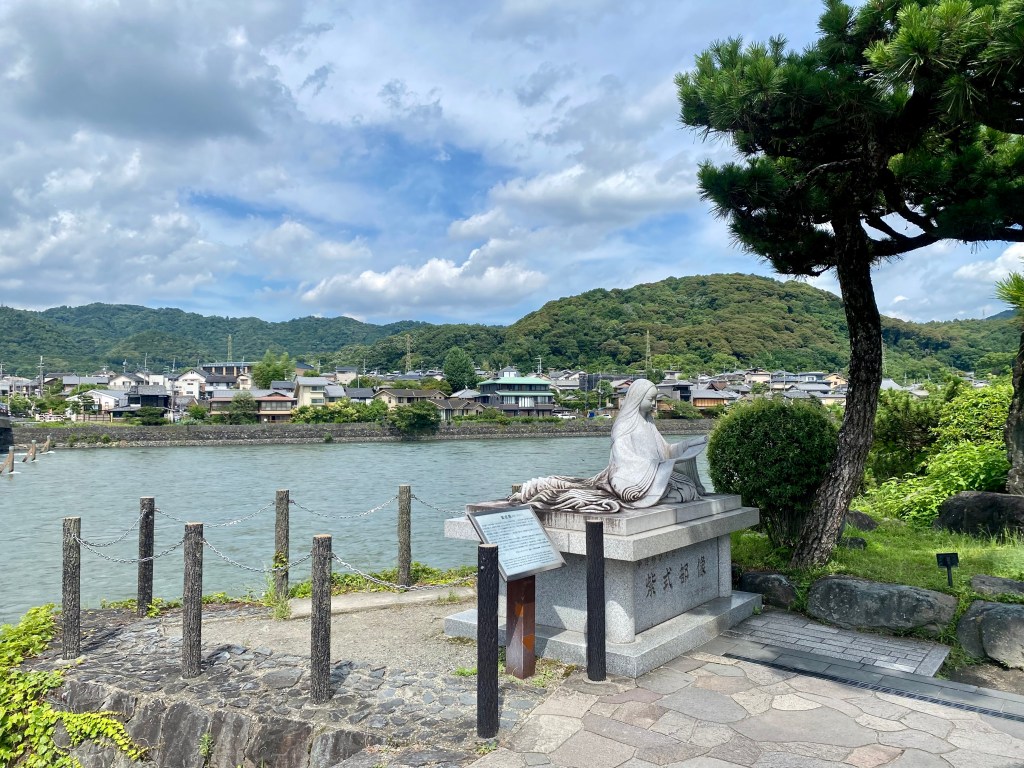
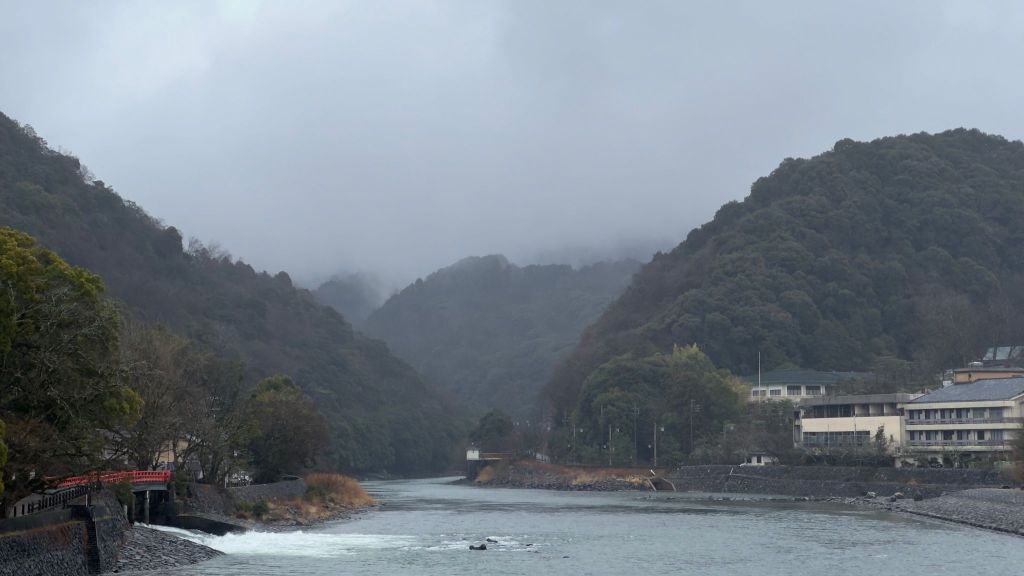
Start to wind down your day with a serene boat ride along the Uji River. These rides provide stunning views of the river’s lush surroundings, historic bridges, and traditional houses. Tickets for a 30-minute boat ride cost approximately ¥1,500 (£8.50) per person. Uji is beautiful regardless of the weather. In summer it has a serene, calming atmosphere while in winter the mountains make for a dramatic landscape as shown in the photos below.
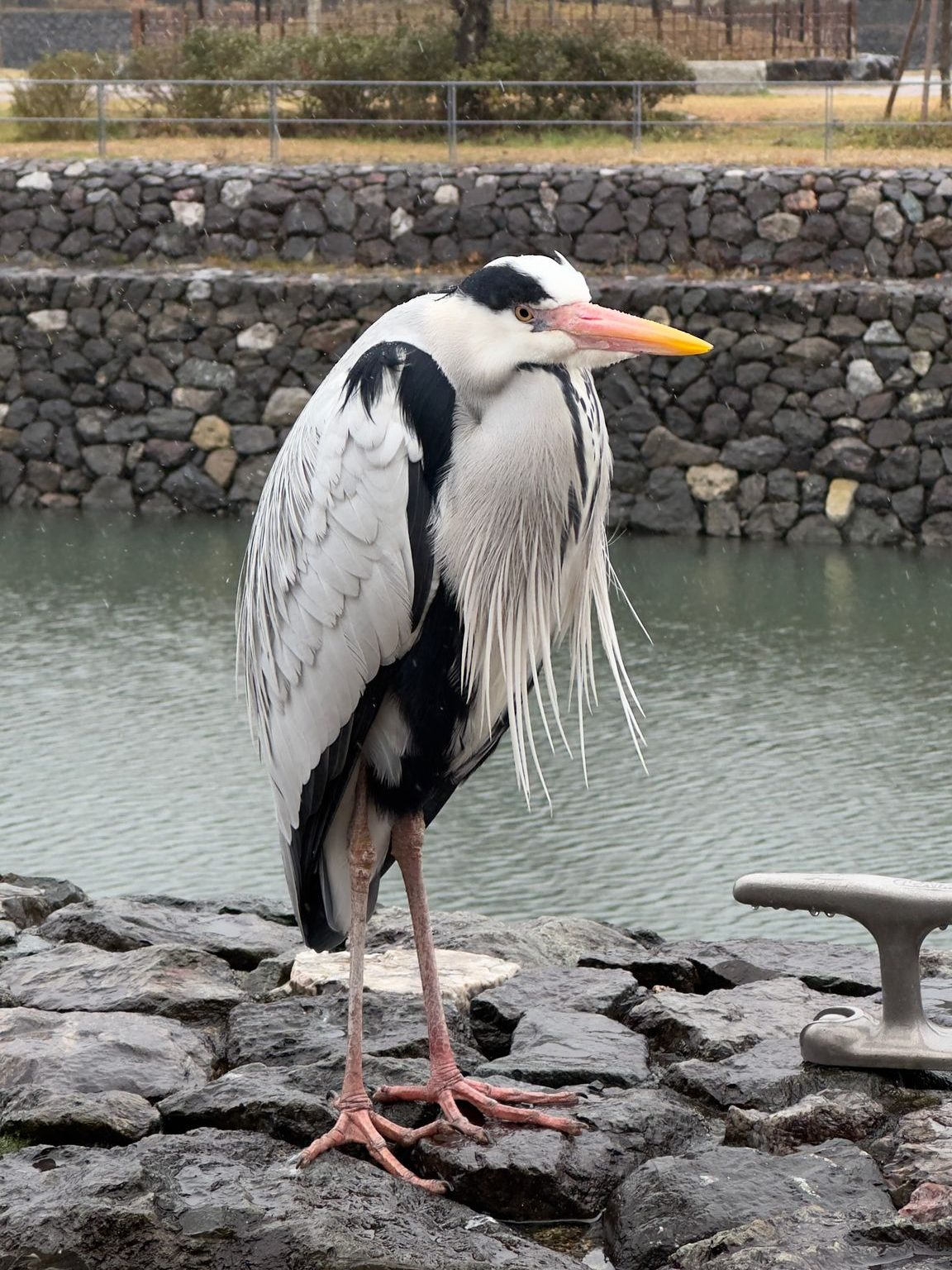
The beautiful Uji river on a hot summers day (July 2024)Dramatic view of the Uji River and Mountains taken from the Asigiri Bridge (March 2025)
There is majestic wildlife in Uji. Grey Herons can be spotted all year round and during the summer months (late June to mid-September), you may be lucky enough to witness ukai, a centuries-old method of cormorant fishing. This traditional fishing technique, performed at night using trained birds, is a fascinating spectacle unique to Uji. The herons that we saw reminded us of Hayao Miyazaki’s 2023 film,The Boy and the Heron.
If you prefer to stay on land, enjoy a riverside walk along the Asigiri Bridge and consider a visit the Tale of Genji Museum, which celebrates Uji’s connection to Japan’s famous literary classic, The Tale of Genji. Alternatively, or if you still have time, you can also visit Daikichiyama fuchi Park and its observation deck to enjoy the sunset before heading back to Osaka.
From Uji Station, take the JR Nara Line back to Osaka. The journey takes about 50 minutes and costs ¥800 (£4.50). Aim to catch a train by 7:00 PM to arrive in Osaka in time to enjoy a relaxed evening in the city or explore its lively dining scene.
Was visiting Nara and Uji worth it?
Perfect for nature lovers, Nara and Uji are must visit destinations in my opinion. Each providing unique and serene landscapes within easy reach of Osaka, they take you away from the concrete jungle and allow you to reconnect with nature.
Trip extension idea: If you have more than a day, or don’t need to head back toward Osaka, I recommend extend your adventures by taking the train from Uji toward Kyoto, being sure to stop at the famous and popular Fushimi Inari along the way. Within this itinerary you could also consider stay overnight in Nara at one of the local deer hostels located in the heart of the park for an immersive experience. We recently stayed at The Deer Park Inn for a very reasonable price and deer came to greet us in the garden!
Hiroshima today is a symbol of hope and resilience. It has become a global advocate for peace and a place of reflection and learning. When I visited Hiroshima with my husband, we spent a couple of days exploring its history and beauty, including a trip to the stunning Miyajima Island nearby. This two-day itinerary offers a balance between the city’s poignant history and the natural charm of its surroundings.
Day 1: Exploring Hiroshima’s History
Morning Catch the Shinkansen from Osaka to Hiroshima. The fastest train, the Nozomi, costs around ¥10,570 (£58) one way and takes about 1 hour 30 minutes. If you have a Japan Rail Pass, you’ll need to take the slightly slower Hikari or Sakura trains, as the Nozomi is not covered.
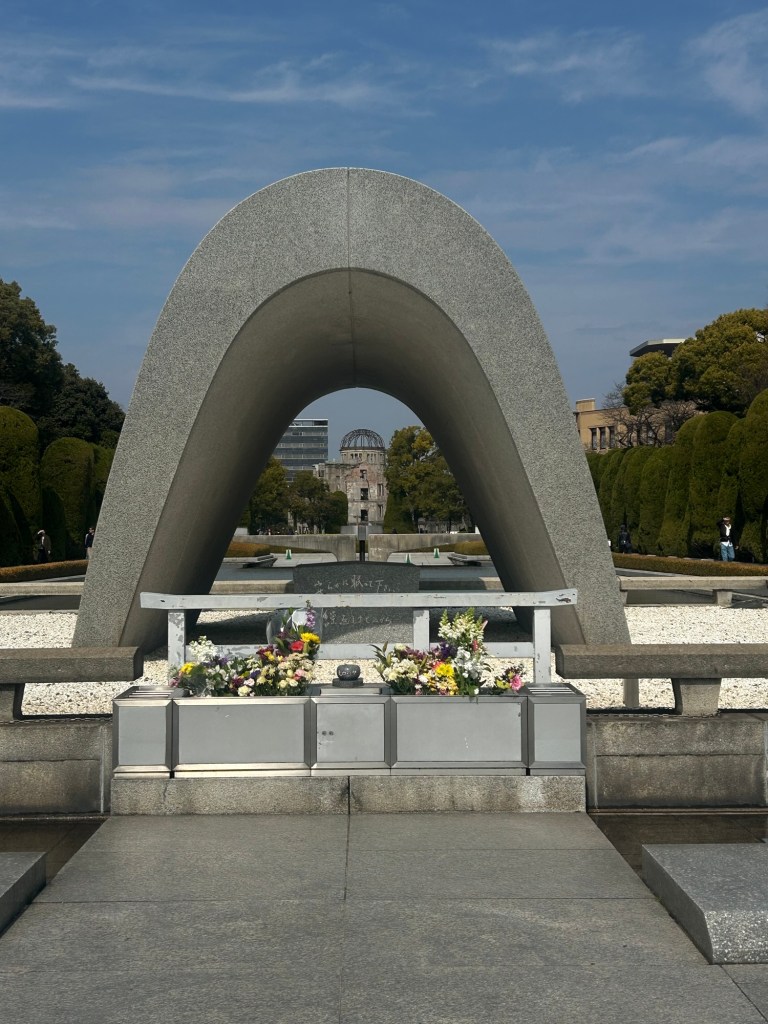
Once in Hiroshima, head straight to the Hiroshima Peace Memorial Park, a place of reflection and remembrance. Begin at the Peace Memorial Museum, which provides a sobering and detailed account of the events of 6th August 1945. Then take a quiet walk to reflect through the park and visit key landmarks, including the Atomic Bomb Dome, the Children’s Peace Monument, and the Cenotaph for the A-Bomb Victims.
Finally, stop at the Hiroshima National Peace Memorial Hall for the Atomic Bomb Victims, a tranquil space dedicated to honouring those who lost their lives.
Lunch By midday, recharge with a plate of Hiroshima-style okonomiyaki, a delicious savoury pancake layered with noodles, seafood, and vegetables. Two popular spots near the park are Okonomimura and Nagata-ya. Expect to spend around ¥1,000–¥1,500 (£6–£8) per person and make sure to bring cash with you as some locations don’t accept card payments.
Afternoon After lunch, make your way to Hiroshima Castle, a reconstructed samurai stronghold surrounded by a peaceful moat and park. Climb to the top of the castle for panoramic views of the city and learn about Hiroshima’s history before the war.
Next, stroll to Shukkeien Garden, a traditional Japanese garden with scenic ponds, stone bridges, and seasonal flowers. This is an ideal spot to relax and reflect after a morning of learning about the city’s past. Entry is just ¥260 (£1.50).
Evening End your day with dinner in downtown Hiroshima. Try the region’s famous oysters at a local izakaya, or explore the lively Hondori Shopping Arcade for a mix of restaurants and boutiques. If oysters aren’t your thing, Kanayama Base has a cosy atmosphere, welcoming staff and delicious food (& beer!). For a quieter evening, take a walk along Peace Boulevard, where the riverside atmosphere is particularly charming.
Stay overnight near Hiroshima Station for easy access to the next day’s adventure. We opted for En Hotel which was affordable at £48 a night, close to the station and had all we needed!
Day 2: Exploring Miyajima Island
Spend your second day exploring the natural beauty and cultural treasures of Miyajima Island. The Global Peace Summit is often held here.
Morning Set off early by taking the JR Sanyo Line from Hiroshima Station to Miyajimaguchi Station (30 minutes, ¥420/£2.30 one way), followed by a short 10-minute ferry ride to Miyajima. The ferry is included in the Japan Rail Pass, or costs ¥180 (£1) each way without it.
As you approach the island, you’ll see the iconic floating torii gate of Itsukushima Shrine, one of Japan’s most famous views. Spend your morning wandering through the shrine, exploring its beautiful wooden structures and marvelling at the torii gate from various vantage points. At low tide, you can even walk out to the base of the gate for a closer look.
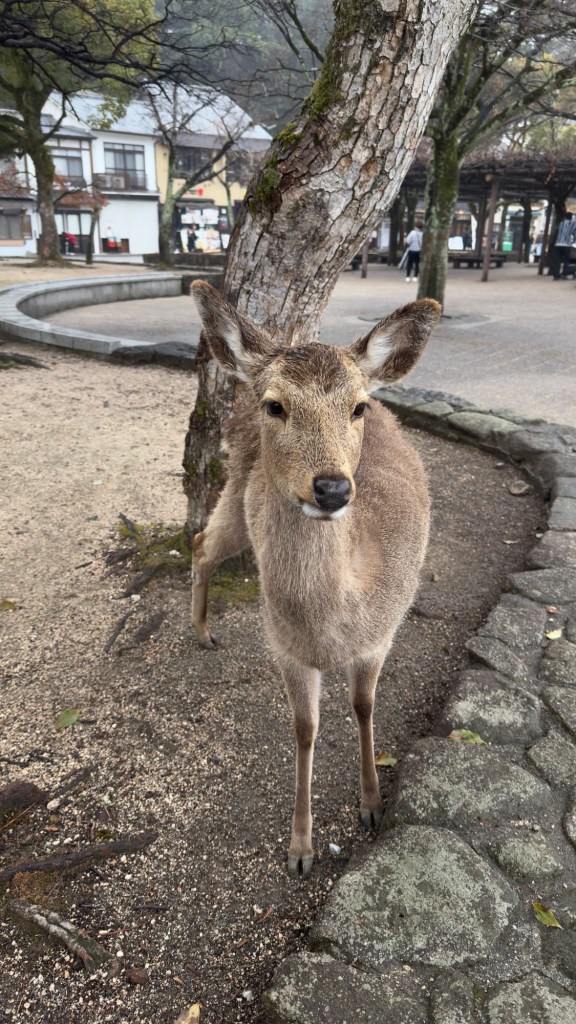
Wild Deer: Throughout the island, you’ll encounter Miyajima’s free-roaming deer, considered sacred in Shinto belief. These friendly creatures will happily approach you for snacks, so keep an eye on your belongings!
Fog on approach to Miyajima (view from Ferry)A wild deer on the island
Lunch Sample Miyajima’s street food, including grilled oysters, freshly skewered fish, and momiji manju, a sweet treat shaped like a maple leaf. Omotesando Shopping Street is a great spot for a relaxed lunch and souvenir shopping. Expect to spend around ¥1,000–¥1,500 (£6–£8).
Afternoon Adventure awaits on Mount Misen, the island’s highest peak. You can hike up (around 90 minutes each way) or take the Miyajima Ropeway (round trip ¥2,200/£12) for spectacular views of the Seto Inland Sea. At the summit, visit the Reikado Hall, where the “eternal flame” has been burning for over 1,200 years, and enjoy the breathtaking panoramas.
After descending, spend a little more time exploring the island’s temples, shops, or quiet coastal paths before returning to the mainland.
Evening Head back to Hiroshima by ferry and train, then catch the Shinkansen back to Osaka. Aim to leave Hiroshima by 6:00 PM to arrive in Osaka by 7:30 PM.
This two-day itinerary offers a thoughtful mix of history, culture, and natural beauty, leaving you with a profound appreciation for Hiroshima’s resilience and Miyajima’s timeless charm. I hope that you find it useful and that it inspires you to go on your trip!



 Visit Osaka