Tag: Hiking

  • Kisen Alps Hike

    Kisen Alps Hike

    When you think of Osaka, hiking isn’t the first to spring to mind. Despite this, Osaka is great for hiking if you know where to go. If you’re seeking a hike just outside of the city, and within easy reach by train, the Kisen Alps are a hidden gem. The Kisen Alps are a series of rolling peaks located on the Osaka-Wakayama prefectural border. Despite their close proximity to the big city, the mountains are relatively unspoiled and completely natural, without a single cedar tree in sight.

    Access

    To get to the Kisen Apls, from Tennoji station (天王時駅) take a train on the JR Wakayama line and get off at Yamanakadani (山中渓駅). An express train should take about 45 minutes or so. Please note that this is an unmanned station.

    Level of difficulty: 2 out of 5 (elevation change ~200m). The duration of the hike can last between 4-6hrs and cover a distance of 12.3km.

    The Adventure Begins

    Go through the unmanned ticket gates, and turn right on the small paved road in front of the station. Turn right at the next street, where you’ll cross a small river and the railroad tracks. Follow the signs to Kisen Alps (記泉アルプス), turning left at the sign, and then right up a small dirt road. This road eventually becomes the trailhead, as you pass through a very funky entrance gate. The path climbs rather steeply at first, paralleling a large expressway. The traffic noise is pretty loud, but you’ll soon leave that all behind and enter a magical wonderland of beautiful flora. I have no idea why this area was spared of the post-war deforestation, but I’m so happy it was.

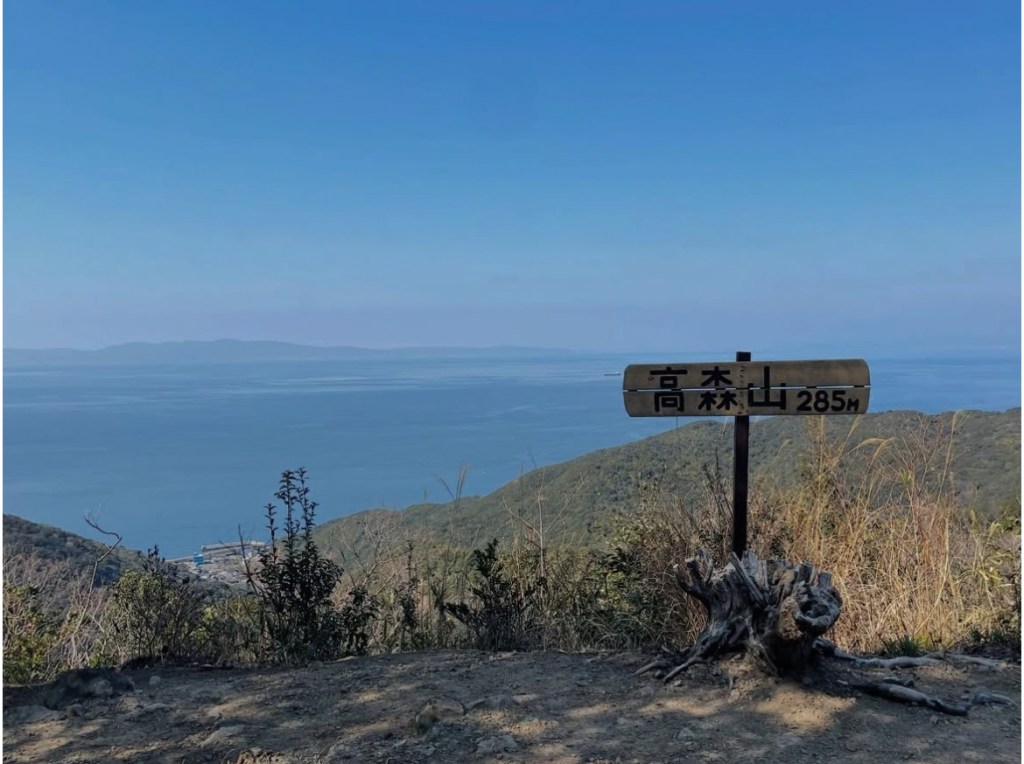
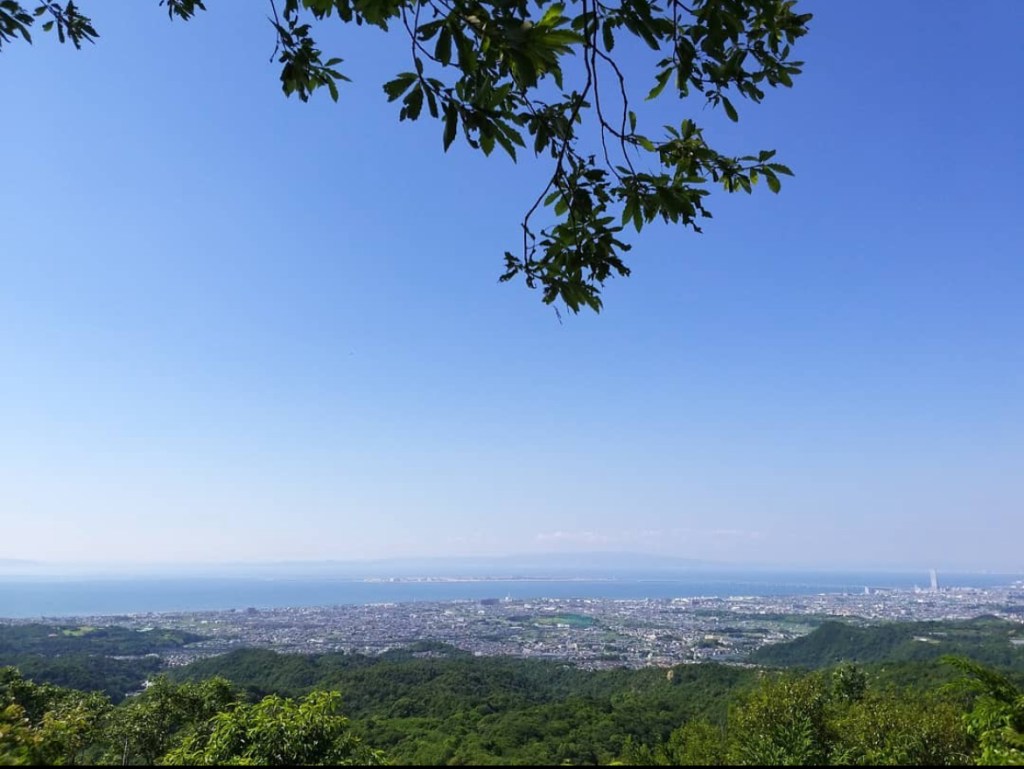
    As you hike, imagine how beautiful this country must’ve been hundreds of years ago, when every single forest looked just like this! Keep your eyes out for snakes and wild boar, as there are quite a few in this area. After about 30 minutes of climbing, you’ll reach the ridgeline and a trail junction. Head to the right for about 20 meters to reach a wonderful clearing with excellent views of Kansai airport and Osaka bay. Take some photos and head back to the junction.
    The Ridgeline and Unzenbou Peak

    The trail follows the entire mountain ridge, and your target is the high point called Unzenbou (雲仙峰). There’s a considerable amount of up and down between here and the top, but it’s not too difficult. There are lots of places to take breaks and enjoy the outstanding scenery. You should reach the peak in about 2 hours or so. Just below the top, you’ll come across a 3-way junction with beautiful bilingual signposts. Yep, you’ve officially entered Wakayama prefecture, where they seem to have more money in their budget for trail maintenance. Continue on to the top of Unzenbou. There’s not much of a view from here, so after taking a break continue down the other side. In about 10 minutes, you’ll come across yet another trail junction, with magnificent views of Wakayama city and the Pacific Ocean. Turn left at the junction and you’ll reach a well-maintained public park with lots of benches and a gazebo. This is a great place for a picnic or a nap on a pleasant day.

    The Final Stretch

    From here, trails split off in all directions, and you’ve got lots of options. I’d recommend following the signs to Kii station (紀伊駅). It should take about 90 minutes or so from the park to the station, and there are lots of different trails you have to take, so follow the signs carefully. Just before the trail dumps you out on a road, you’ll pass through a bamboo forest that is hauntingly beautiful at dusk. From Kii station, you can catch a JR train back to Tennoji.

    When to go

    This hike can be done year round, but I’ve been told that autumn is the best time to see the forests in all their glory. If you’re wondering where to hike around Osaka – put Kisen Alps on your list as one of the most scenic hikes in Osaka, Japan.

    Have you been on this hike? let me know how you found it in the comments!
  • Minoh Falls Hike: An Easy Day Trip from Osaka

    Minoh Falls Hike: An Easy Day Trip from Osaka

    Don’t go chasing waterfalls, or do! If you’re a person who craves being in nature like me, you’ll be pleased to find out that Minoh Park (also spelled Minoo or Mino) is an easy day-trip to escape the bustle of the city. Minoh Park is located just 30-minutes to the north of Osaka and is famous for its tranquil hiking trails and waterfalls.

    Minoh Falls is one of the most iconic waterfalls in Japan. In spring, Minoh Park is an ideal location to view cherry blossoms, while autumn transforms the park into a canvas of warm hues, making it one of the Kansai region’s best spots for koyo (autumn leaf viewing).

    How to get to Minoh Falls

    To get to Minoh Falls, catch the Hankyu Takarazuka Line from Osaka to Ishibashi-handaimae Station, then transfer to the Hankyu Minoh Line to reach Minoh. This will bring you to Minoh Station (Mino-o) – the park’s entrance.

    From Mino-o Station, you can either choose to follow the hiking route, or catch the one-way sightseeing bus directly from the train station. The sightseeing bus will take you to Katsuoji-Temple first, so if you’d like to combine this with your trip to the falls this is a great option.

    Travel tip: If the sightseeing bus isn’t operating from Mino-o Station on the day that you visit, you could get the train to Minoh-kayano Station and catch a local bus up to Katsuoji Temple before walking down to see the falls. Or get a taxi!

    The Hiking Trail

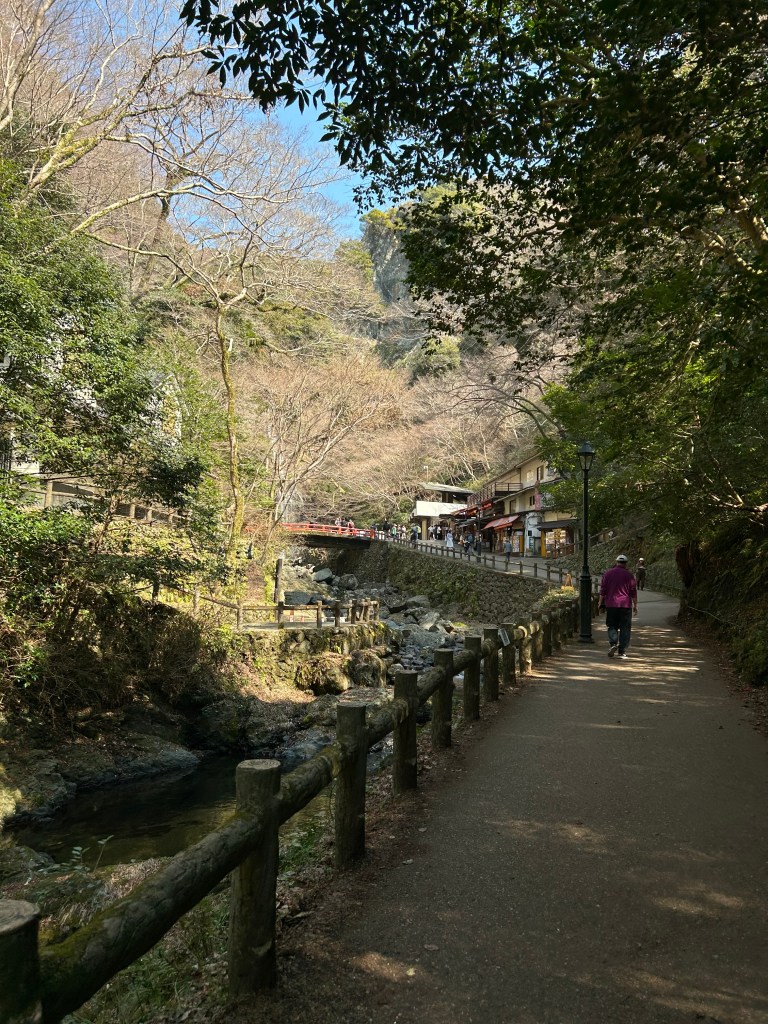
    The hiking trail is located just a five-minute walk north of Mino-o Station. You will enter the park via a bridge across the River Minoh where you can then follow signage to get to the falls. Navigating the main route is super easy! The main signposted trail to Minoh Falls is a gentle 2.8-kilometer path that winds through a forest landscape and adjacent to the Minoh River. With a paved route and a gradual incline, it’s accessible for hikers of all levels, and suitable for those with pushchairs or wheelchairs. Yes – this is a hike that you can do easily with children. You’ll also be happy to know that there are also nine public toilets en route.

    Along the main route, you have the opportunity to stop by the peaceful Bhuddist temple – Ryuanji Temple. Ryuanji Temple is one of the most peaceful temples that I have visited so far in Osaka. You can also check out Minoh Park Insectarium and local shops selling the famous momiji tempura—crispy deep-fried maple leaves, a must-try snack. Be sure to have cash with you as some vendors only accept cash payment.

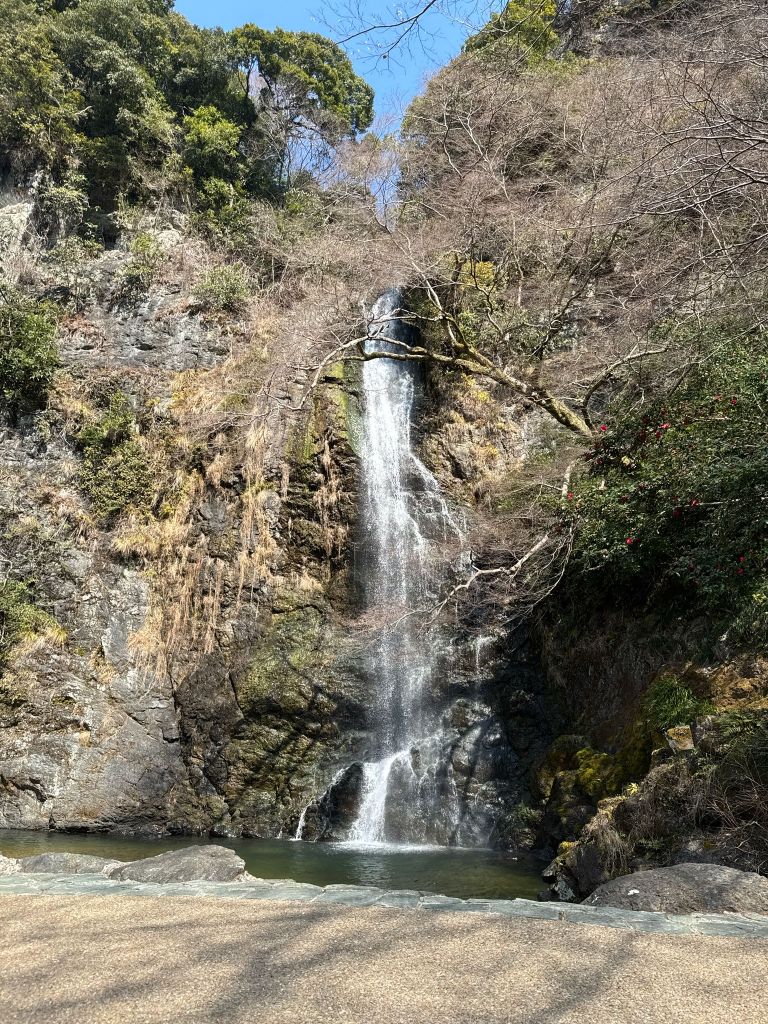
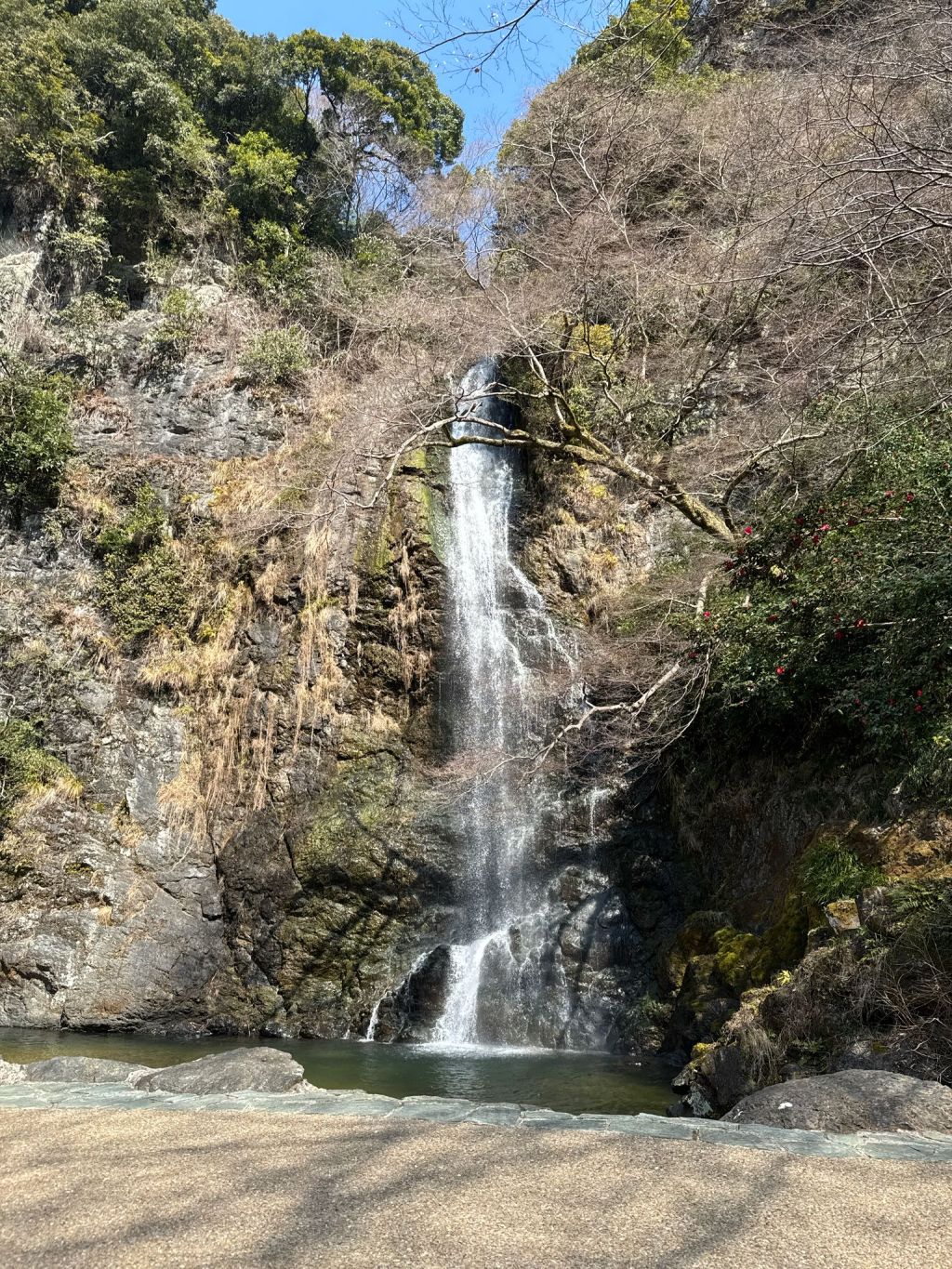
    After walking for around 45 minutes, you’ll arrive at Minoh Falls, the 33-meter cascade and prime photo spot. The beauty of the falls changes with the seasons: red and gold leaves in autumn, vibrant greens in summer, and a quietness in winter. Take a moment to soak in the scenery and snap a few photos—this is the perfect spot for a rest.

    Minoh Falls

    Travel tip: Visit early in the morning or on a weekday if you can to avoid crowds and enjoy the falls in peaceful solitude.

    On your route back down, be sure to dip your feet into the free foot bath located along the main walking route to/from the train station to soothe your achey feet.

    Climb to the observation deck

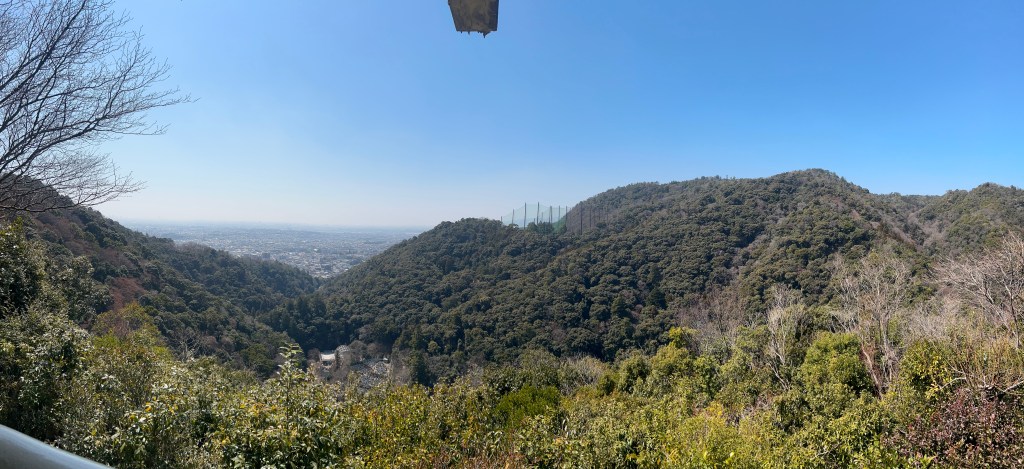
    There is an incredible view of Osaka which is signposted during your walk along the main path. The walk to the observation deck is not an easy walk up and you will need to climb a fair amount of stairs to get to it. I climbed to the deck after visiting the falls and I’m glad that I did. Check out the view below!

    View from the observation deck

    Travel tip: Climb to the viewing point after viewing the falls, if you do it before, your legs may be tired.

    Feeling adventurous?

    If you want to stray off the main hiking trail and delve further into the forest, there are a few options available to you. The two main options involve making your way north past the falls to the Visitor Centre before deciding to go either:

    • North to reach the Minoogawa Dam where you will be greeted with scenic views of the weir. If you head north, you could also extend your hike to include a visit to Katsuoji-temple. If you choose to do this, you will add an additional 45-minutes of walking uphill, but then the reward is that you can get a local bus back down from the temple directly to the train station!
    • South via forest paths to see Saigaharaike Pond. If you choose to enter the forest routes, keep an eye out for Japanese macaques and do not feed them; these curious monkeys sometimes make an appearance.

    Final thoughts

    Your day exploring Minoh Park can be as long as you want it to be. It is suitable for all ages and abilities. Minoh Park and Falls provides both a kid friendly, easy hike and an opportunity for a walking adventure through the forest. I highly recommend visiting for a day-trip, you can definitely visit Minoh Park and Falls in one-day. Happy hiking! Let me know what you get up to in the comments when you visit.

  • The Blue Pagoda in Nakayama-dera, Osaka: A Hike of Tranquility and Scenic Beauty

    The Blue Pagoda in Nakayama-dera, Osaka: A Hike of Tranquility and Scenic Beauty

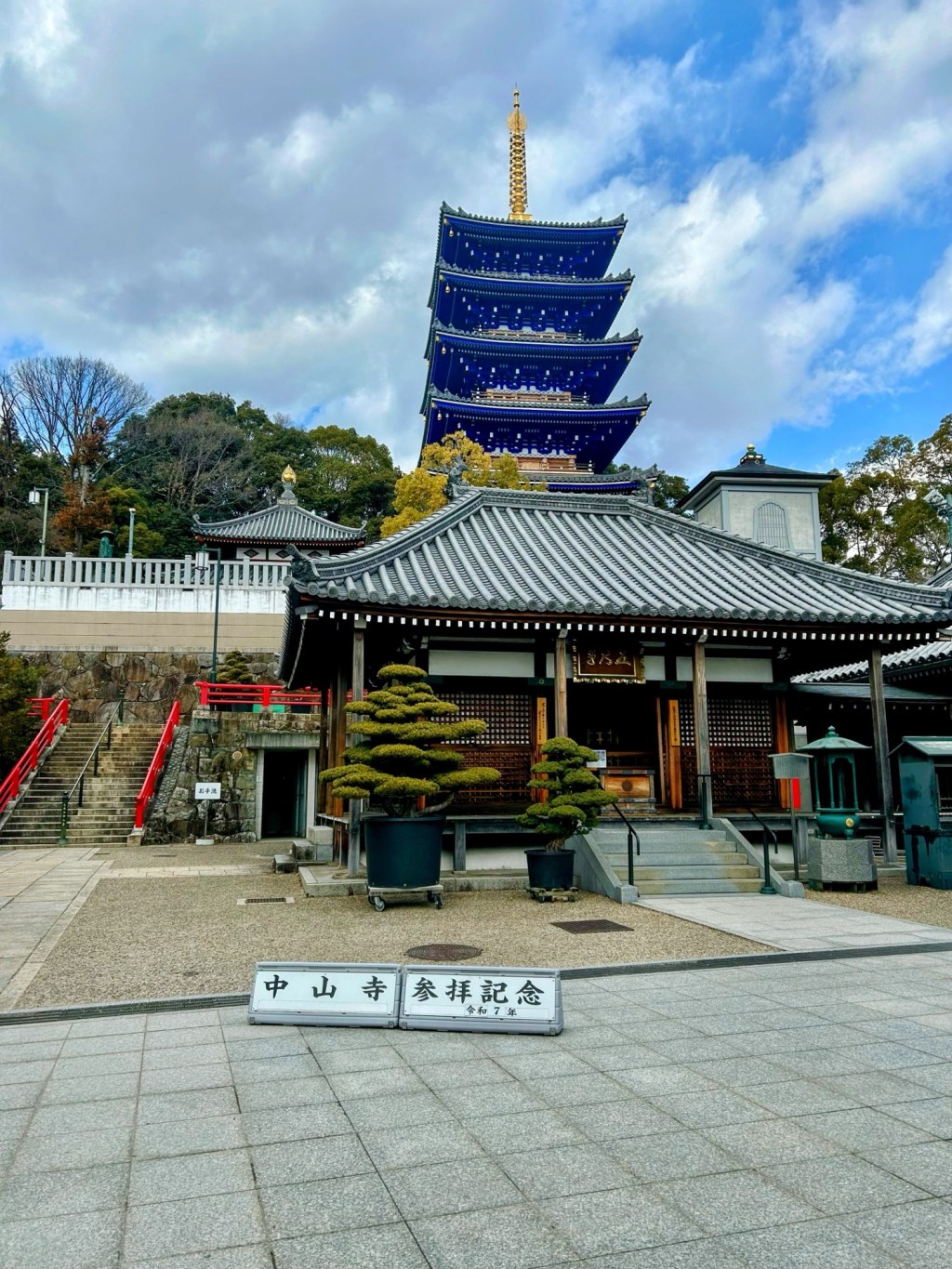
    Nestled in the town of Takarazuka, just outside Osaka, Nakayama-dera Temple is an enchanting destination steeped in history and natural beauty. Among its many highlights is the striking blue pagoda, a rare architectural gem that captivates visitors with its vibrant color and serene surroundings.

    Unlike the traditional red pagodas commonly seen across Japan, this four-tiered structure is painted in a vibrant shade of blue, symbolising tranquility and enlightenment. The pagoda is nestled against a backdrop of lush greenery, which only enhances its striking appearance.

    The Temple’s Historical Significance

    Nakayama-dera is one of the 33 temples on the Saigoku Kannon Pilgrimage, dedicated to Kannon, the Buddhist deity of mercy. Founded in the 6th century, the temple is a place of deep spiritual resonance and a popular site for prayers, particularly for safe childbirth. The grounds have beautiful gardens, ancient stone lanterns, and a variety of Buddhist statues (over 700 in one of the shrines!) but the blue pagoda stands out as a truly unique attraction.

    Getting to the Blue Pagoda

    Getting to the Blue Pagoda itself is easily accessible from Nakayama Station on the Hankyu Takarazuka Line. The station is just a 25-minute ride from Osaka’s city center, making it a convenient escape from the urban bustle. The distance from the station to the pagoda is then short, and doesn’t require much physical effort to reach, taking around 15-minutes to walk.

    The hike!

    The hike begins at the base of Nakayama-dera Temple (to the left of the blue pagoda). After about 45 minutes to an hour of hiking along the path, you’ll reach awe-inspiring views across Osaka to rewards your efforts.

    The view halfway along the hike

    As you ascend, the path meanders through a picturesque landscape of tall cedar trees and gentle streams. The trail is well-maintained and suitable for hikers of all levels, though sturdy footwear is recommended due to occasional steep sections. Along the way, you’ll encounter small shrines and Jizo statues, offering opportunities to pause and soak in the spiritual atmosphere.

    Visitors often remark on the profound sense of peace they feel here. The location is relatively secluded, ensuring that the site remains uncrowded, even during peak travel seasons. This makes it an ideal spot for quiet reflection or simply enjoying the surrounding beauty.

    Seasonal Highlights

    The hike is a year-round delight, but each season brings its own charm. In spring, cherry blossoms blanket the temple grounds in soft pink hues. Summer offers lush greenery, while autumn transforms the landscape with fiery red and orange foliage. Even winter has its appeal, as the pagoda looks particularly enchanting against a dusting of snow.

    Tips for Your Visit

    • Time Your Hike: Morning is the best time to start, as the trail is cooler and less crowded.
    • Bring Essentials: Pack water, snacks, and a camera to capture the breathtaking scenery.
    • Respect the Space: Nakayama-dera is an active temple, so be mindful of worshippers and maintain a respectful demeanor.
    • Explore the Area: After your hike, take time to explore the rest of Nakayama-dera or enjoy local delicacies in the nearby town of Takarazuka.

    Conclusion

    Hiking around, and seeing the blue pagoda, in Nakayama-dera is an opportunity to connect with Japan’s rich cultural heritage and the natural world. Whether you’re a seasoned hiker or a casual traveler, this serene escape near Osaka offers a perfect blend of adventure and mindfulness. Make it a part of your next trip, and let the vibrant blue pagoda leave an indelible mark on your travel memories.

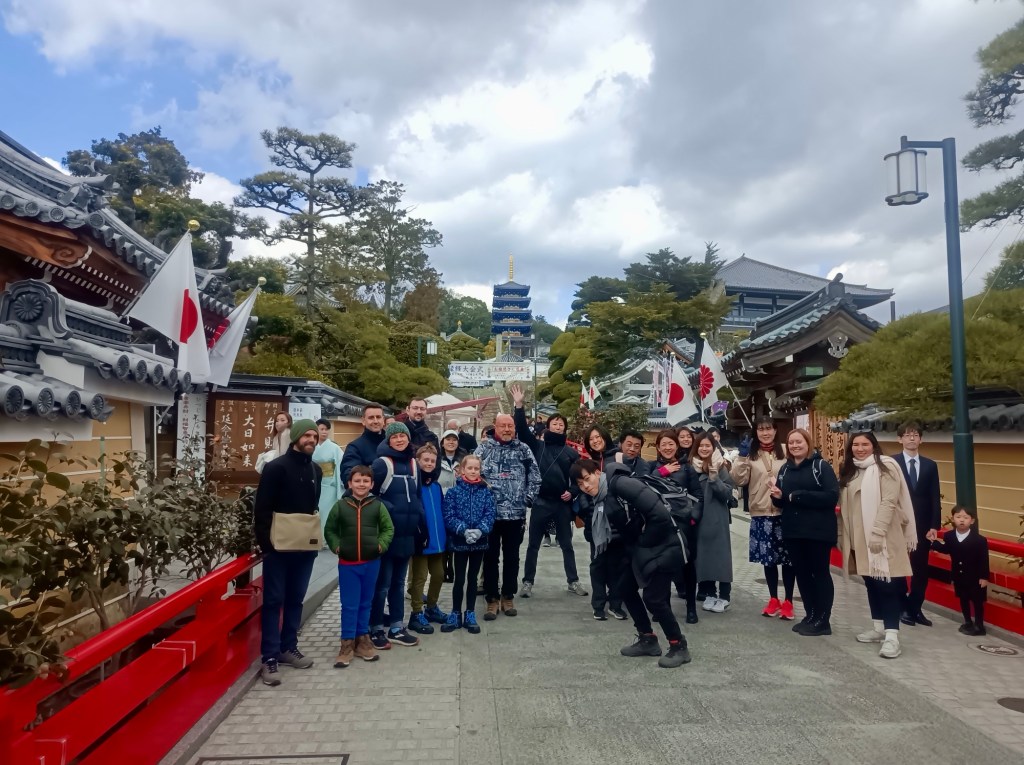
    I went on the hike with a group that I found via the ‘meetup’ app! A photo of my group is below. I’ve also recorded a short youtube video for you to see some of the grounds near the temple: