Ok, this is technically in Nara, but its an easily accessible hike from Osaka!…
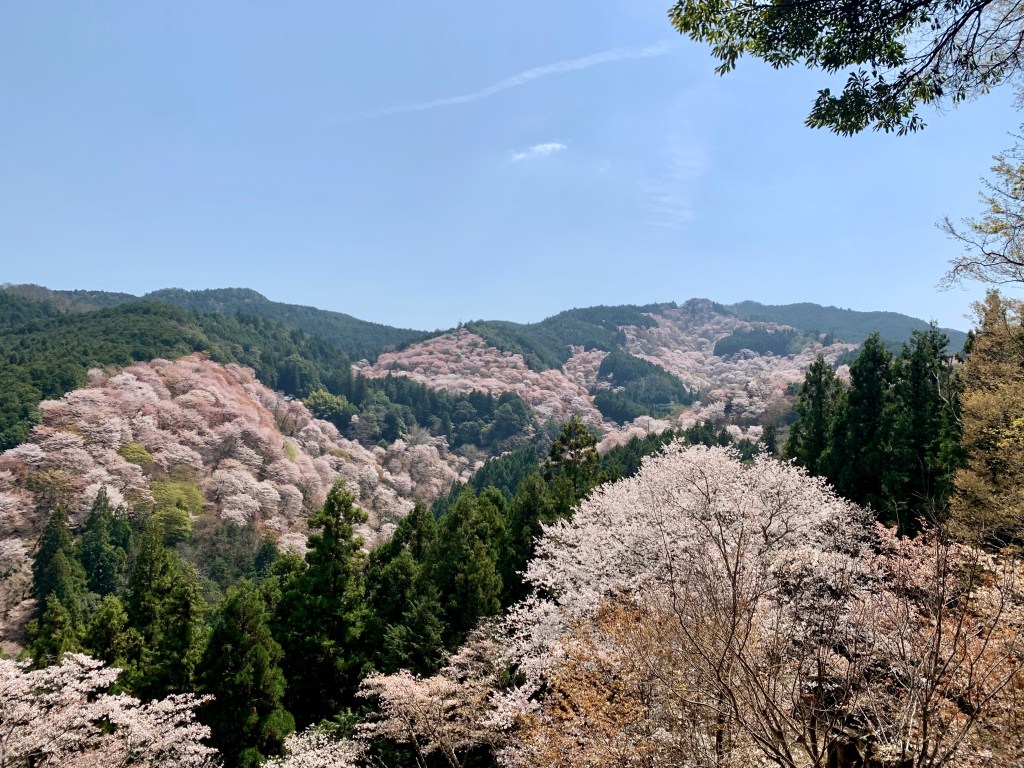
Mt. Yoshino in Nara Prefecture is the traditional famous place to see an impressive vista of cherry blossom trees (Sakura) in Japan (over 30,000 trees!). Mount Yoshino was designated as part of a UNESCO World Heritage Site in 2004 called ‘Sacred Sites and Pilgrimage Routes in the Kii Mountain Range’. Here’s everything you need to plan your own trip.
🕐 Hike Time: 4–6 hours round trip, depending on pace and how far you go 🥾 Difficulty: Easy to moderate – mostly paved or gravel paths, some uphill sections 🚻 Facilities: Toilets at stations, temples, and main viewpoints 📶 Signal: Spotty in higher areas.
Getting to Mt. Yoshino from Osaka
Mt. Yoshino is super accessible from the city of Osaka. The easy way (recommended)is to get the train from Osaka-Abenobashi Station (right next to Tennoji Station), and take the Kintetsu Limited Express directly to Yoshino Station (吉野駅). The duration of the train ride is ~1 hour 15 minutes and will cost: Around ¥1,600–2,000 one-way.
💡 Tip: Reserve a seat ahead of time, especially during cherry blossom season or weekends. You can buy tickets at the station or via the Kintetsu website.
🐢 The Cheaper Way (Local Trains) If you’re not in a rush, take a local Kintetsu train with a transfer at Kashiharajingu-mae Station. It’s slower (closer to 2 hours) but a bit cheaper.
Starting the Hike
Once you arrive at Yoshino Station, the mountain hike begins right outside. You can walk or take the Yoshino Ropeway (when it’s running) up to the Naka Senbon area.
🥾 Hiking Mt. Yoshino – What to Expect This isn’t a hardcore mountain hike—it’s more of a gentle, spiritual trail lined with shrines, shops, temples, and trees. The mountain is traditionally divided into four sections as you climb:
You can turn back at any point, but here’s the route I followed for a well-paced, full-day experience:
Yoshino Station to Naka Senbon – Winding Up Through Town 🌸 The hike begins with a walk up through Shimo Senbon, where the narrow mountain road is lined with little shops selling mochi, tea, and local specialties like kakinoha-zushi (sushi wrapped in persimmon leaves). I grabbed some to-go and kept climbing as the slope was gentle.
Kinpusenji Temple – A Sacred Stop ⛩️ You’ll soon reach Kinpusenji Temple, a UNESCO World Heritage Site and a key location in Japan’s mountain-worship tradition (Shugendo). From here you will see an iconic view of the sakura. The wooden main hall is enormous, with dramatic beams and a deep, spiritual atmosphere. There is a small entrance fee of 200-yen.
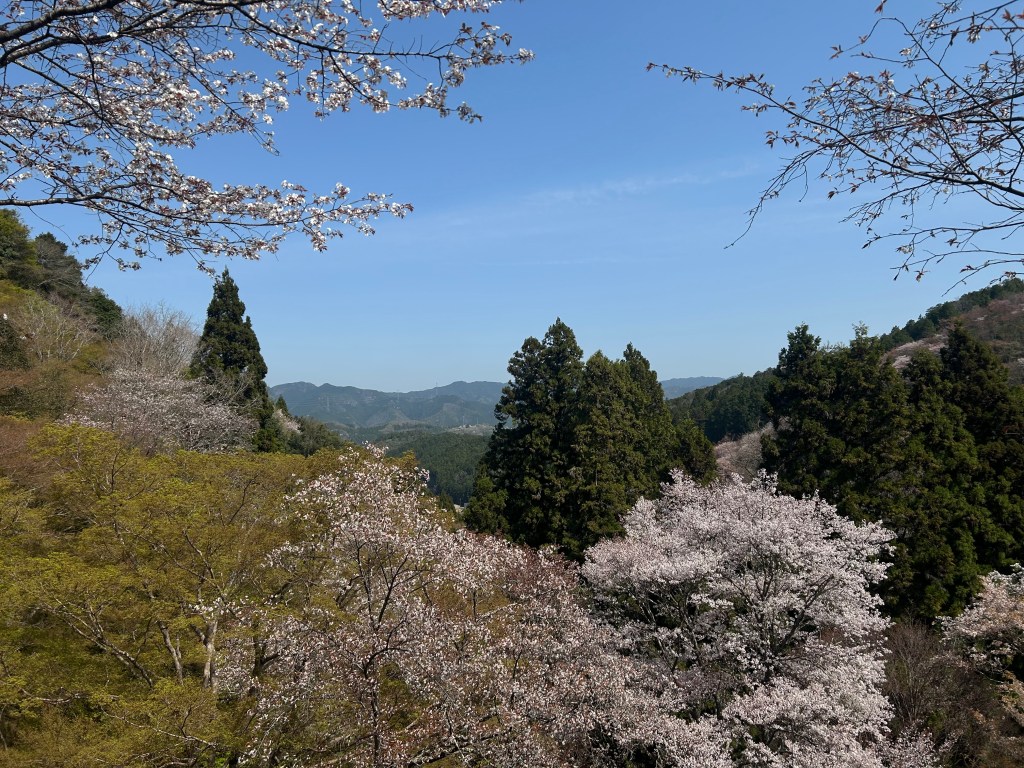
Kami Senbon – Forest Paths & Big Views 🌄 Past the temple, the trail gets quieter and more forested. As you reach Kami Senbon, the views open up and you can see down into the valley and across the ridgelines of Mt. Yoshino. The Hanayagura Viewpoint is the big highlight here where the mountain turns pink in waves. I visited on peak bloom, and it was stunning. 💡 Cherry blossoms bloom in layers as you climb, so even if the town is past peak, higher elevations may still be in bloom. In other seasons, you’ll find green, misty mountain trails or fiery red leaves in autumn.
Oku Senbon – Into the Deep 🌲 If you’ve still got energy (and time), keep hiking into Oku Senbon—the deepest and most peaceful part of the mountain. The path gets quieter, wilder, and more serene, surrounded by towering cedars and little shrines tucked into the forest. I didn’t see many people past this point.
This is the BEST location in the world to view the sakura in Japan & its just 1.5-2hrs from Osaka!! 🌸🥾🌲🏕️ This reel does not do it justice. The views are incredible. I’ll be writing a blog shortly about how to get to Mt Yoshino and what to expect. Check out visitosaka.org in the next few days! 09.04.2025 #sakuraschoolsimulator#japan#osaka#mtyoshino#cherryblossoms#tourism#travel#hiking
🍵 Where to Take a Break There are plenty of little rest stops and cafes along the trail, especially around Naka Senbon. My favourite spot is Yoshinoyama Sabo (吉野山茶房) – a lovely mountain teahouse with matcha desserts and seasonal sweets. You’ll also find small noodle shops and stalls selling grilled mochi or dango. Bring some cash, as not all shops take cards!
Tsurumi-Ryokuchi Park is located on the lime green subway route and can be easily accessed from near Osaka Castle (Morinomiya station). The park was home to the 1990 International Garden and Greenery Expo, where different countries showcase flowers and landscaped areas. This is where the park gets its title as the ‘Osaka Expo ‘90 Commemorative Park’.
Hire a scooter for the day
Upon entering the park I noticed that you can hire a bike or hire some futuristic looking e-scooters and mobility scooters which I discovered were called Tsuru Mobi. To ride the Tsurumobi, all passengers must register as members and make a reservation in advance, so bear this in mind before your trip. As this was my first time visiting, I decided to walk to make sure I didn’t wizz past something worth exploring more. I checked the park map before making my way around. The map of the park looked big, and I was excited to explore it.
Shortly after I entered, I spotted a tower which I now know is called the Tower of Life! Osaka city government closed the tower more than 10 years ago, due to declining tourist numbers, and had initially planned to demolish it. However, calls have emerged for the tower to be used to boost momentum for the Osaka-Kansai Expo in 2025. City officials say plans to topple the structure will go ahead without a feasible proposal to preserve it. I took a lot of photos of it, hoping that it will remain but knowing it could be demolished, and knew it would be a good point of reference during my park adventures.
Tour the old-expo site and take a photo next to a windmill
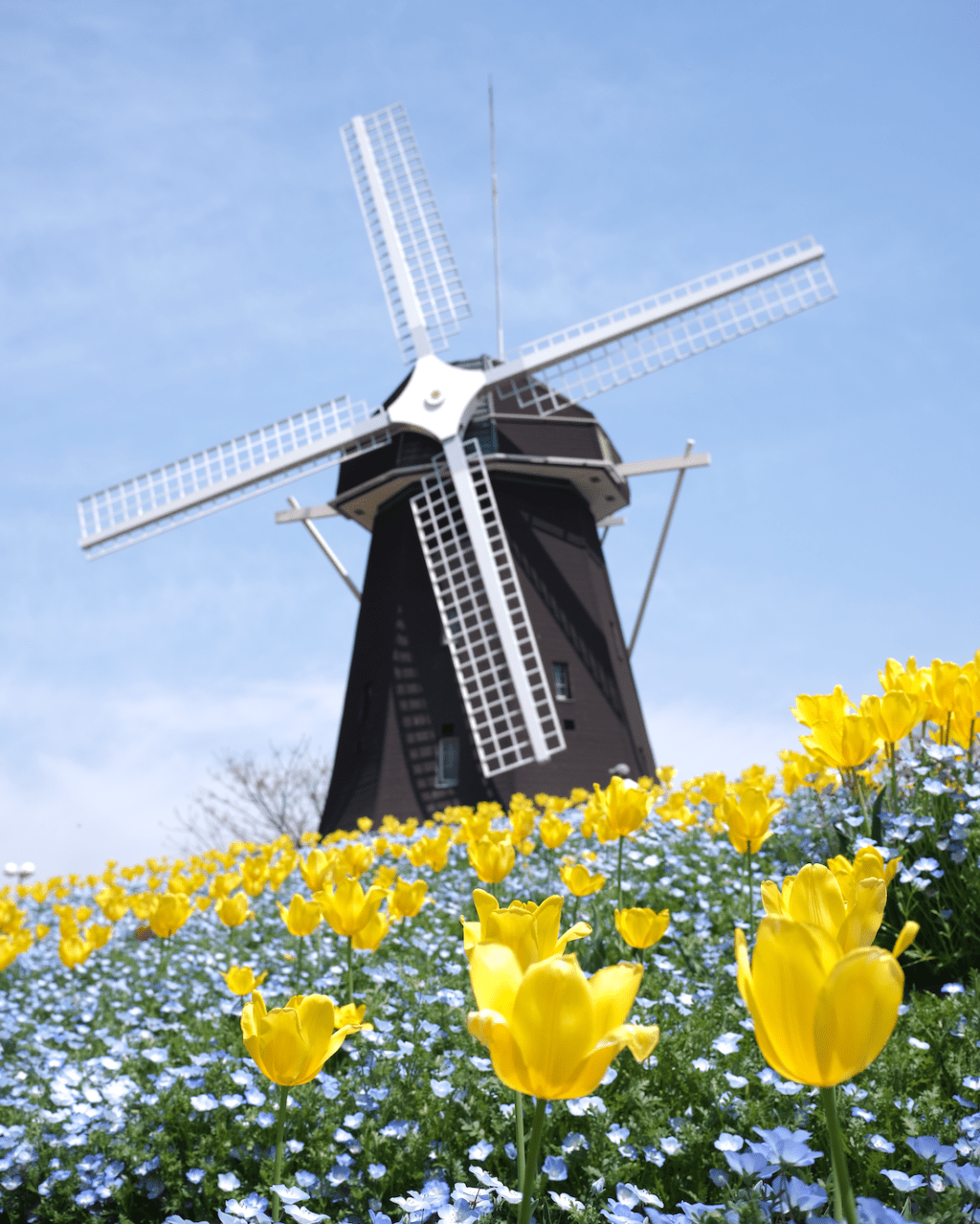
After entering the park, if you head right, you will enter the site of the 1990s flower expo and will be met with displays from all around the world. The most iconic is the dutch-style windmill which is surrounded by impeccable rows of flowers all year round. The flowers vary from tulips in spring, to sunflowers in august and more prime photo opportunities throughout the year. The displays from all around the world have been restored recently, with highlights including a waterfall from Canada, and temples from China and South Korea.
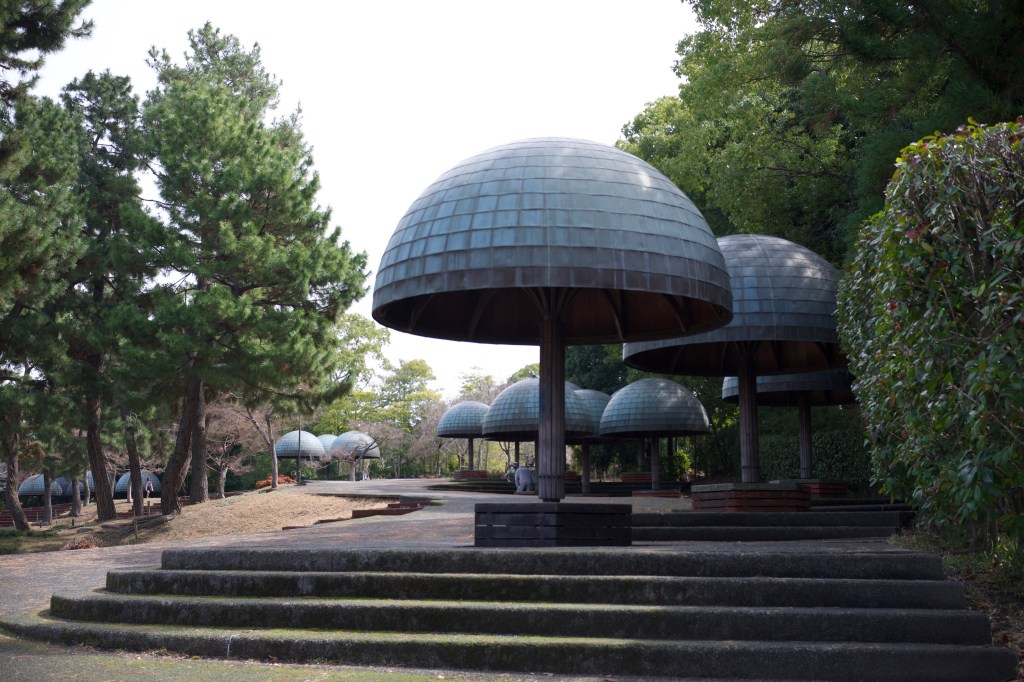
Throughout the park, I noticed people sitting beneath mushroom-like shelters, and thought they looked really unique and cool in their design. Here is a photo!
Mushroom Design Seating Areas
Spot wildlife near the pond
The large pond ‘Oike Pond’ in the centre of the park had a lot of birds flapping around, and herons perched quietly on rocks within the water. The backdrop of the pond included temples and a dutch-style windmill in the distance.
On my way around, I found that the park has something for everyone, this includes a Horse Racing Track, a Forest Adventure filled with playgrounds for children, a BBQ and Camping area for those who want to camp in the park! If you wish to do this, remember to book in advance and bring your own tent.
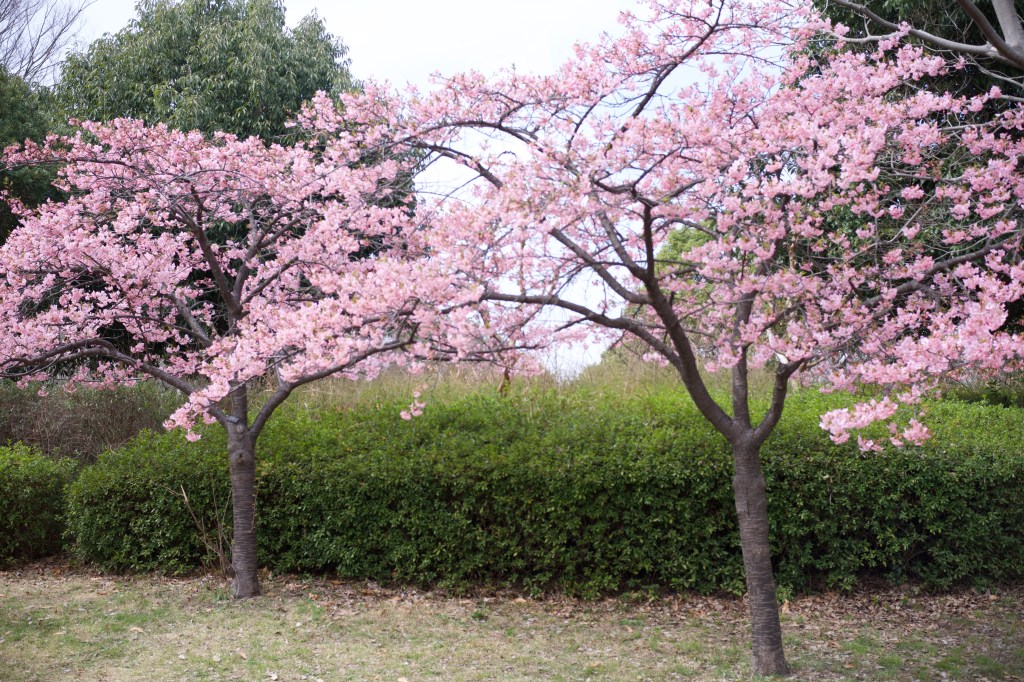
The abundance of wildlife, flowers and trees in the park was what I noticed most. The Sakura (blossom) trees were blooming in mid-March. A lovely surprise as they’re not forecast in most areas until April. Locals were naturally gathered to take photos of this fleeting moment. I was suprised to discover that the park is also home to a large indoor botanical garden with over 15,000 plants! The park is called Sakuya Konohana Kan, which costs just ¥500 to enter.
Sakura Blossom Trees
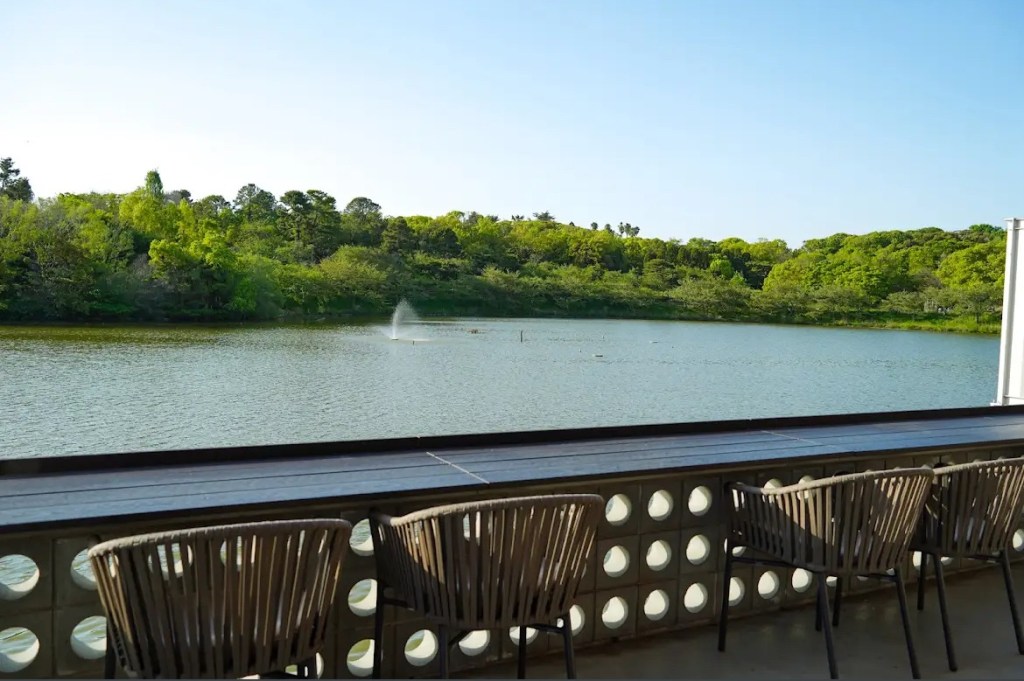
My walk around the park lasted around 3 hours, so I can see why you can rent bikes and scooters near the entrance! At the end of my walk, i was quite hungry, so I stopped at the restaurant near Oike Pond. The restaurant is ideally named ‘Botanical House’ and has a lovely terraced dining area near the water. It is one of the best locations for a romantic dinner that I’ve found in Osaka so far. A perfect scene to end the day before catching the train or if you want further time to relax, Tsurumi Onsen Suishun is a public bath house and gym located directly opposite the train station.
View from Botanical House Restaurant
So, is Tsrumi Park worth visiting? Yes, absolutely, i’d say that Tsrumi Park is arguably the best park to visit in Osaka when it comes to the variety of activities, plants and nature. While the park can be enjoyed all year round, the best time to visit Tsrumi Park is in Spring (April-June) to see the flowers in bloom or toward Autumn (September-November).
Exploring Japan’s Heritage and Scenic Beauty from Osaka
Osaka makes an ideal base for day trips to some of Japan’s most enchanting destinations. Two of my absolute favourite spots for a one-day (or two-day!) adventure are Nara, home to ancient temples and friendly deer, and Uji, renowned for its matcha and picturesque riverside scenery.
This itinerary combines history, nature, and relaxation, offering a day packed with unforgettable experiences. Whether you’re looking to meet Nara’s famous deer, marvel at ancient temples, or enjoy a tranquil boat ride or hike along the Uji River, this guide has everything you need, including travel tips, costs, and insider recommendations. If you’ve been asking yourself ‘Can I visit Nara and Uji in one day?’, I’m here to tell you yes, you absolutely can.
Feed Sacred Deer in Nara
Start your day early to make the most of your visit. Catch the Kintetsu Limited Express from Osaka-Namba Station to Kintetsu-Nara Station. This 40-minute journey costs ¥1,070 (£6) one way and offers a faster and more convenient option for reaching Nara. Alternatively, take the JR Yamatoji Line from Osaka Station to Nara Station, which takes about 50 minutes and costs ¥800 (£4.50).
Nara Park is a sprawling 502-hectare area that is home to over 1,000 free-roaming Sika deer. These deer are considered sacred messengers of the gods in Shinto belief, and they are now a symbol of Nara. To get to Nara Park from the train station, I recommend walking approximately 20 minutes along Sanjo dori Street which has a variety of souvenir and convenience stores en route. A chance to experience the famous mochi pounding at Nakatanidou en route is another reason to walk.
Alternatively, you can hop on a local bus with unlimited rides throughout the day for just ¥600 (£3) and ¥300 (£1.50) for children. There are three pass options to choose from, each covering different areas, check out the map areas here. The one-day pass is best if you’re tight on time and want to see the main sights of the park.
If you would like to spend more time in Nara, you can also book a bus tour in advance using Nara Kotsu Bus. They offer English speaking tours of the park, with visits to temples, shrines and Mt. Wakakusa for ¥11,000 (£57).
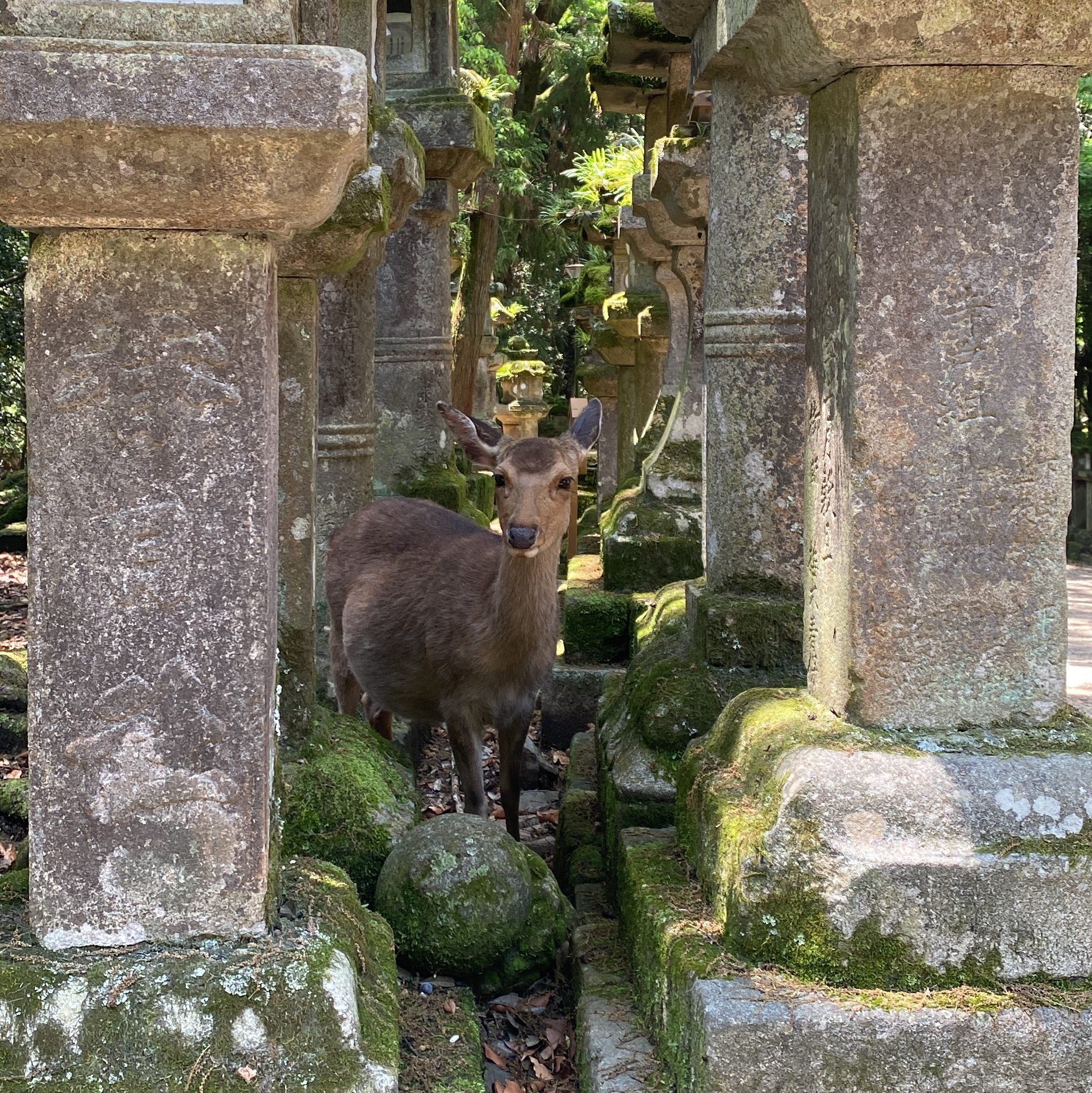
Once in the park, you will spot vendors selling crackers at stalls for ¥200 (£1). As delicious as they look, these are not for you to eat… they are shika senbei (deer crackers) which you offer to the deers as snacks. Be prepared—the deer will bow politely to you in exchange for them, but some can be quite persistent, so keep your own snacks secure! If a deer pesters you, hold up your hands to show them that you have no food to offer & they will then walk away.
Next, visit Todai-ji Temple, one of Japan’s most famous landmarks and a UNESCO World Heritage Site. The temple is home to the Great Buddha (Daibutsu), a 15-metre-tall bronze statue housed in the world’s largest wooden building, the Daibutsuden. Entry costs ¥600 (£3.50) for adults. Take your time to admire the intricate architecture and the peaceful atmosphere of the temple grounds.
After visiting Todai-ji, walk through the park to reach Kasuga Taisha Shrine, another UNESCO site. This Shinto shrine is renowned for its hundreds of stone and bronze lanterns, which create a mystical atmosphere. Entry to the inner area of the shrine costs ¥500 (£3), but you can also enjoy the scenic outer grounds for free.
For those who enjoy hiking, the nearby Mount Wakakusa offers a short climb with panoramic views of Nara and the surrounding countryside.
Lunch in Nara
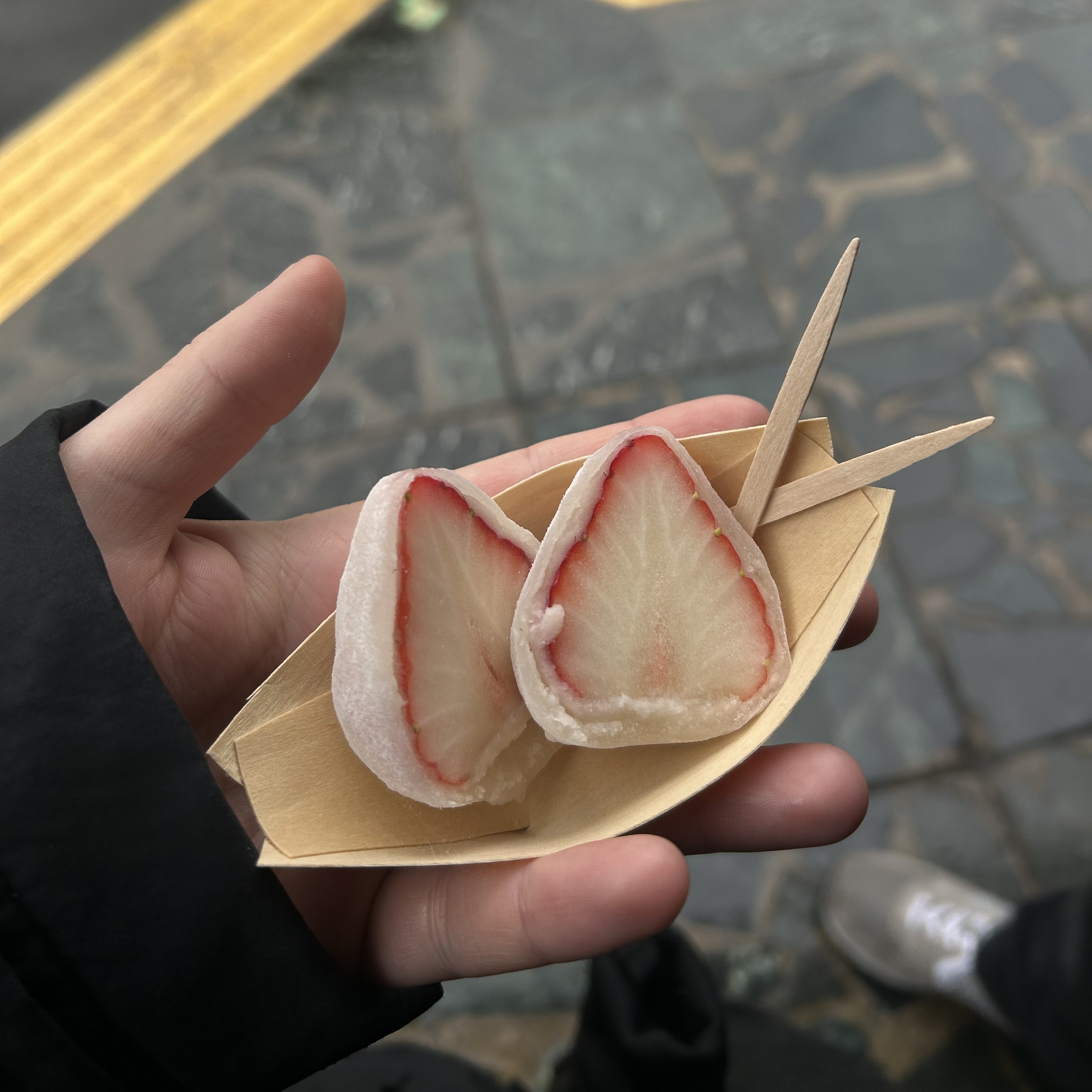
Nara has plenty of excellent options if you’re feeling pekish. Try kaki-no-ha sushi, a type of pressed sushi wrapped in persimmon leaves, or enjoy a bowl of kitsune udon, a noodle soup topped with sweetened fried tofu. Restaurants around Nara Park often offer set meals for ¥1,000–¥1,500 (£6–£8). For a quick bite, grab some street food from the stalls near the park, including freshly grilled mochi and taiyaki (fish-shaped pastries filled with red bean paste). For something sweet, a personal favourite of mine is the mochi fruit from Ben Zai Ten, located halfway along Sanjo Dori Street on return to the station. Here you can try the soft and delicious, vegan fruit mochi. The strawberry is my favourite!
Next Stop – Uji!
Uji is closer to Nara than you may think. From Nara, take the JR Nara Line to Uji Station. This 40-minute ride costs ¥620 (£3.50). Uji is a dramatic riverside town steeped in history and famous for producing Japan’s finest matcha green tea. If you were looking for a place to try it, Uji is the perfect location to do so.
From the station, take a leisurely stroll down Omotesando Street, Uji’s main shopping and dining area. Here, you’ll find numerous tea houses and shops where you can sample and purchase high-quality matcha products. Treat yourself to matcha ice cream, cakes, or even matcha soba noodles. Many shops offer free tastings of green tea, so you can learn about the different grades and flavours.
For a more immersive experience, book a tea ceremony session at one of the local tea houses, where you can learn about the traditional preparation and significance of matcha. Prices for matcha treats range from ¥300–¥800 (£1.50–£4.50), while a tea ceremony may cost around ¥1,500 (£8.50).
At the end of Omotesando Street, you will be near the must visit Byodoin Temple, a stunning example of Buddhist architecture and another UNESCO World Heritage Site. The temple’s Phoenix Hall is so iconic that it’s featured on the back of the ¥10 coin. Admission costs ¥600 (£3.50) and includes access to a museum displaying treasures from the temple’s history.
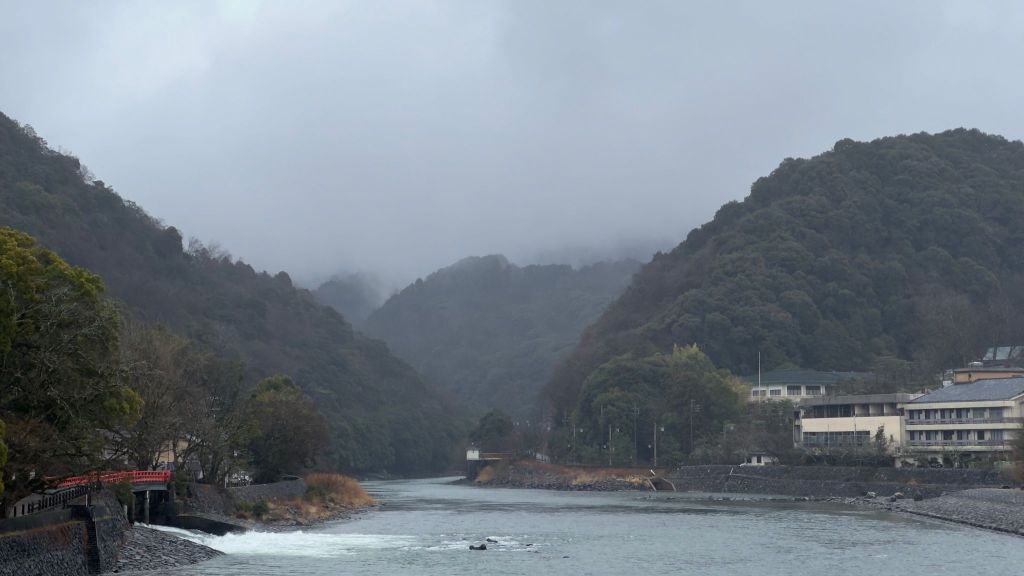
Start to wind down your day with a serene boat ride along the Uji River. These rides provide stunning views of the river’s lush surroundings, historic bridges, and traditional houses. Tickets for a 30-minute boat ride cost approximately ¥1,500 (£8.50) per person. Uji is beautiful regardless of the weather. In summer it has a serene, calming atmosphere while in winter the mountains make for a dramatic landscape as shown in the photos below.
The beautiful Uji river on a hot summers day (July 2024)Dramatic view of the Uji River and Mountains taken from the Asigiri Bridge (March 2025)
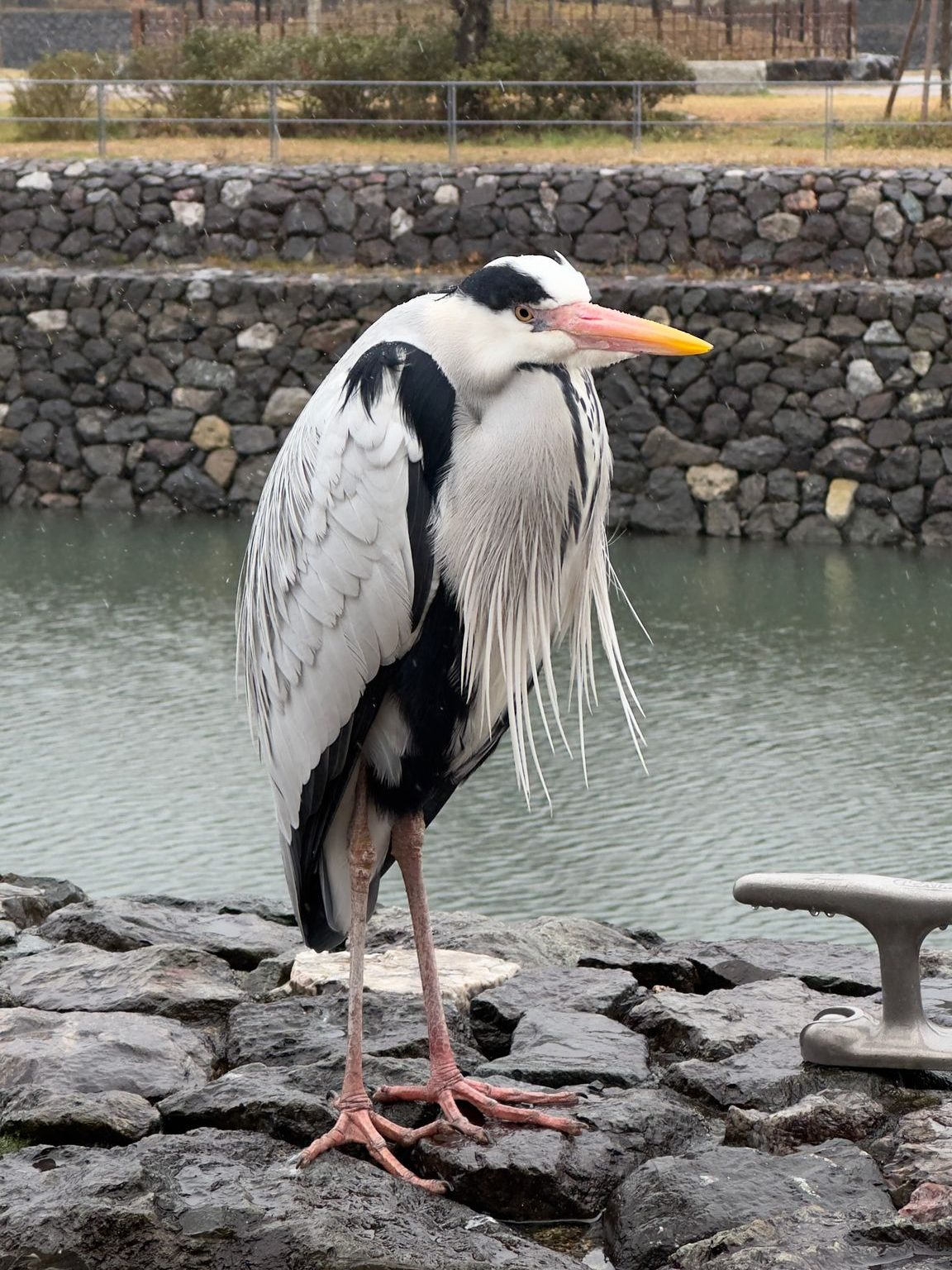
There is majestic wildlife in Uji. Grey Herons can be spotted all year round and during the summer months (late June to mid-September), you may be lucky enough to witness ukai, a centuries-old method of cormorant fishing. This traditional fishing technique, performed at night using trained birds, is a fascinating spectacle unique to Uji. The herons that we saw reminded us of Hayao Miyazaki’s 2023 film,The Boy and the Heron.
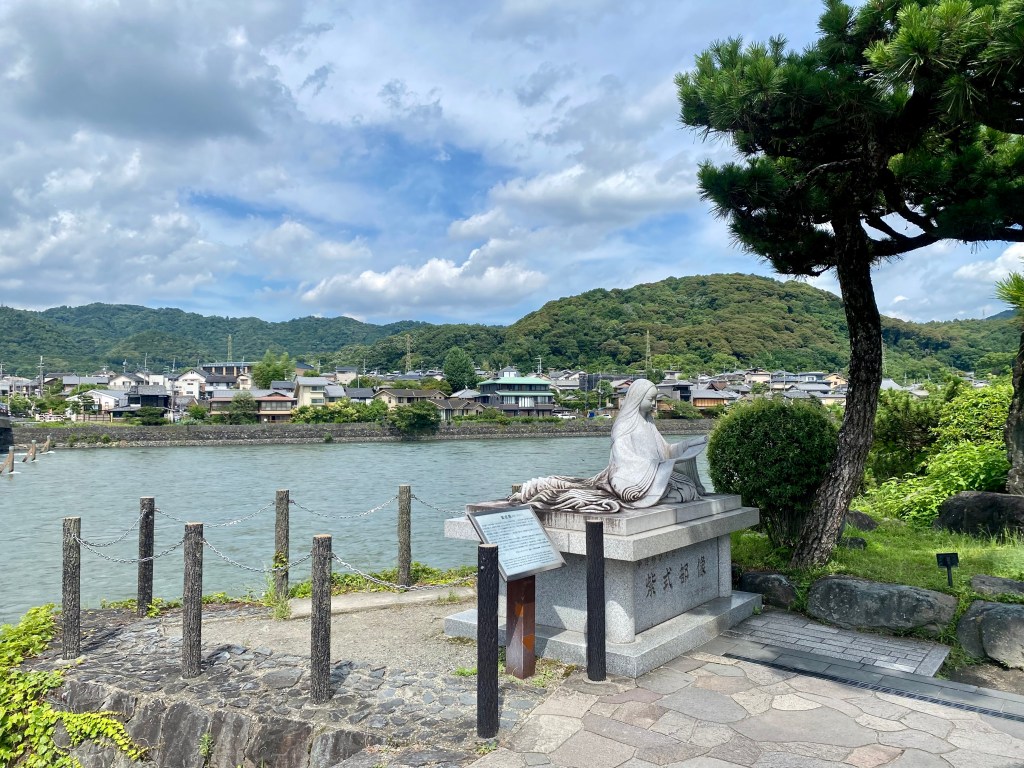
If you prefer to stay on land, enjoy a riverside walk along the Asigiri Bridge and consider a visit the Tale of Genji Museum, which celebrates Uji’s connection to Japan’s famous literary classic, The Tale of Genji. Alternatively, or if you still have time, you can also visit Daikichiyama fuchi Park and its observation deck to enjoy the sunset before heading back to Osaka.
From Uji Station, take the JR Nara Line back to Osaka. The journey takes about 50 minutes and costs ¥800 (£4.50). Aim to catch a train by 7:00 PM to arrive in Osaka in time to enjoy a relaxed evening in the city or explore its lively dining scene.
Was visiting Nara and Uji worth it?
Perfect for nature lovers, Nara and Uji are must visit destinations in my opinion. Each providing unique and serene landscapes within easy reach of Osaka, they take you away from the concrete jungle and allow you to reconnect with nature.
Trip extension idea: If you have more than a day, or don’t need to head back toward Osaka, I recommend extend your adventures by taking the train from Uji toward Kyoto, being sure to stop at the famous and popular Fushimi Inari along the way. Within this itinerary you could also consider stay overnight in Nara at one of the local deer hostels located in the heart of the park for an immersive experience. We recently stayed at The Deer Park Inn for a very reasonable price and deer came to greet us in the garden!
 Visit Osaka