If you’re scared of heights – this hike isn’t for you.
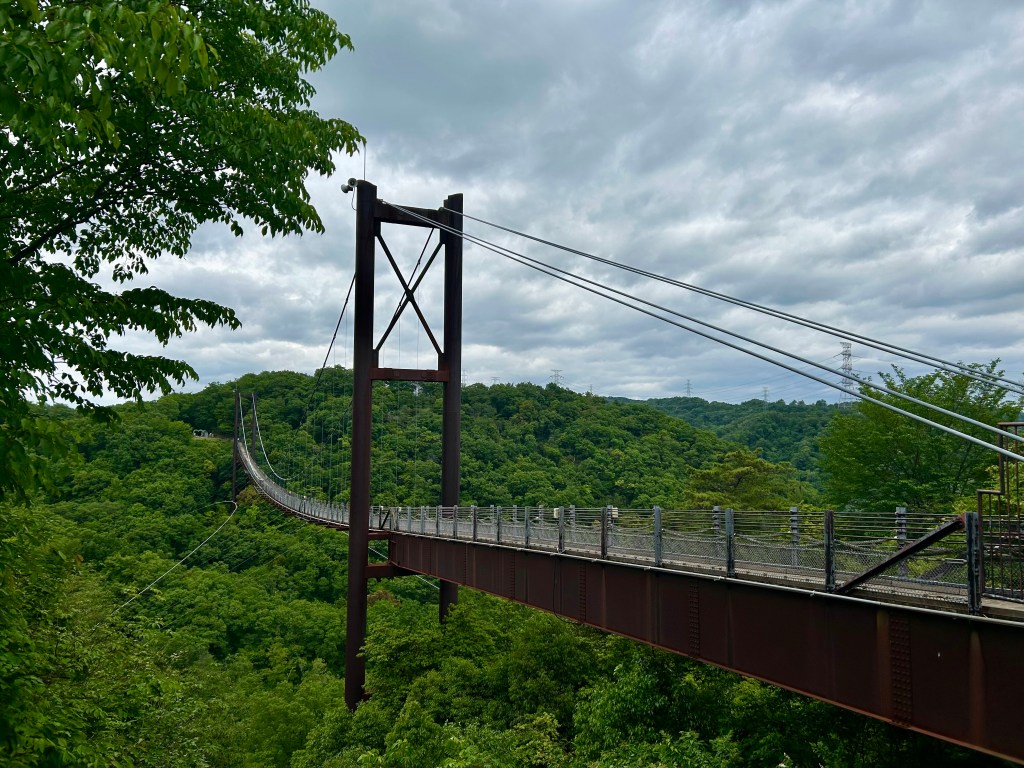
Hoshida Park, known as the ‘Forest of Osaka’, is home to the largest suspension bridge in Japan at a length of 280 meters and a height of 50 meters. The bridge, Hoshi no Buranko, is locally known as the Star Swing Bridge, stemming from the belief that standing on the bridge at night feels like floating among the stars. Despite its name, unfortunately you cannot walk across the bridge at night; it currently closes at 1630hrs.
This hike takes you through a well-signposted forest route, leading you across the bridge, before making your way back down. The route to the bridge and back spans around 8km and is suitable for beginners. To get to the start of the hike take the Keihan Main Line from Kyobashi to Hirakatashi Station. From Hirakatashi Station, take the Katano Line to Kisaichi Station (the end of the line). Follow the trail around the scenic Amano River which should be on your left-hand side on your way up. It will take around 1-hour to get to the bridge from the start of your hike, depending on your pace.
The longest wooden footbridge in Japan! 📍 Hike to Hoshi no Buranko 🌉✨ Looking for a perfect half-day adventure near Osaka? 🏞️ Start your hike from Kisaichi Station 🚉 and immerse yourself in forests, peaceful trails, and breathtaking views. 🌳🌲 👟 Trail Details: 📏 ~2.5 km one way 🌿 Easy to moderate difficulty 🕒 Takes about 2-3 hours round trip The highlight? Hoshi no Buranko—a massive suspension bridge that makes you feel like you’re walking among the stars! ✨ The view from up there is absolutely incredible, with a canopy of greenery stretching as far as the eye can see. 😍 🍙 Pro Tip: Pack a snack or bento to enjoy at the picnic area nearby—it’s the perfect way to recharge before heading back! 🌅 End your adventure with a serene walk back to Kisaichi Station as the sun sets over the Kansai wilderness. 📸 Tag your hiking buddy and save this post for your next outdoor escape! 🌟 #HikingJapan#Osaka#Japan#HoshiNoBuranko#KansaiAdventures#OsakaHikes#NatureLovers
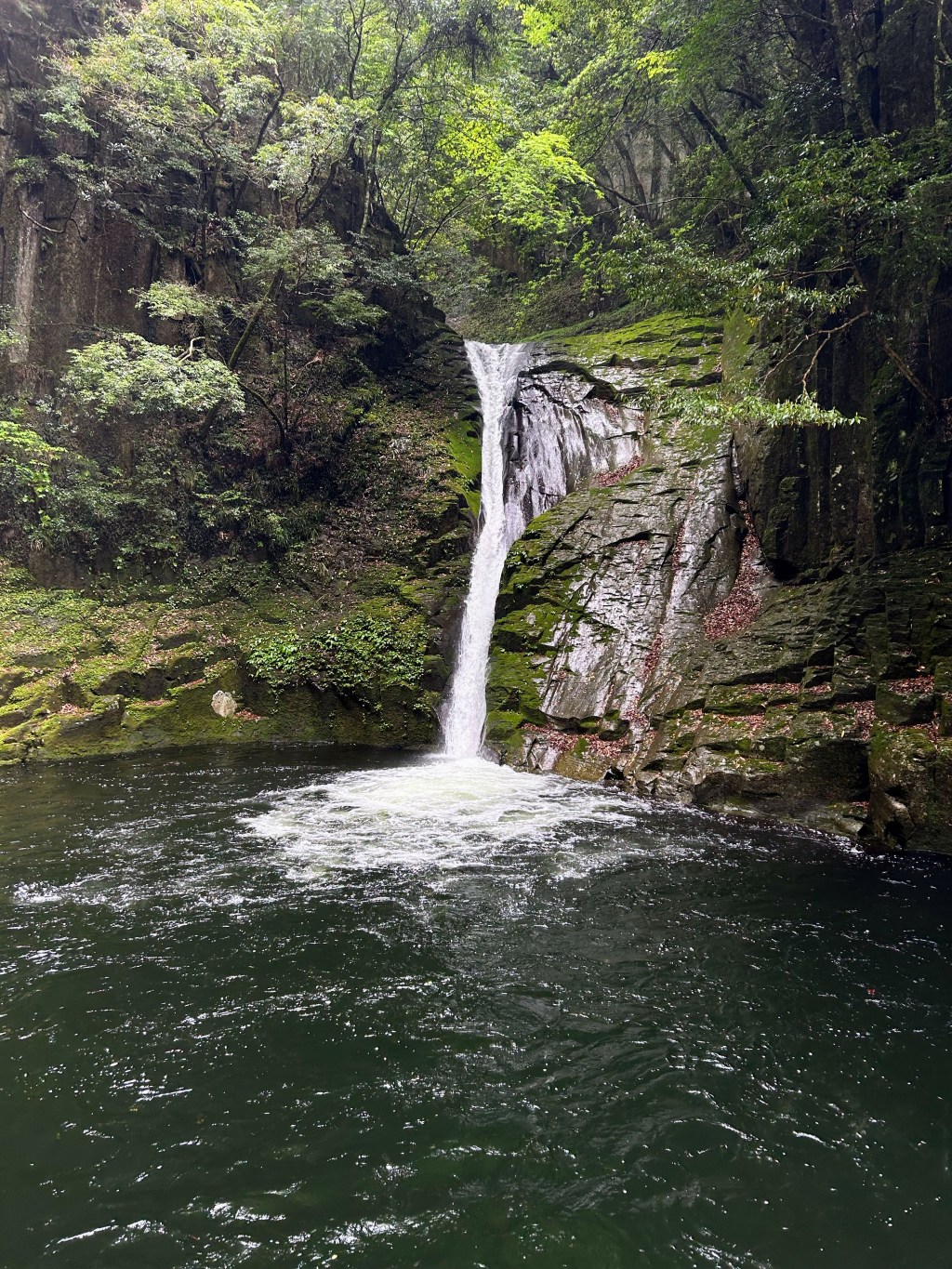
Akame 48 Waterfalls Trail is a well-known trail for deep mountain valleys and waterfalls of various sizes, widths, plunges and waterflows. The hike will take you into the Murō-Akame-Aoyama Quasi-National Park, past multiple stunning waterfalls. The 48 waterfalls are a collective name for a string of waterfalls flowing through Akame-cho, Nabari, Mie.
This location is where the first Ninjas used to train and perfect their art form. Go to the home of the Ninja, viewing the history of ninjas from stalls, shops and even restaurants. Enter a giant salamander museum, view these impressive creatures which are native to this area.
There are different routes that you can take, which vary in their difficulty. The three route options are:
Route 1 – Short and easy course, 20-minutes (one-way). This route is mostly paved and suitable for casual hikers. It will take you past three out of the five best waterfalls, Fudo Falls, Senju Falls and Nunobiki Falls. Be sure to not miss the deep valley at the start of the route which is said to date back over 15-million years; an unfathomable amount of time.
Route 2 – Moderate course, 90-minutes (one-way). This route is paved and includes some steep staircase sections, which can be slippy if it’s been raining. This route will ensure that you experience all five of the best waterfalls, adding Ninai Falls and Biwa Falls to your route.
Route 3 – Advanced course, 170-minutes (one-way) with a 584m elevation gain. This route takes you past the same waterfalls as route 1, before deviating onto the advanced course toward Mt. Nagasaka. The trail is steep but includes plenty of rest spots, making it manageable for intermediate hikers. To fully enjoy the experience, plan for a whole day.
To get the starting point of all three routes, take the Kintetsu-Osaka Line from Tsuruhashi Station (accessible via the Osaka Loop Line) to Akameguchi Station, this takes around 1hr 05mins. From Akameguchi Station, catch a bus from the bus station to Akamedaki.
The bus takes just 10-minutes on the Akame Line. Be sure to note the time of the last bus back from the falls and give yourself plenty of time to head back. From Akamedaki, follow the road around to the start of the hike.
All paths are well-signposted from the bus stop. Follow the route uphill and pass through the Salamander aquarium where you pay a small fee of 1,000 yen before starting your hike.
🌿✨ Explore the breathtaking beauty of Akame 48 Waterfalls! 🌊🍃 Just a short trip from Osaka, this serene hike offers cascading falls, lush green forests, and magical vibes! 🌟 Whether you’re spotting salamanders 🦎, soaking in the peaceful sounds of nature 🎶, or dressing up as a ninja 🥷, this spot is a must-visit! 💧🏞️ ⏰ Duration: 2–3 hours round trip (easy-moderate hike) 🎒 What to bring: Comfy shoes, a water bottle, and your sense of adventure! 💬 Tag someone who’d love this hike! 🥾💚 #Akame48Waterfalls#OsakaDayTrips#HikingVibes#NatureLovers#JapanTravel#Osaka#Travel#Daytrip
If you love good food, great spaces, and the energy of Osaka, Time Out Market and Green Plaza should be at the top of your list. Whether you’re a visitor or a local looking for something new, this is a place that captures the best of the city in one location.
Time Out Market Osaka has officially arrived, bringing together some of the city’s top chefs, beloved local eateries, and international flavours—all under one roof. And the best part? It’s nestled in the brand-new Green Plaza, a vibrant urban space designed for food, fun, and relaxation.
Located in the heart of Osaka’s bustling Umeda district, Green Plaza sits just a short walk from Osaka Station, making it a prime destination for both locals and visitors. The area is already known for its impressive skyscrapers, shopping hubs, and entertainment, but Green Plaza brings something new—a much-needed balance of modern urban energy and open, green space.
Here’s why you should add this spot to your Osaka itinerary.
The best of the City under one roof
Osaka is famous for its food, and Time Out Market takes that reputation to the next level. This isn’t just another food court—it’s a carefully curated collection of some of the best dining experiences the city has to offer. Think Michelin-recognised chefs, legendary street food vendors, and exciting new flavours, all in one stylish setting.
From high-end sushi to crispy takoyaki, every dish is made with Osaka’s signature passion for flavour. Highlights include expertly crafted ramen, sizzling okonomiyaki, gourmet yakitori, and decadent desserts from some of the city’s most celebrated patisseries. There’s even a dedicated craft beer and cocktail bar, offering the perfect pairing for your meal. Whether you’re grabbing a quick bite or settling in for a long meal, the market delivers a feast worth remembering.
For seafood lovers, there’s fresh sashimi straight from Osaka Bay, while meat enthusiasts can enjoy wagyu beef cooked to perfection. Vegetarian and vegan options are also well-represented, with plant-based ramen and creative Japanese fusion dishes that ensure no one misses out.
Beyond the Food: Exploring Green Plaza
Time Out Market is just the beginning. It’s located within Green Plaza, a brand-new urban space that blends modern design with a relaxed, inviting atmosphere. With open spaces, stylish shops, and cultural spots, it’s a place where you can eat, explore, and unwind.
The Idea Behind Green Plaza
Green Plaza was designed with a clear vision: to create a dynamic, people-friendly space that balances modern urban living with sustainability and culture. Recognising the need for more pedestrian-friendly, green spaces in Osaka’s bustling cityscape, urban planners developed Green Plaza as an innovative model for future city design. It prioritises walkability, community engagement, and eco-conscious development, ensuring that residents and visitors alike have a welcoming place to gather, relax, and experience the best of the city.
From its rooftop gardens that help combat the urban heat island effect to its use of energy-efficient lighting and sustainable materials, Green Plaza represents a new era of urban planning in Japan—one that seamlessly blends commerce, culture, and nature.
What to Do at Green Plaza
Green Plaza is pedestrian-friendly, eco-conscious, and designed for people to actually enjoy spending time in. It’s a refreshing escape from the usual city rush, making it a great place to stroll, grab a drink, or simply take in the vibe of Osaka’s ever-evolving landscape. Unique boutique stores and pop-up stalls showcase artisanal goods, while art installations add an extra touch of creativity to the area.
One of the standout features of Green Plaza is its brand-new outdoor concert area, which hosts live music performances, cultural events, and weekend markets. From jazz nights to indie band showcases, the space brings an exciting energy to the district, making it a perfect spot to relax with a drink and enjoy Osaka’s vibrant arts scene. There are also film screenings, interactive workshops, and seasonal festivals that add to the dynamic atmosphere, ensuring there’s always something happening.
For those looking to unwind, Green Plaza offers uniquely designed seating areas, rooftop gardens, and a small urban park where visitors can enjoy a quiet moment away from the bustling city. Families will appreciate the dedicated play areas for children, while remote workers can take advantage of open-air coworking spaces with free Wi-Fi.
In the evenings, the area transforms with illuminated walkways, creating a scenic spot for a leisurely nighttime stroll. Seasonal light displays and projection mapping events add an extra layer of magic to the experience, making it an Instagram-worthy destination year-round.
When you think of Osaka, hiking isn’t the first to spring to mind. Despite this, Osaka is great for hiking if you know where to go. If you’re seeking a hike just outside of the city, and within easy reach by train, the Kisen Alps are a hidden gem. The Kisen Alps are a series of rolling peaks located on the Osaka-Wakayama prefectural border. Despite their close proximity to the big city, the mountains are relatively unspoiled and completely natural, without a single cedar tree in sight.
Access
To get to the Kisen Apls, from Tennoji station (天王時駅) take a train on the JR Wakayama line and get off at Yamanakadani (山中渓駅). An express train should take about 45 minutes or so. Please note that this is an unmanned station.
Level of difficulty: 2 out of 5 (elevation change ~200m). The duration of the hike can last between 4-6hrs and cover a distance of 12.3km.
The Adventure Begins
Go through the unmanned ticket gates, and turn right on the small paved road in front of the station. Turn right at the next street, where you’ll cross a small river and the railroad tracks. Follow the signs to Kisen Alps (記泉アルプス), turning left at the sign, and then right up a small dirt road. This road eventually becomes the trailhead, as you pass through a very funky entrance gate. The path climbs rather steeply at first, paralleling a large expressway. The traffic noise is pretty loud, but you’ll soon leave that all behind and enter a magical wonderland of beautiful flora. I have no idea why this area was spared of the post-war deforestation, but I’m so happy it was.
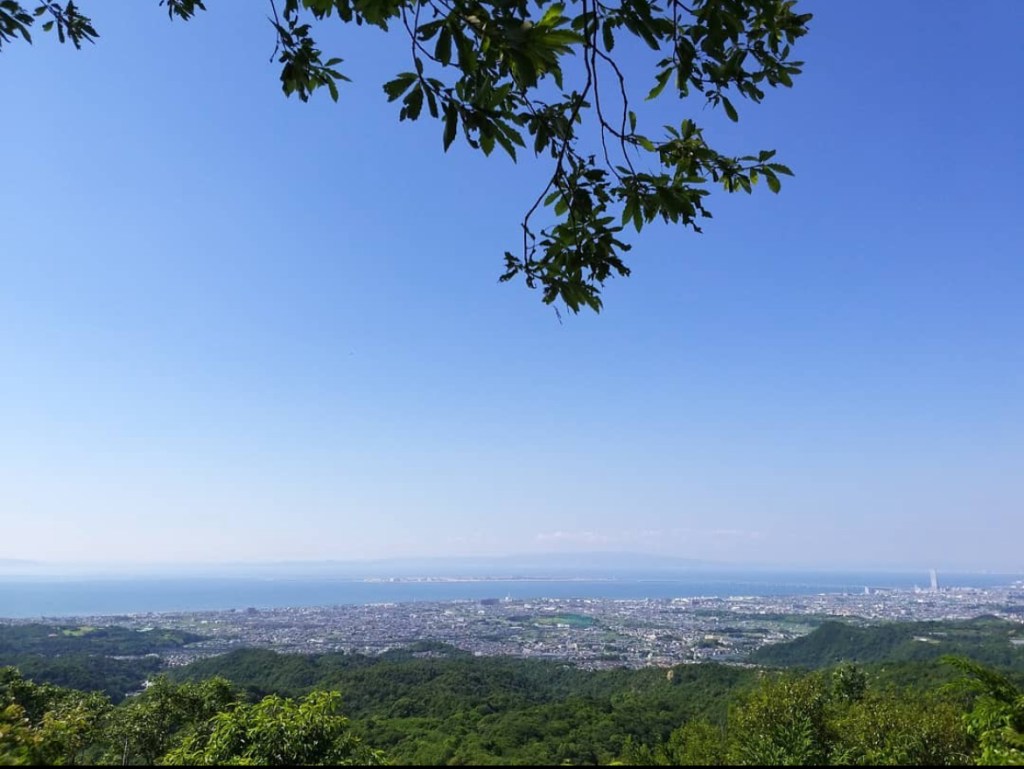
As you hike, imagine how beautiful this country must’ve been hundreds of years ago, when every single forest looked just like this! Keep your eyes out for snakes and wild boar, as there are quite a few in this area. After about 30 minutes of climbing, you’ll reach the ridgeline and a trail junction. Head to the right for about 20 meters to reach a wonderful clearing with excellent views of Kansai airport and Osaka bay. Take some photos and head back to the junction.
The Ridgeline and Unzenbou Peak
The trail follows the entire mountain ridge, and your target is the high point called Unzenbou (雲仙峰). There’s a considerable amount of up and down between here and the top, but it’s not too difficult. There are lots of places to take breaks and enjoy the outstanding scenery. You should reach the peak in about 2 hours or so. Just below the top, you’ll come across a 3-way junction with beautiful bilingual signposts. Yep, you’ve officially entered Wakayama prefecture, where they seem to have more money in their budget for trail maintenance. Continue on to the top of Unzenbou. There’s not much of a view from here, so after taking a break continue down the other side. In about 10 minutes, you’ll come across yet another trail junction, with magnificent views of Wakayama city and the Pacific Ocean. Turn left at the junction and you’ll reach a well-maintained public park with lots of benches and a gazebo. This is a great place for a picnic or a nap on a pleasant day.
The Final Stretch
From here, trails split off in all directions, and you’ve got lots of options. I’d recommend following the signs to Kii station (紀伊駅). It should take about 90 minutes or so from the park to the station, and there are lots of different trails you have to take, so follow the signs carefully. Just before the trail dumps you out on a road, you’ll pass through a bamboo forest that is hauntingly beautiful at dusk. From Kii station, you can catch a JR train back to Tennoji.
When to go
This hike can be done year round, but I’ve been told that autumn is the best time to see the forests in all their glory. If you’re wondering where to hike around Osaka – put Kisen Alps on your list as one of the most scenic hikes in Osaka, Japan.
Have you been on this hike? let me know how you found it in the comments!
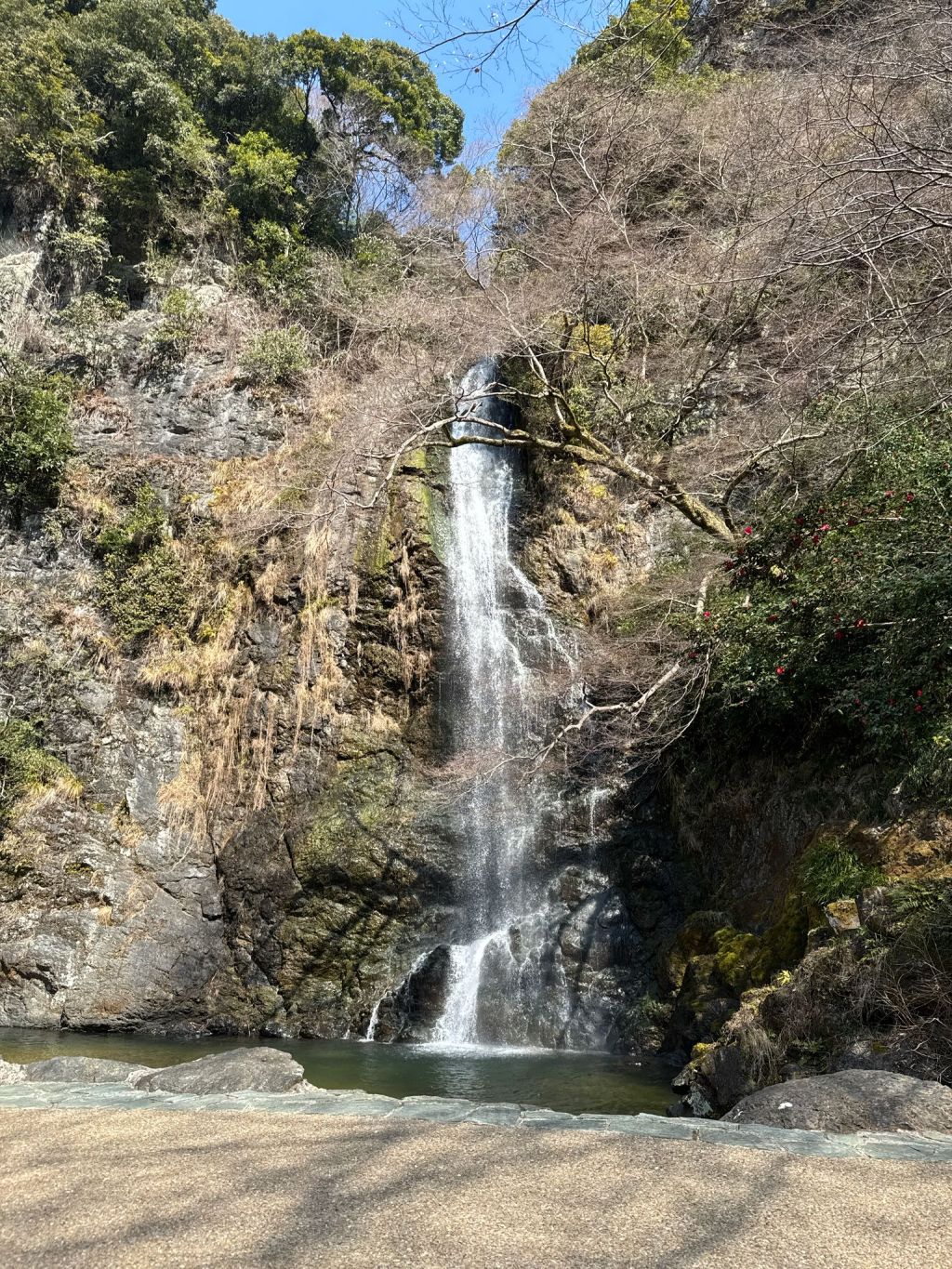
Don’t go chasing waterfalls, or do! If you’re a person who craves being in nature like me, you’ll be pleased to find out that Minoh Park (also spelled Minoo or Mino) is an easy day-trip to escape the bustle of the city. Minoh Park is located just 30-minutes to the north of Osaka and is famous for its tranquil hiking trails and waterfalls.
Minoh Falls is one of the most iconic waterfalls in Japan. In spring, Minoh Park is an ideal location to view cherry blossoms, while autumn transforms the park into a canvas of warm hues, making it one of the Kansai region’s best spots for koyo (autumn leaf viewing).
How to get to Minoh Falls
To get to Minoh Falls, catch the Hankyu Takarazuka Line from Osaka to Ishibashi-handaimae Station, then transfer to the Hankyu Minoh Line to reach Minoh. This will bring you to Minoh Station (Mino-o) – the park’s entrance.
From Mino-o Station, you can either choose to follow the hiking route, or catch the one-way sightseeing bus directly from the train station. The sightseeing bus will take you to Katsuoji-Temple first, so if you’d like to combine this with your trip to the falls this is a great option.
Travel tip: If the sightseeing bus isn’t operating from Mino-o Station on the day that you visit, you could get the train to Minoh-kayano Station and catch a local bus up to Katsuoji Temple before walking down to see the falls. Or get a taxi!
The Hiking Trail
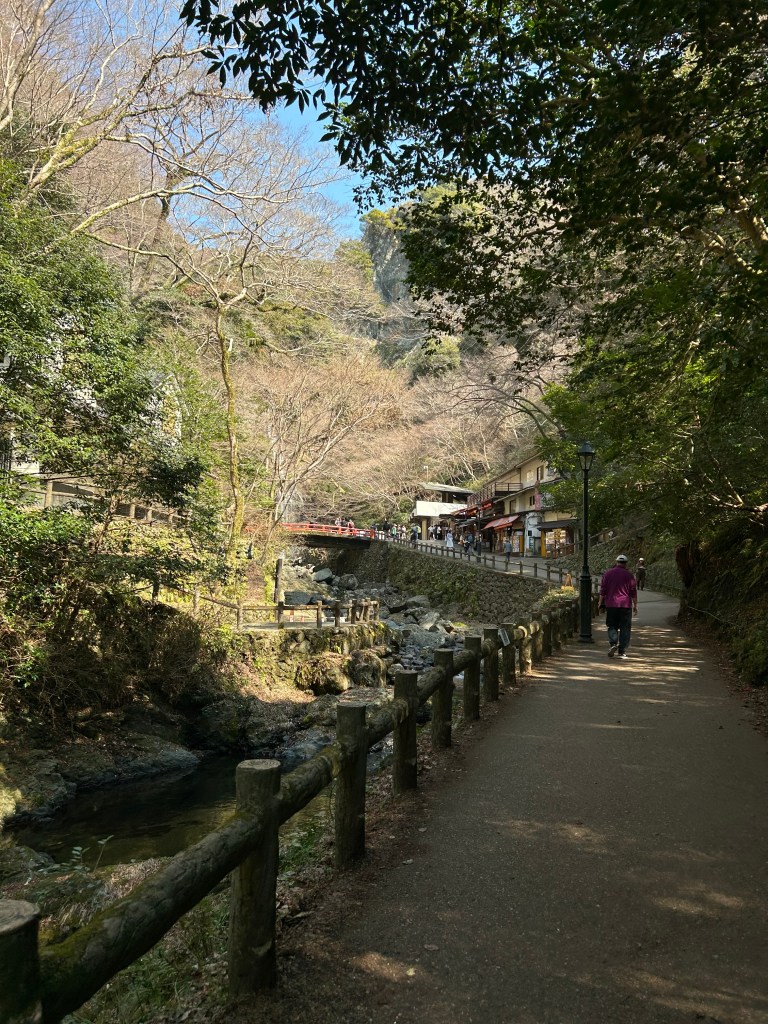
The hiking trail is located just a five-minute walk north of Mino-o Station. You will enter the park via a bridge across the River Minoh where you can then follow signage to get to the falls. Navigating the main route is super easy! The main signposted trail to Minoh Falls is a gentle 2.8-kilometer path that winds through a forest landscape and adjacent to the Minoh River. With a paved route and a gradual incline, it’s accessible for hikers of all levels, and suitable for those with pushchairs or wheelchairs. Yes – this is a hike that you can do easily with children. You’ll also be happy to know that there are also nine public toilets en route.
Along the main route, you have the opportunity to stop by the peaceful Bhuddist temple – Ryuanji Temple. Ryuanji Temple is one of the most peaceful temples that I have visited so far in Osaka. You can also check out Minoh Park Insectarium and local shops selling the famous momiji tempura—crispy deep-fried maple leaves, a must-try snack. Be sure to have cash with you as some vendors only accept cash payment.
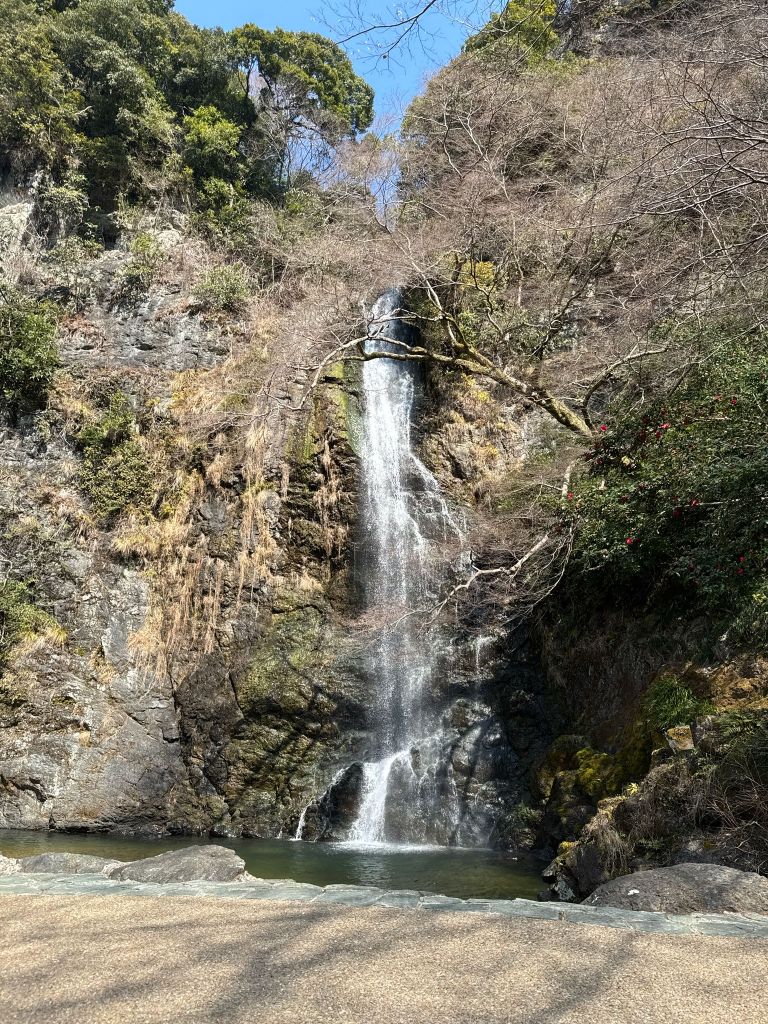
After walking for around 45 minutes, you’ll arrive at Minoh Falls, the 33-meter cascade and prime photo spot. The beauty of the falls changes with the seasons: red and gold leaves in autumn, vibrant greens in summer, and a quietness in winter. Take a moment to soak in the scenery and snap a few photos—this is the perfect spot for a rest.
Minoh Falls
Travel tip: Visit early in the morning or on a weekday if you can to avoid crowds and enjoy the falls in peaceful solitude.
On your route back down, be sure to dip your feet into the free foot bath located along the main walking route to/from the train station to soothe your achey feet.
Climb to the observation deck
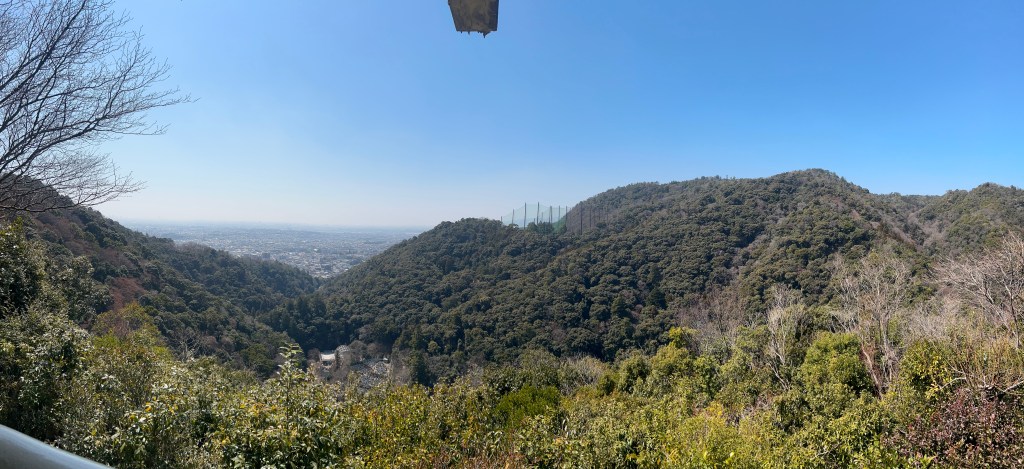
There is an incredible view of Osaka which is signposted during your walk along the main path. The walk to the observation deck is not an easy walk up and you will need to climb a fair amount of stairs to get to it. I climbed to the deck after visiting the falls and I’m glad that I did. Check out the view below!
View from the observation deck
Travel tip: Climb to the viewing point after viewing the falls, if you do it before, your legs may be tired.
Feeling adventurous?
If you want to stray off the main hiking trail and delve further into the forest, there are a few options available to you. The two main options involve making your way north past the falls to the Visitor Centre before deciding to go either:
North to reach the Minoogawa Dam where you will be greeted with scenic views of the weir. If you head north, you could also extend your hike to include a visit to Katsuoji-temple. If you choose to do this, you will add an additional 45-minutes of walking uphill, but then the reward is that you can get a local bus back down from the temple directly to the train station!
South via forest paths to see Saigaharaike Pond. If you choose to enter the forest routes, keep an eye out for Japanese macaques and do not feed them; these curious monkeys sometimes make an appearance.
Final thoughts
Your day exploring Minoh Park can be as long as you want it to be. It is suitable for all ages and abilities. Minoh Park and Falls provides both a kid friendly, easy hike and an opportunity for a walking adventure through the forest. I highly recommend visiting for a day-trip, you can definitely visit Minoh Park and Falls in one-day. Happy hiking! Let me know what you get up to in the comments when you visit.
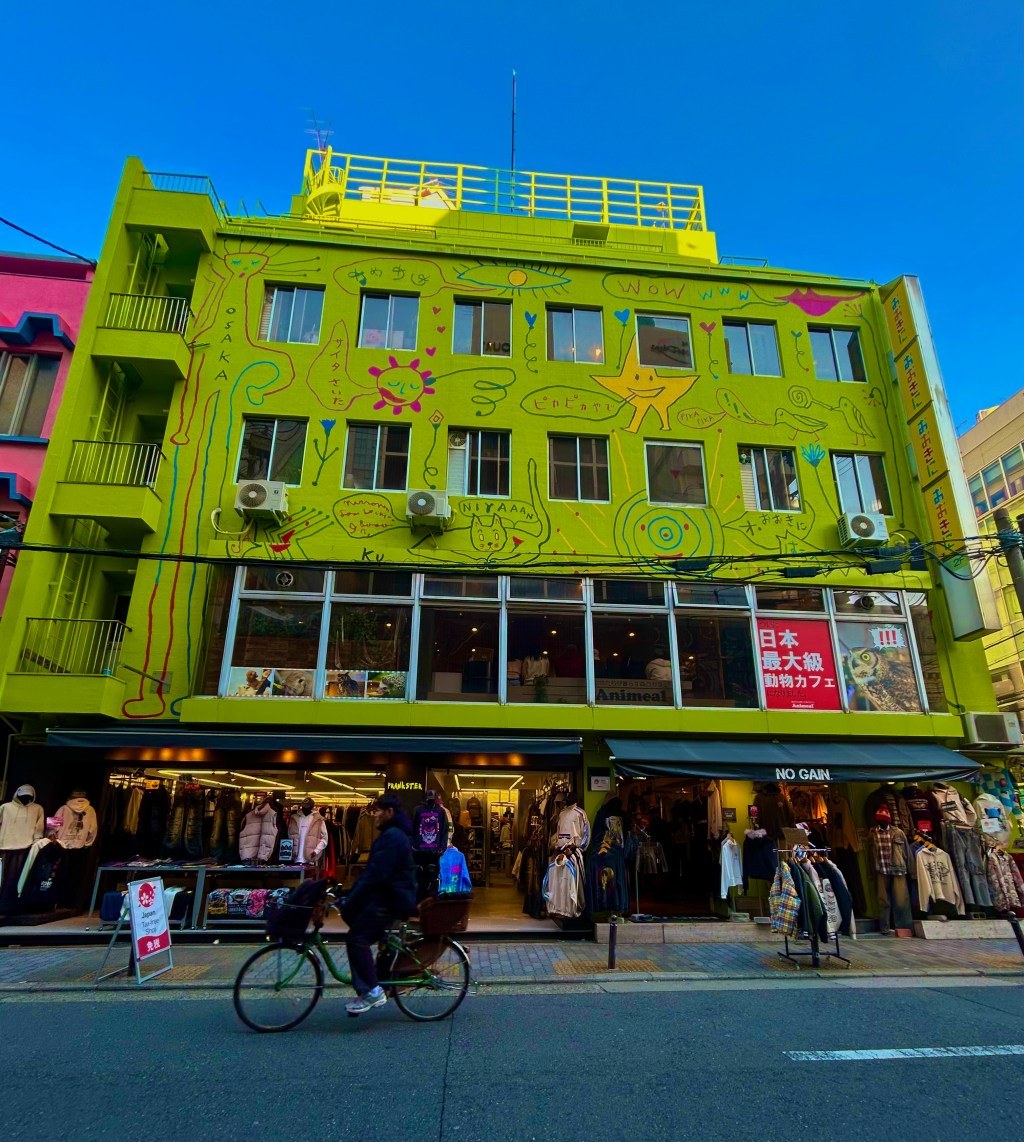
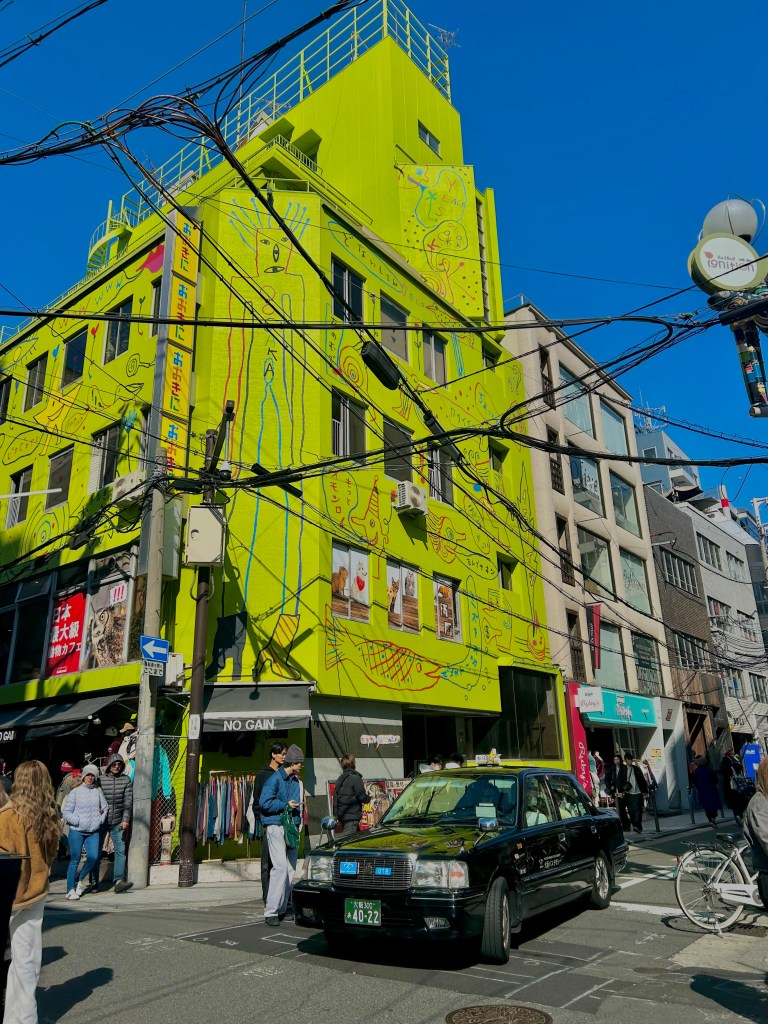
America-Mura (or “Amemura,” as locals call it) is a vibrant cultural hub located a short walk from Shinsaibashi. Located within the Shinsaibashi shopping district, America-Mura translates to “American Village,” and it’s easy to see why.
The area’s transformation began in the 1970s, when shops specialising in imported American goods started to pop up. Over time, it evolved into a hotspot for Osaka’s trendsetters, with streetwear boutiques, vintage stores, and quirky cafes lining its narrow streets.
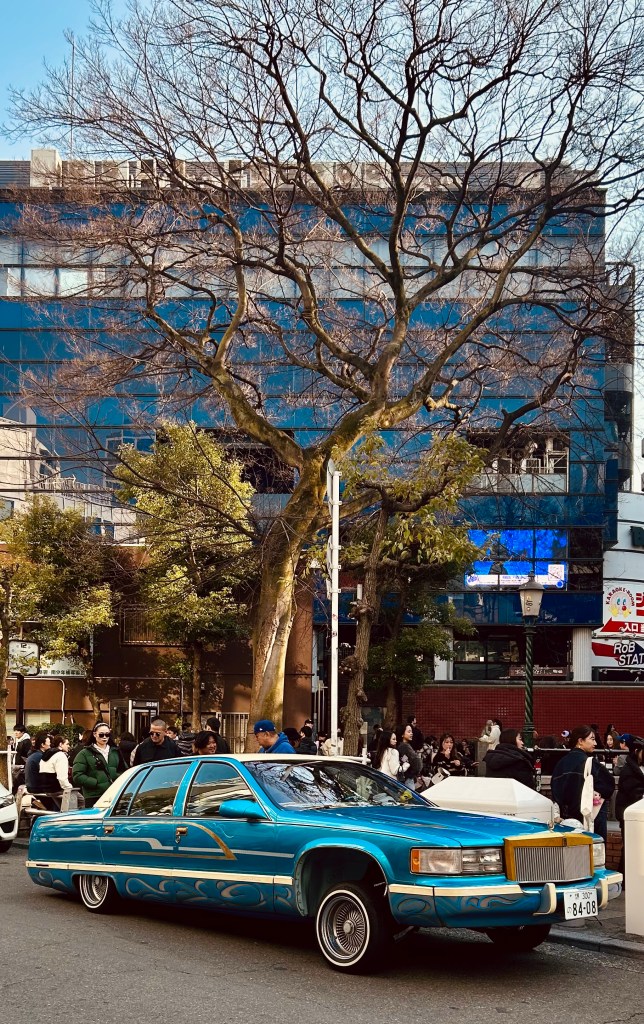
The district’s focal point is Sankaku Koen (Triangle Park), a small plaza that serves as a gathering spot for street performers, artists, and anyone looking to soak in the lively atmosphere. It’s the starting point for exploring America-Mura’s maze of streets. You may also spot some cars that look like they’ve been driven straight out of the movie ‘the mask’ – shmokin!
Shopping and Fashion
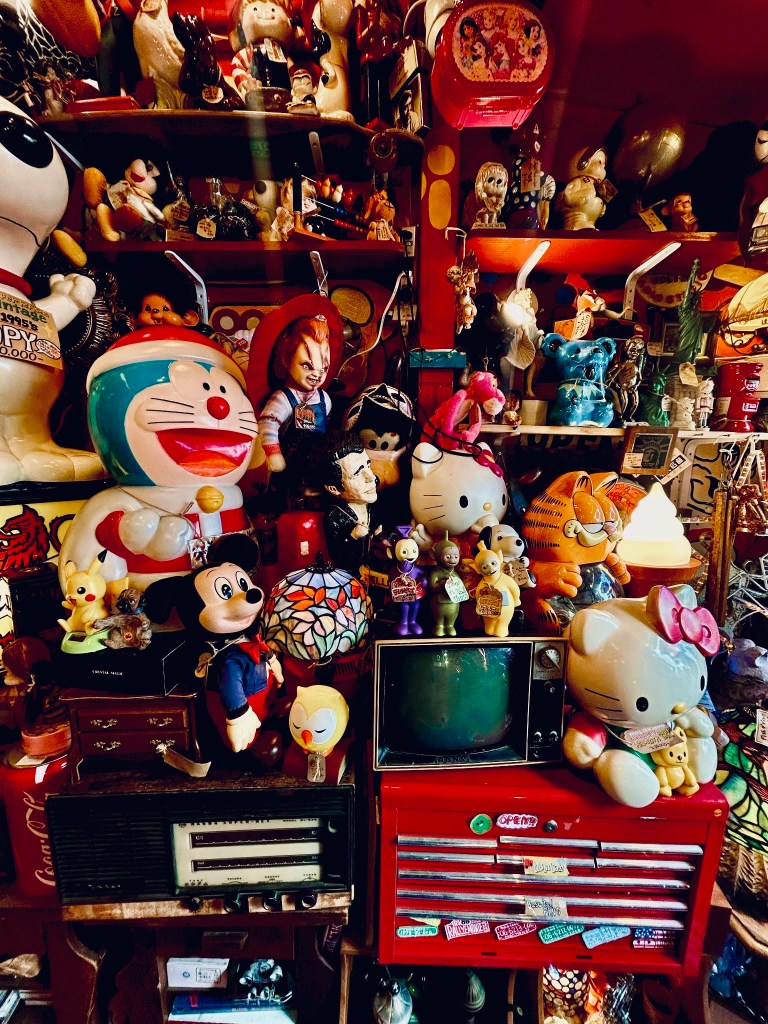
America-Mura is a treasure trove. The area is flooded with independent boutiques and vintage shops, offering everything from punk and goth attire to high-end streetwear. Popular stores like Purgatory, Acid Gallery, and Chicago have unique finds. Keep an eye out for local designers and limited-edition items you won’t find anywhere else. The most memorable store for me was visiting B.B(American village freemarket B.B) which was like walking around the loft of my nans house, discovering items filled with nostalgia.
Art and Street Culture
America-Mura is also a canvas for Osaka’s creative community. Street art features on the side of buildings, and galleries showcase works by emerging and established artists. Even the area’s street lamps, signage and storefronts exude a sense of creativity, making every corner Instagram-worthy.
Food and Drink
No trip to America-Mura would be complete without sampling its diverse culinary offerings. From American-style burgers and pancakes to Japanese takes on international cuisine, there’s something for every palate. Popular spots include:
Eggs ‘n Things: A Hawaiian-inspired eatery known for its decadent pancakes and breakfast fare.
Little Osaka: A food court featuring various street food stalls, offering a taste of Osaka’s famous takoyaki and other treats.
Big Step: A multi-floor shopping and entertainment complex with unique cafes and bars.
For drinks, the neighborhood is packed with stylish bars and izakayas.
Nightlife
The area is lively throughout the day, and flooded with crowds, however, when the sun sets it really comes alive. Live music venues like Live House Pangea and Club Joule host performances ranging from indie rock to electronic beats. Dance clubs and karaoke bars ensure the party lasts well into the night.
Tips for Visiting America-Mura
Best Time to Visit: Late afternoon to evening is ideal, as the area is at its liveliest and the neon lights create a captivating ambiance. (If you have anxiety or sensory overload, probably best to go very early in the mornings).
Getting There: Take the Midosuji Line to Shinsaibashi Station; America-Mura is just a short walk west of Exit 7.
Stay Respectful: While the vibe is casual and carefree, remember that this is a community space. Keep noise levels down late at night and dispose of trash properly.
Dotonbori, a bustling district in Osaka, Japan, is a must-visit destination for anyone traveling to the Kansai region. Known for its vibrant nightlife, neon lights, delicious street food, and unique culture, Dotonbori offers a quintessential Osaka experience. If you’ve been searching for travel tips or are curious about what to do in Dotonbori, you’ve come to the right place. Here’s a comprehensive guide to help you make the most of your visit, covering everything from things to do and eat to cost-effective recommendations.
Top Things to Do in Dotonbori
Take a Photo with the Glico Man
The Glico Running Man sign is an iconic Osaka landmark. It’s a rite of passage for visitors to snap a photo here. The best time for photos is after sunset when the neon lights illuminate the area.
Cruise the Dotonbori Canal
Hop on a boat tour to enjoy a unique view of the district. Most tours cost around ¥1,000-1,500 and last about 20 minutes. You don’t need to book in advance and can hop on a boat while there!
Explore Hozenji Yokocho
Step back in time by visiting this narrow alley lined with traditional restaurants and izakayas. Don’t miss the moss-covered Hozenji Temple where you can make a wish by splashing water on the statue of Fudō Myō-ō.
Shop Along Shinsaibashi-suji
This massive shopping arcade connects directly to Dotonbori and features everything from high-end fashion to quirky souvenir shops. A paradise for shopaholics!
Catch a Show at Namba Grand Kagetsu
Experience Osaka’s famous comedy culture with a live show at this renowned theater. Tickets typically cost around ¥2,000-5,000 depending on the performance.
What to Eat in Dotonbori
Dotonbori is a foodie’s heaven, boasting some of the best street food in Japan. Here’s what you can’t miss:
Takoyaki (Octopus Balls)
These savory snacks are a Dotonbori staple. Try them hot off the grill at stalls like Kukuru or Wanaka. Prices range from ¥500-800 per portion. The further away from the main stretch you go, the cheaper they will be!
Okonomiyaki
Osaka’s famous savory pancake is a must-try. Visit Mizuno, a highly-rated restaurant, for authentic flavors. Expect to pay around ¥1,000-1,500 per dish.
Kushikatsu
Skewers of deep-fried meat, vegetables, and seafood. Daruma is a popular chain to sample this Osaka delicacy. Dishes cost around ¥100-200 per skewer.
Ramen
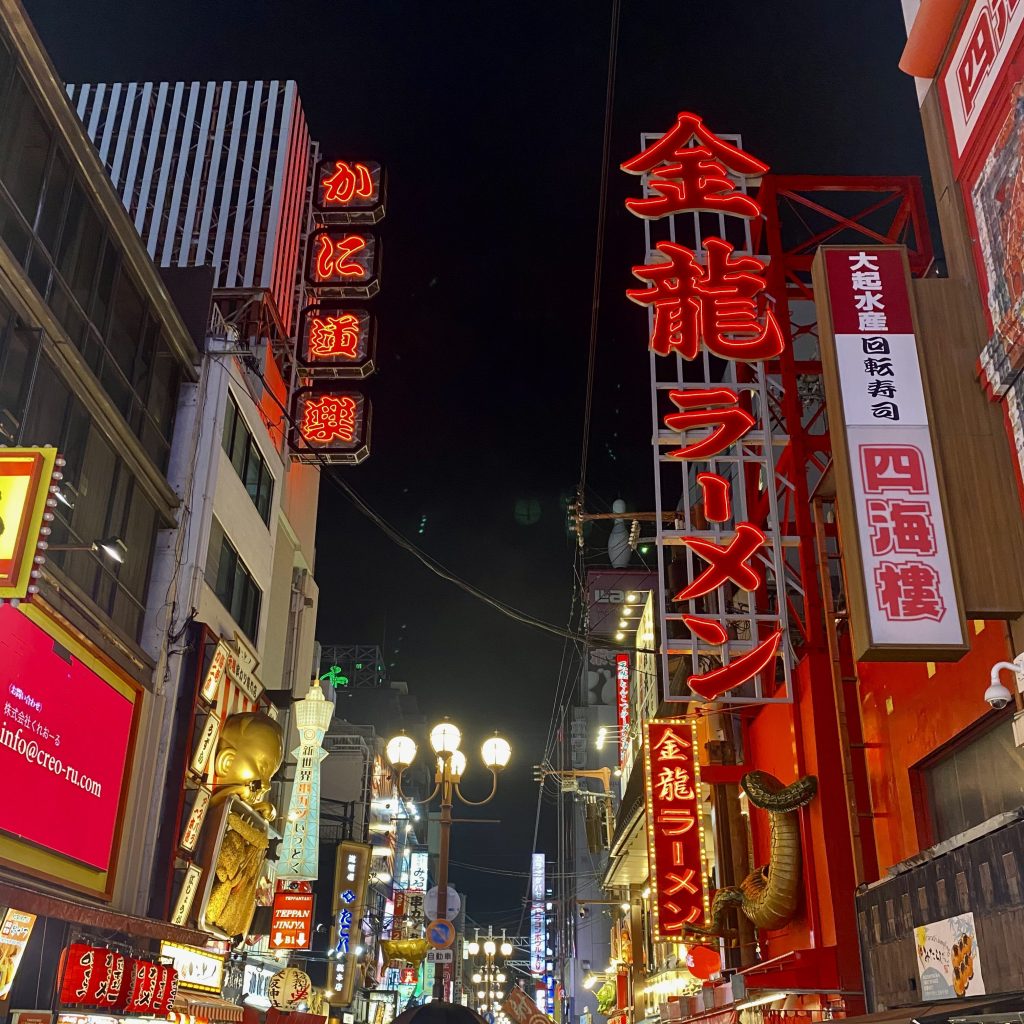
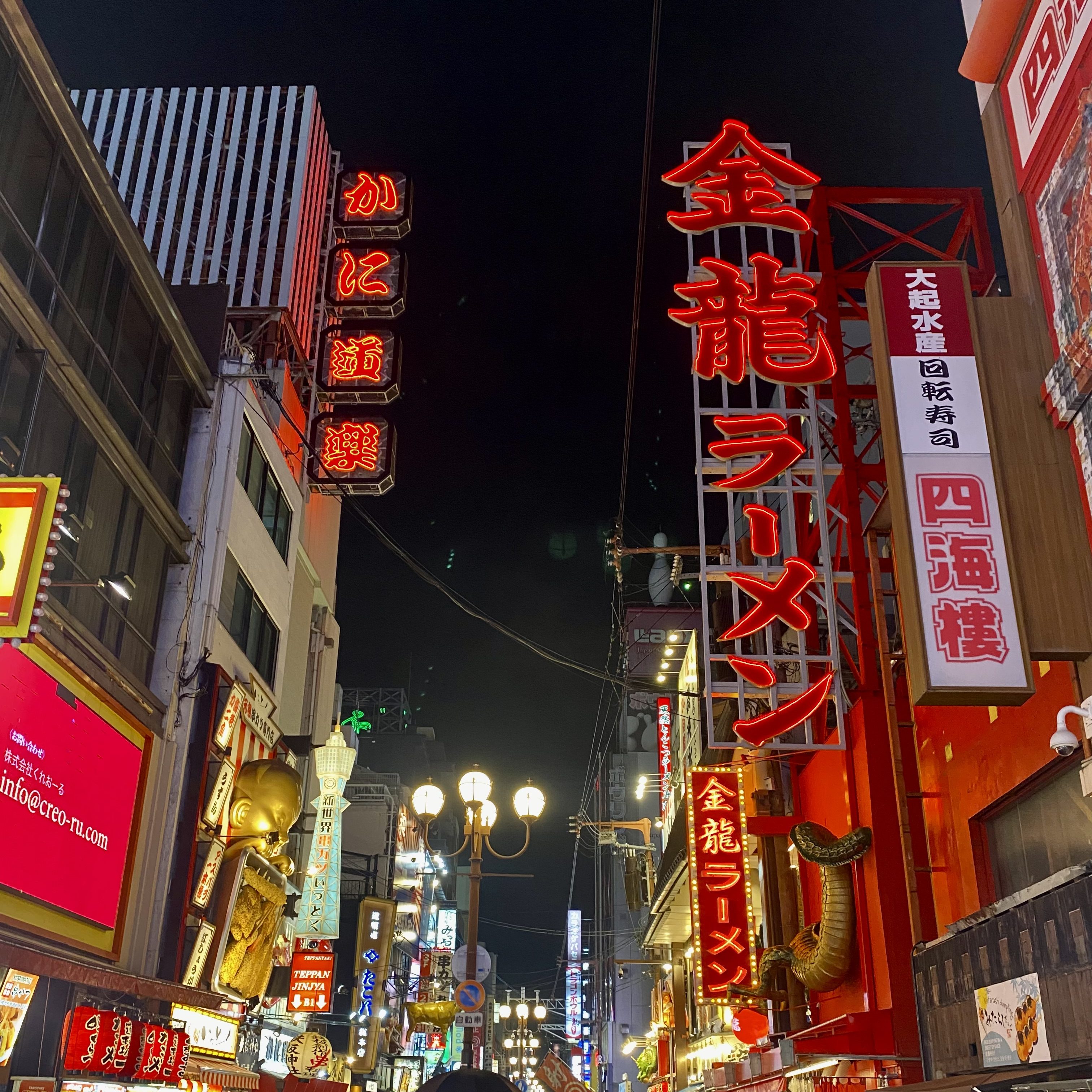
Ichiran and Kinryu Ramen are local favorites. A bowl typically costs ¥700-1,000 and is perfect for late-night cravings.
Fresh Seafood
Don’t miss the giant crab sign at Kani Doraku, which serves some of the best crab dishes in the area. Meals here start at around ¥2,500.
Budget-Friendly Tips
Stay in Namba: Book accommodations in Namba for convenient access to Dotonbori. Capsule hotels and hostels start at around ¥2,500 per night, while mid-range hotels range from ¥6,000-10,000 per night.
Eat Street Food: Street food is affordable and allows you to try multiple dishes without breaking the bank.
The best time to visit is in the evening as Dotonbori’s neon lights and vibrant energy are best experienced after dark.
FAQs
Is Dotonbori expensive? Dotonbori can suit various budgets. Street food is affordable, and there are dining options ranging from cheap eats to high-end restaurants.
How long should I spend in Dotonbori? A full evening is enough to explore, but if you want to shop or enjoy multiple meals, consider half a day.
Is Dotonbori family-friendly? Absolutely! While the nightlife can get lively, families will enjoy the food, shopping, and cultural attractions.
When visiting Osaka, Universal Studios Japan (USJ) is an absolute must-see destination. Known for its thrilling rides, immersive experiences, and world-class attractions, USJ offers something for everyone. In this guide, I’ll cover everything from entry tips and queue-beating strategies to the best rides, food options, and costs.
How do you get to USJ?
USJ is located in the Konohana Ward of Osaka, easily accessible via public transport. Take the JR Yumesaki Line from Osaka Station to Universal City Station. The journey takes just 15-minutes and costs approximately 180 yen.
Tips for Entry and Beating the Queues
Buy Tickets in Advance: Purchase tickets online or from authorised retailers to avoid long queues at the gate. Prices for a 1-day studio pass are around 8,600 yen (£50) for adults and 5,600 yen (£32) for children.
Arrive Early: The park opens at 8:30 AM, but arriving an hour early gives you a head start to popular attractions.
Use the Universal Express Pass: This add-on (starting from 7,800 yen/£45) lets you skip the lines at select rides. Options include Express 4 Pass (4 attractions) or Express 7 Pass (7 attractions).
Visit on Weekdays: Weekends and holidays can be packed. Aim for a weekday visit during non-peak seasons (March-May, September-November).
Download the USJ App: Use the app for real-time updates on ride wait times, park maps, and show schedules.
Plan Your Route: Start with the most popular rides (e.g., The Wizarding World of Harry Potter) and work your way through the park.
Do I need timed entry tickets at USJ?
Yes – USJ often requires timed entry tickets for certain popular attractions or areas, such as the Super Nintendo World. These timed-entry tickets are typically free but must be reserved in advance or on the day of your visit using the official USJ app or kiosks in the park.
Here’s how tickets work:
General Admission: You only need a regular park ticket to enter the park itself.
Timed Entry Areas: For specific zones like Super Nintendo World, you need a timed entry ticket in addition to your regular ticket. These can be reserved through the app or distributed on-site, depending on availability.
To ensure a smooth visit, I recommend you download the Universal Studios Japan app to reserve timed entry tickets as soon as they become available OR arrive very early if you plan to secure these tickets in the park.
What are the main attractions and rides at USJ?
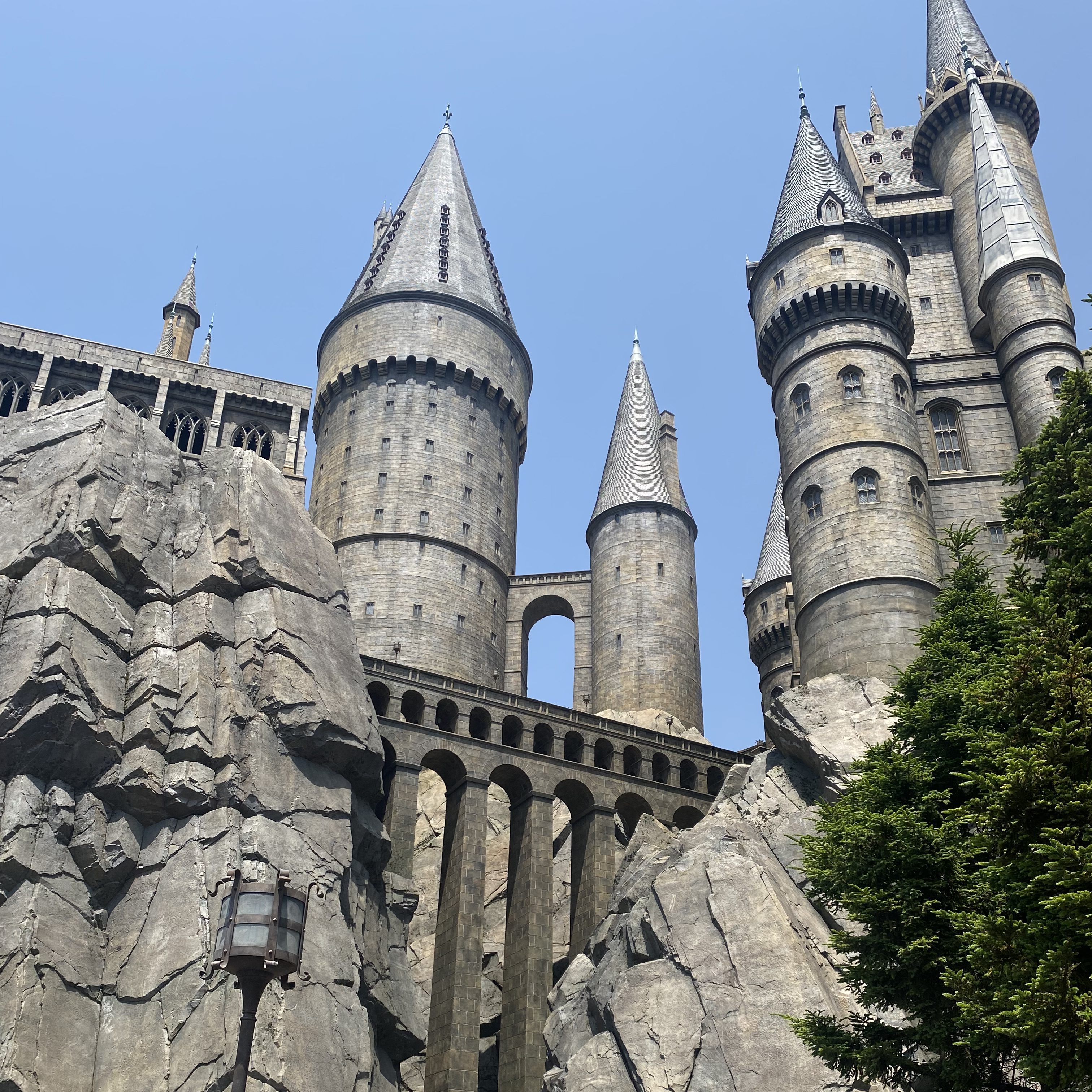
The Wizarding World of Harry Potter:
Ride: Harry Potter and the Forbidden Journey (4K 3D experience inside Hogwarts).
Tip: Get a timed-entry ticket to secure your spot in this popular area.
Super Nintendo World:
Rides: Mario Kart: Koopa’s Challenge and Yoshi’s Adventure.
Highlights: Interactive activities using a Power-Up Band (3,800 yen/£22).
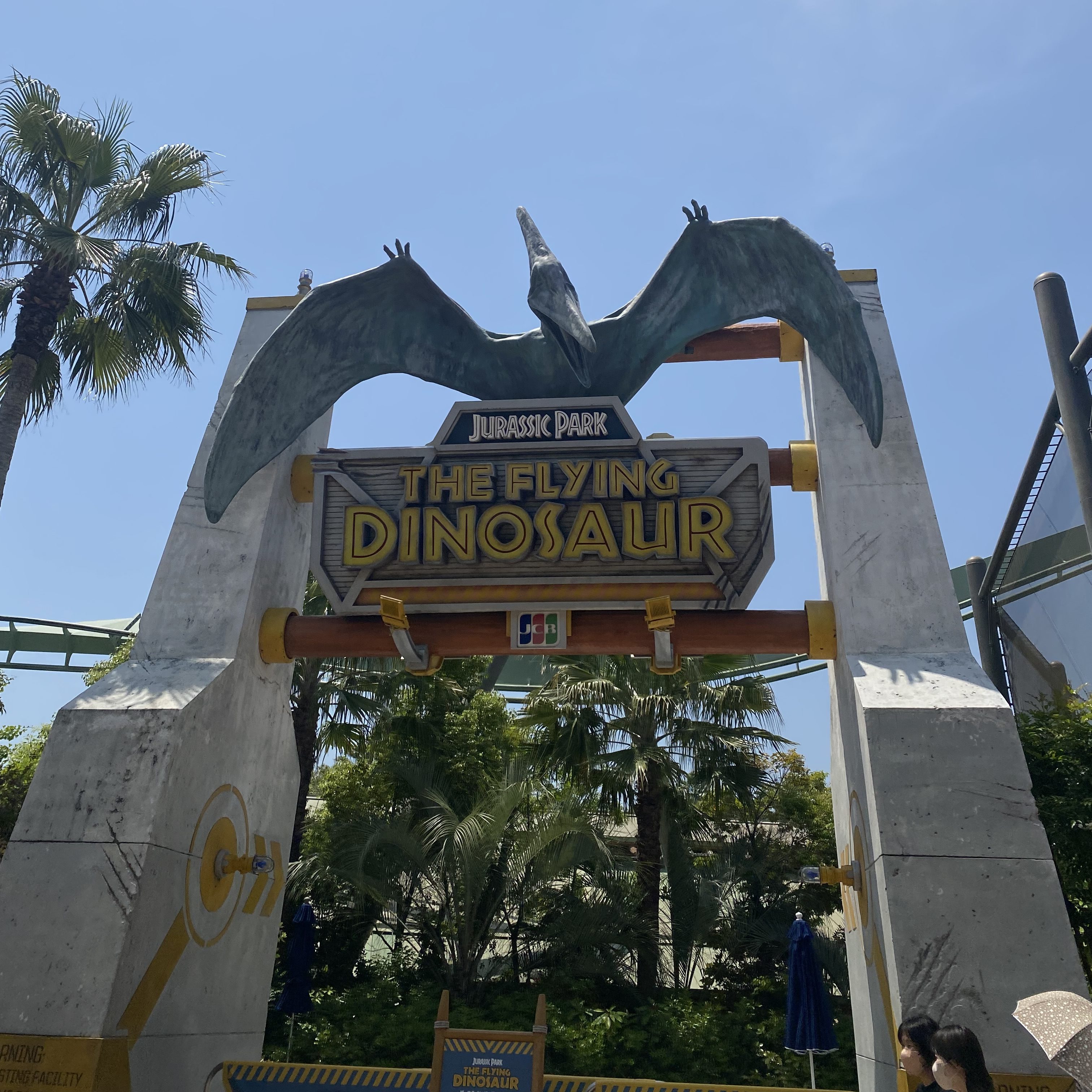
Jurassic Park:
Ride: The Flying Dinosaur (a thrilling rollercoaster). Perfect for adrenaline junkies!
Despicable Me Minion Mayhem: A 3D ride perfect for families.
Hollywood Dream: The Ride: A high-speed rollercoaster with optional backward seating (Backdrop).
Spider-Man: The Ride 4K3D: A multi-sensory superhero experience.
What is there to eat at USJ?
Butterbeer: A must-try drink in The Wizarding World of Harry Potter (non-alcoholic, 800 yen/£4.70).
Mario-themed Treats: Super Nintendo World offers adorable snacks like Block popcorn buckets and Toad’s Cafe dishes (1,500–2,500 yen/£9-£14).
Classic Theme Park Food: Turkey legs (950 yen/£5.50), churros (600 yen/£3.50), and themed bento boxes.
Fine Dining: Try Amity Landing Restaurant for seafood or Finnegan’s Bar & Grill for Western dishes (2,000–3,500 yen/£11-£20 per meal).
When is the best time to visit USJ?
While USJ is a great attraction all-year round. Spring is the bestt time to visit (March-May) as you will enjoy pleasant weather and cherry blossoms nearby. Autumn (September-November) provides cooler temperatures and fun Halloween-themed events.
Avoid Peak Seasons: Golden Week (late April–early May), Obon (mid-August), and school holidays.
How much does USJ cost?
USJ is insanely cheap compared to other Universal Studios around the world and you can buy an annual pass for just 38,400 yen (£222) that grants you access all year round! I’ve provided a cost comparison table below to help you.
Item
Cost in Yen
Cost in GBP
1-Day Studio Pass (Adult)
8,600
£50
1-Day Studio Pass (Child)
5,600
£32
Express Pass (From)
7,800
£45
Food (Per Meal)
2,000–3,500
£11–£20
Power-Up Band
3,800
£22
Souvenirs (Average)
1,000–5,000
£5.50–£29
Is one day at USJ enough?
Yes – If you get there early, and plan ahead, you can tick off all of the rides you want to go on within one-day. I highly recommend booking a timed entry ticket to the popular rides such as Nintendo World in advance using the app, OR as soon as you get to the park!
Tsurumi-Ryokuchi Park is located on the lime green subway route and can be easily accessed from near Osaka Castle (Morinomiya station). The park was home to the 1990 International Garden and Greenery Expo, where different countries showcase flowers and landscaped areas. This is where the park gets its title as the ‘Osaka Expo ‘90 Commemorative Park’.
Hire a scooter for the day
Upon entering the park I noticed that you can hire a bike or hire some futuristic looking e-scooters and mobility scooters which I discovered were called Tsuru Mobi. To ride the Tsurumobi, all passengers must register as members and make a reservation in advance, so bear this in mind before your trip. As this was my first time visiting, I decided to walk to make sure I didn’t wizz past something worth exploring more. I checked the park map before making my way around. The map of the park looked big, and I was excited to explore it.
Shortly after I entered, I spotted a tower which I now know is called the Tower of Life! Osaka city government closed the tower more than 10 years ago, due to declining tourist numbers, and had initially planned to demolish it. However, calls have emerged for the tower to be used to boost momentum for the Osaka-Kansai Expo in 2025. City officials say plans to topple the structure will go ahead without a feasible proposal to preserve it. I took a lot of photos of it, hoping that it will remain but knowing it could be demolished, and knew it would be a good point of reference during my park adventures.
Tour the old-expo site and take a photo next to a windmill
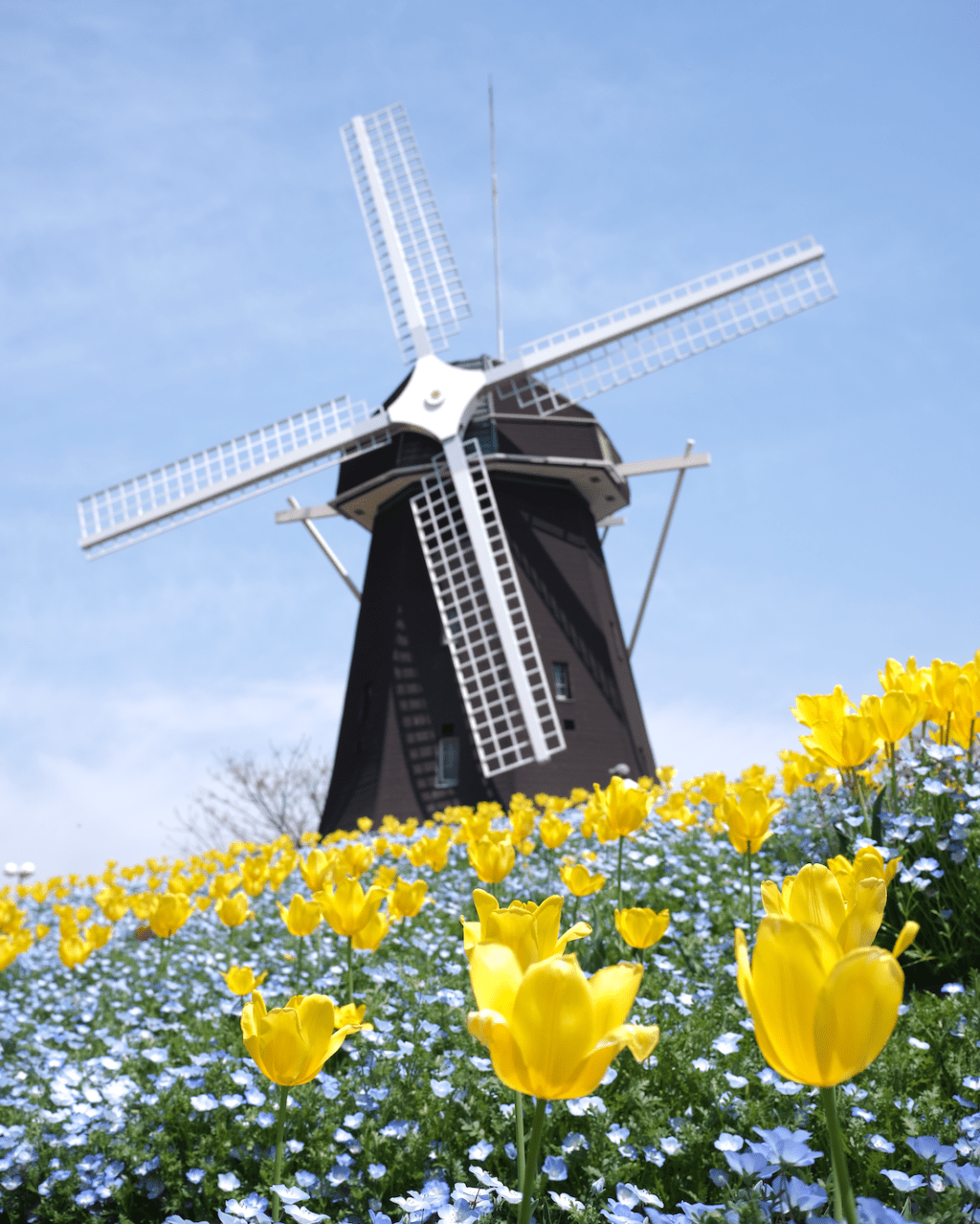
After entering the park, if you head right, you will enter the site of the 1990s flower expo and will be met with displays from all around the world. The most iconic is the dutch-style windmill which is surrounded by impeccable rows of flowers all year round. The flowers vary from tulips in spring, to sunflowers in august and more prime photo opportunities throughout the year. The displays from all around the world have been restored recently, with highlights including a waterfall from Canada, and temples from China and South Korea.
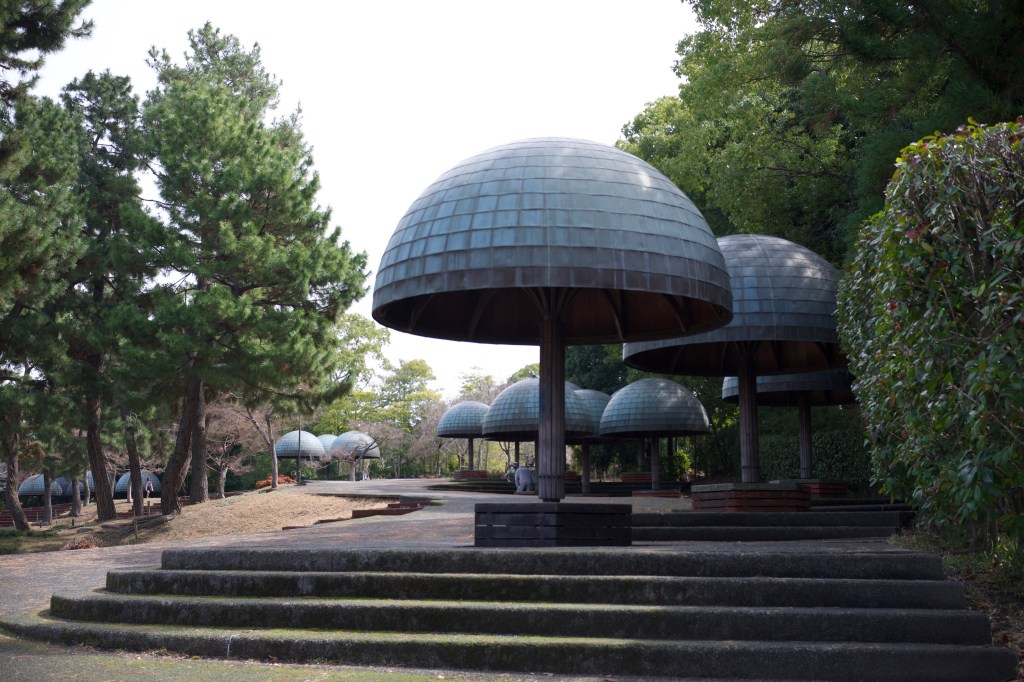
Throughout the park, I noticed people sitting beneath mushroom-like shelters, and thought they looked really unique and cool in their design. Here is a photo!
Mushroom Design Seating Areas
Spot wildlife near the pond
The large pond ‘Oike Pond’ in the centre of the park had a lot of birds flapping around, and herons perched quietly on rocks within the water. The backdrop of the pond included temples and a dutch-style windmill in the distance.
On my way around, I found that the park has something for everyone, this includes a Horse Racing Track, a Forest Adventure filled with playgrounds for children, a BBQ and Camping area for those who want to camp in the park! If you wish to do this, remember to book in advance and bring your own tent.
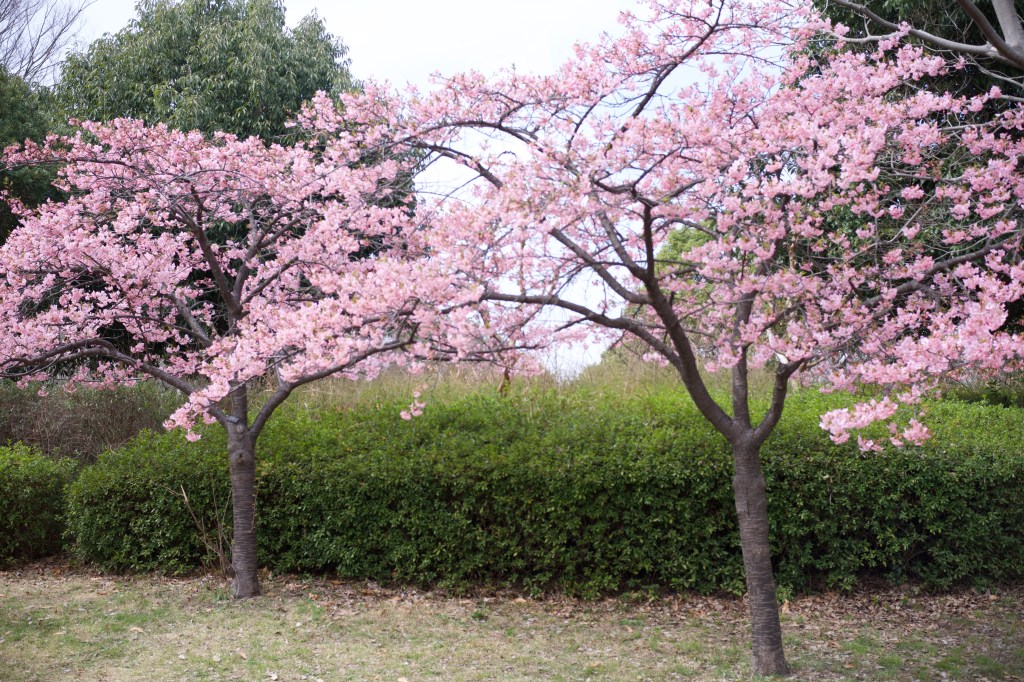
The abundance of wildlife, flowers and trees in the park was what I noticed most. The Sakura (blossom) trees were blooming in mid-March. A lovely surprise as they’re not forecast in most areas until April. Locals were naturally gathered to take photos of this fleeting moment. I was suprised to discover that the park is also home to a large indoor botanical garden with over 15,000 plants! The park is called Sakuya Konohana Kan, which costs just ¥500 to enter.
Sakura Blossom Trees
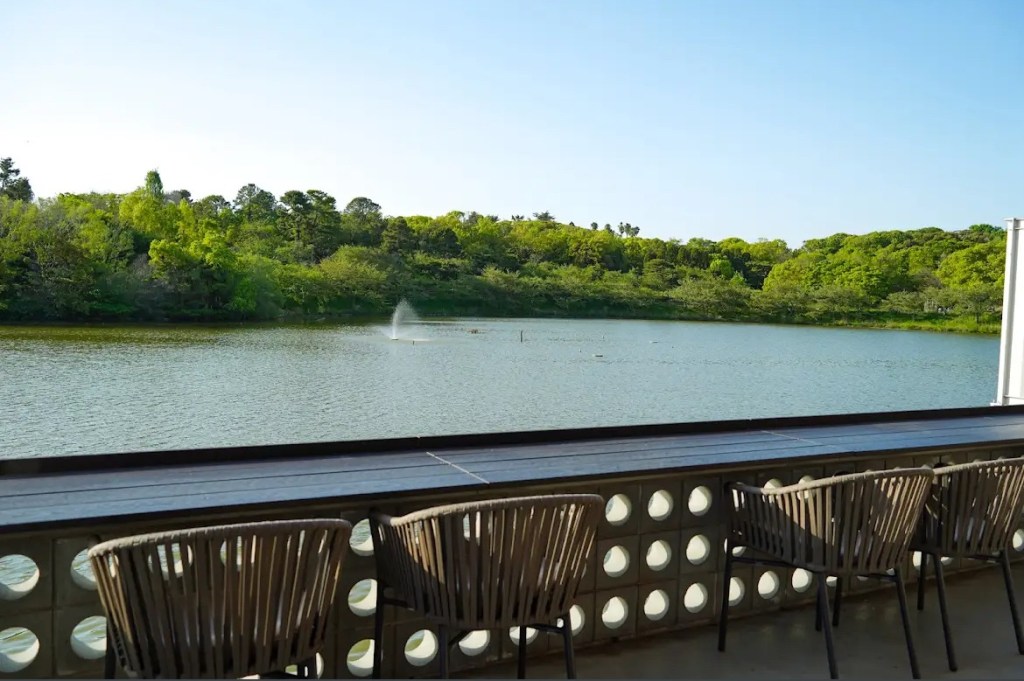
My walk around the park lasted around 3 hours, so I can see why you can rent bikes and scooters near the entrance! At the end of my walk, i was quite hungry, so I stopped at the restaurant near Oike Pond. The restaurant is ideally named ‘Botanical House’ and has a lovely terraced dining area near the water. It is one of the best locations for a romantic dinner that I’ve found in Osaka so far. A perfect scene to end the day before catching the train or if you want further time to relax, Tsurumi Onsen Suishun is a public bath house and gym located directly opposite the train station.
View from Botanical House Restaurant
So, is Tsrumi Park worth visiting? Yes, absolutely, i’d say that Tsrumi Park is arguably the best park to visit in Osaka when it comes to the variety of activities, plants and nature. While the park can be enjoyed all year round, the best time to visit Tsrumi Park is in Spring (April-June) to see the flowers in bloom or toward Autumn (September-November).
Recently we decided to visit Expo ’70 Commemorative Park, the site of Japan’s first world fair in 1970. It felt right to do with the Osaka Expo ‘25 starting soon! I had heard about the Tower of the Sun, a strange-looking sculpture that had become an Osaka landmark, and had to see it for myself. The commemorative park is huge, with a mix of open spaces, museums, and gardens. It turned out to be a quiet place to walk around, away from the busier parts of the city. It costs just ¥250 (£1.30!) to enter the park, which is amazing value for money. I recommend purchasing the ticket at the gate, and make sure to bring cash as some of the machines don’t accept card payments.
How to get there:
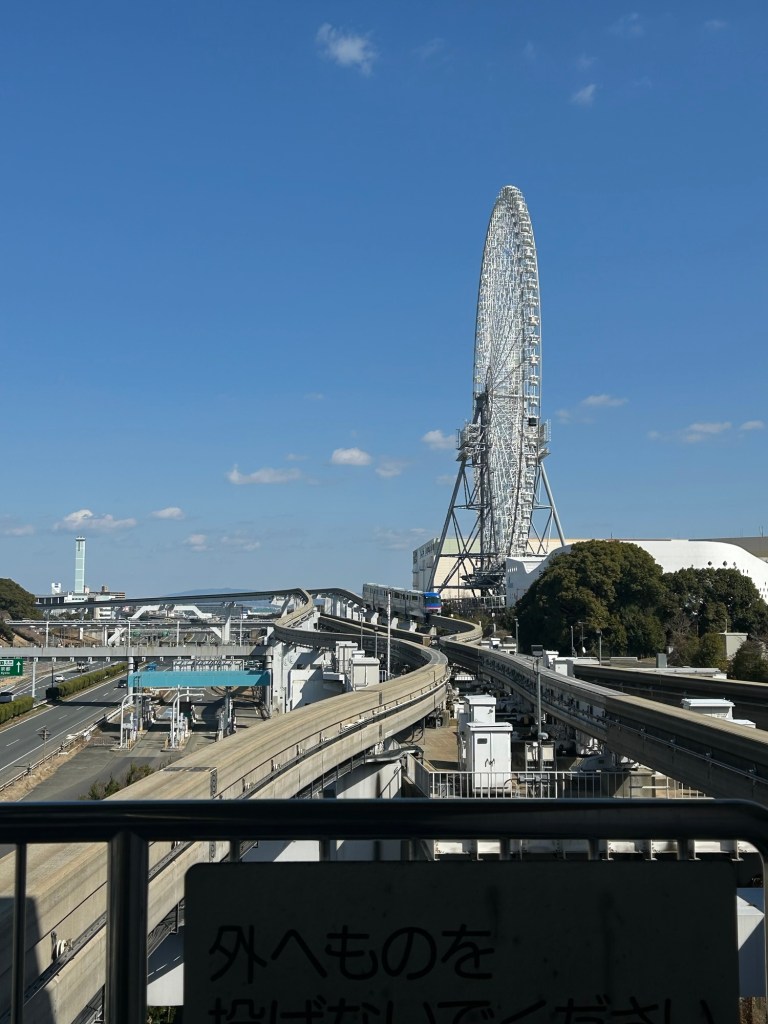
Getting to the park was straightforward. We took the Midosuji Line from Osaka Station to Senri-Chuo, then switched to the Osaka Monorail for a short ride to Bampaku-Kinen-Kōen Station. The monorail stops right by the entrance, which makes access pretty convenient. The ride on the monorail itself was exciting (and perhaps a little daunting an experience if you’re not used to travelling this way!).
Exploring the Park
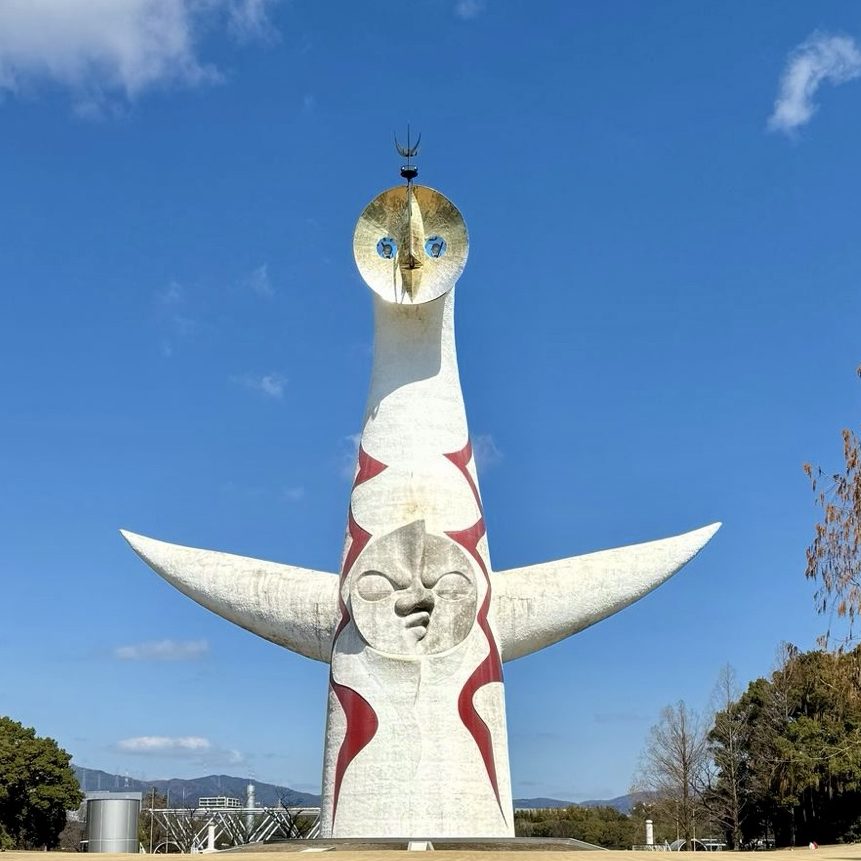
One of the first things I saw upon entering was the Tower of the Sun, an unusual sculpture standing at 70 meters tall. Designed by artist Taro Okamoto, it was originally created for the Expo and has been preserved ever since. The tower has a distinct look, with large outstretched arms and multiple faces representing different aspects of time. We didn’t book a tour to see the inside, but were surprised to find out that this is an option. Admission to the Tower of the Sun Museum is by reservation only. (A minimum of a 1-day advance reservation is required.)
Tower of the sun!
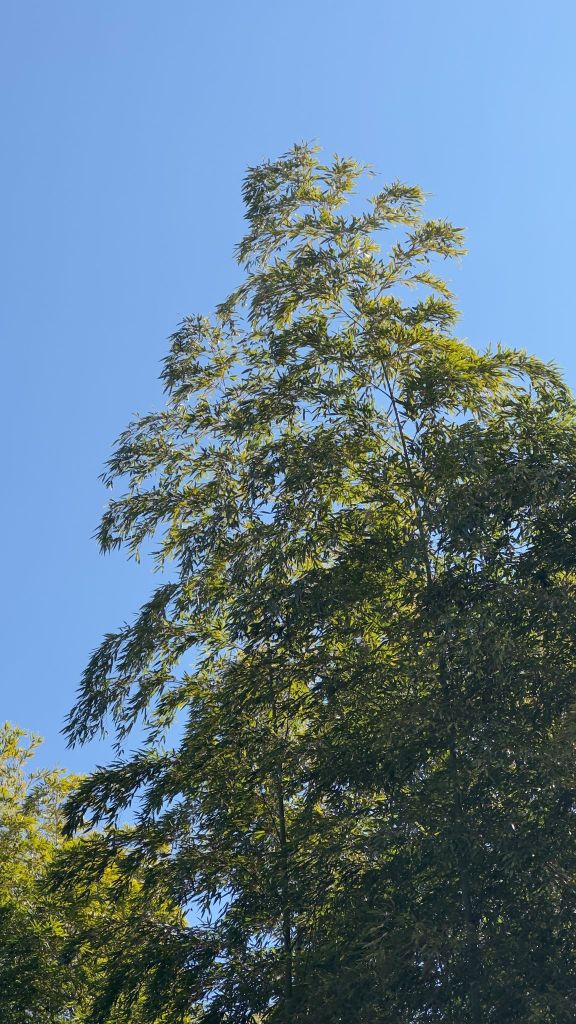
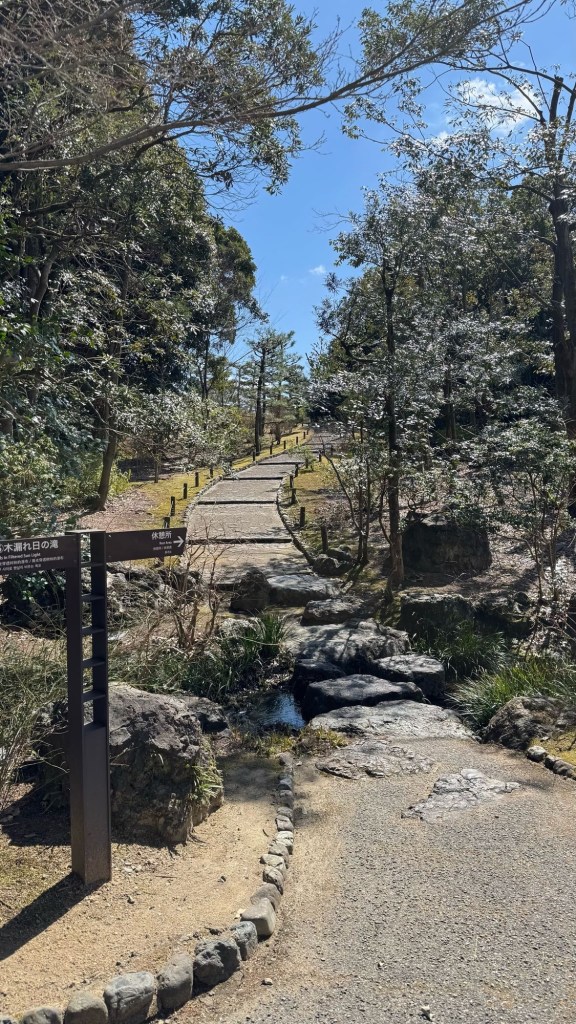
After walking past the tower, we headed toward the Japanese Garden. It was well-maintained, with ponds, bridges, and a mix of different landscaping styles. Depending on the season, you can see cherry blossoms (spring) or autumn foliage (November-December). You can also see bamboo swaying gently in the breeze, which I personally found more relaxing than the Arashiyama Bamboo Forest in Kyoto which has become a tourist hotspot.
The gardens are fun for all ages and there is an interactive stamp collection activity, if you collect just 5 stamps on your way around you will get a lovely gift! I won’t spoil the surprise for you…
For those interested in history and culture, the park has a couple of museums. The National Museum of Ethnology showcases cultural artifacts from around the world, while the Expo ’70 Pavilion focuses on the history of the 1970 World Expo. We walked through the Pavilion, which had exhibits on the futuristic designs and ideas presented at the Expo. It was a small but interesting look into Japan’s post-war era of rapid growth.
For those who enjoy activities, the park has something called “Banpaku BEAST”, an athletic facility that utilises a hexagonal platform using unique technology from Germany. You can enjoy various activities such as climbing, slacklining, and aerial bicycles at this facility. There are 121 types of activities. With a high level of safety, people of all ages, from elementary school students to seniors, can experience them. The athletic area is on four floors, and there is also an observation deck on the rooftop that offers a panoramic view of the park. An additional fee is required to enter the BEAST!
Food wise, there were a few food stalls inside the park selling mostly selling snacks and drinks. Vending machines are also there (of course). If you’re looking for more options, Expo City, a large shopping and entertainment complex right next to the park, has restaurants, an aquarium, and a shopping mall. This includes a buffet-style KFC… yes you read that right!
Is a visit to the Commemorative Park worth it?
Expo ’70 Commemorative Park isn’t typically a tourist attraction, but it’s a lovely place to visit if you enjoy open spaces, walking trails, or learning about Osaka’s history. The Tower of the Sun was the main highlight for me, and the gardens make for a relaxing day out. I would highly recommend a visit if you’re looking for a break from the city, a day out with family relaxing with a picnic, or have an interest in the legacy of the 1970 Expo. Just make sure to take sunscreen and hats as the park is a large open space, with not much shelter. We will definitely be back!








 Visit Osaka